Observational research
User behavior observation: Watching product usage patterns
Customer journey mapping: Understanding end-to-end experiences
Competitor analysis: Learning from market alternatives
Trend analysis: Identifying market and behavior shifts
Ethnographic research: Deepening cultural and contextual understanding
Related:
Top
Best practices for continuous product discovery
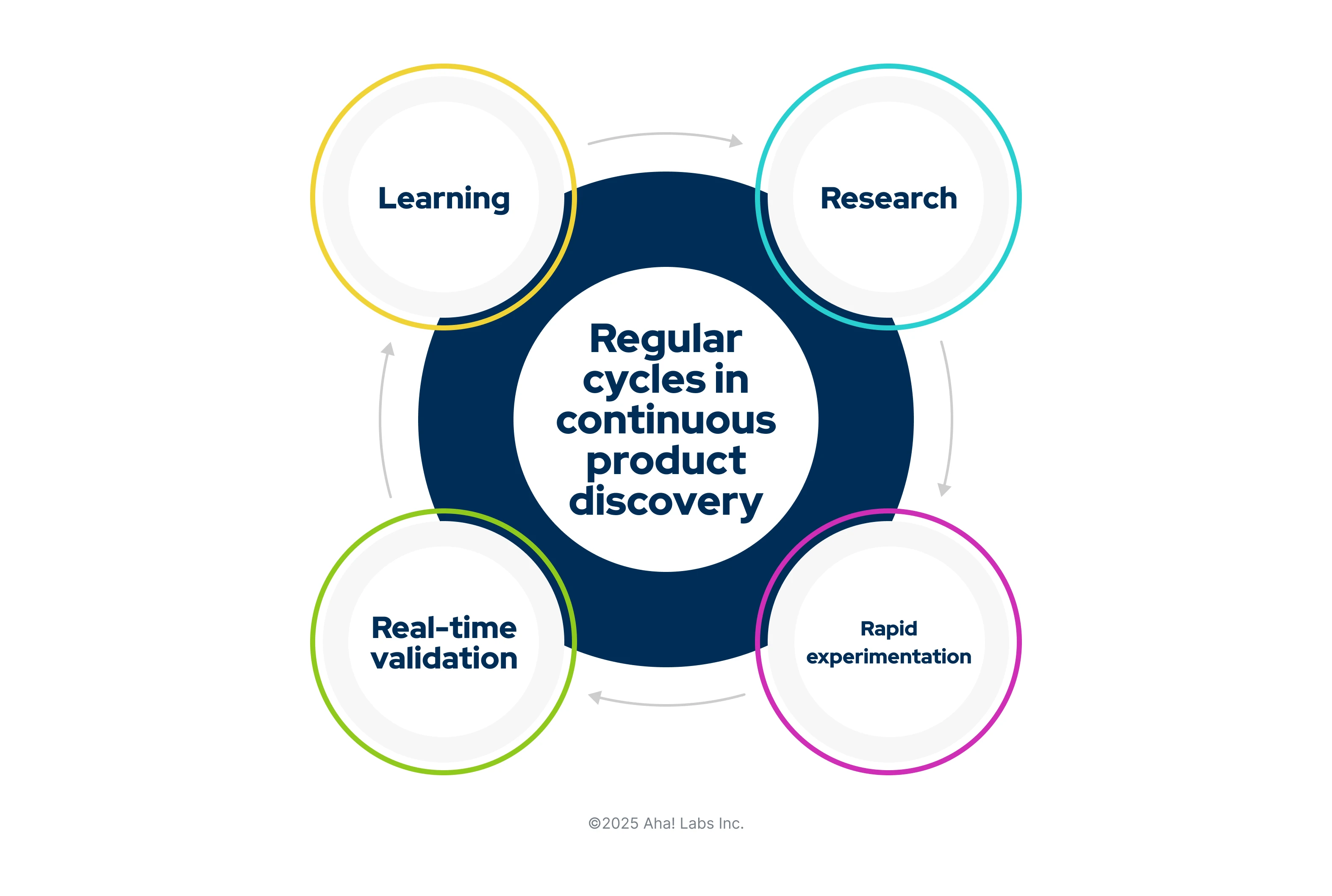
Continuous product discovery hinges on a sustainable process.
Continuous product discovery is not a one-time initiative. It only delivers value when it becomes a habit. Building continuous product discovery habits means investing in structure, training, and the right tools to make research a natural part of every product cycle.
To create a best-in-class process for continuous product discovery, focus on:
Customer relationship management
Customer research standards
Cross-functional team participation
Knowledge management
Customer relationship management
If you are just getting started with continuous product discovery, finding a group of customers who are interested in giving feedback and participating in research studies on an ongoing basis may feel like a feat in itself. And even if you have an existing database of customers to select from, ensuring diversity of representative customer segments becomes your next hurdle.
Best practices for customer relationship management in continuous product discovery:
Recruitment tactics
Multiple channels for participant acquisition
Referral systems from existing customers
Partnership with sales and success teams
Relationship nurturing
Regular check-ins with research participants
Appreciation and recognition programs
Feedback loops that show results from input
Customer research standards
Not many product teams are truly versed in customer research protocols. It can be uncomfortable asking people direct questions — most of us want to eliminate friction and keep conversations light.
Nerves also come into play. Between those two factors, you can end up with folks on the product team rushing from question to question during customer interviews, without taking a beat to follow up on a comment to understand customer needs.
Best practices for customer research standards in continuous product discovery:
Preparation excellence
Research question clarity and focus
Interview guide preparation and testing
Participant background research
Interview techniques
Documentation standards
Cross-functional team participation
Having a diverse cross-functional team involved in continuous product discovery efforts will ensure that both the outreach and output of customer research are well considered. You want both folks who understand customers and those who understand technical feasibility.
Best practices for cross-functional team participation in continuous product discovery include:
Role clarity
Shared responsibilities
Process protocols
Knowledge management
All that customer research is worthless if you are not rigorous in how you capture and document your findings. This is an area where many teams lag — not just in lacking a centralized hub for storing knowledge, but also in handoff gaps between insight and roadmap planning.
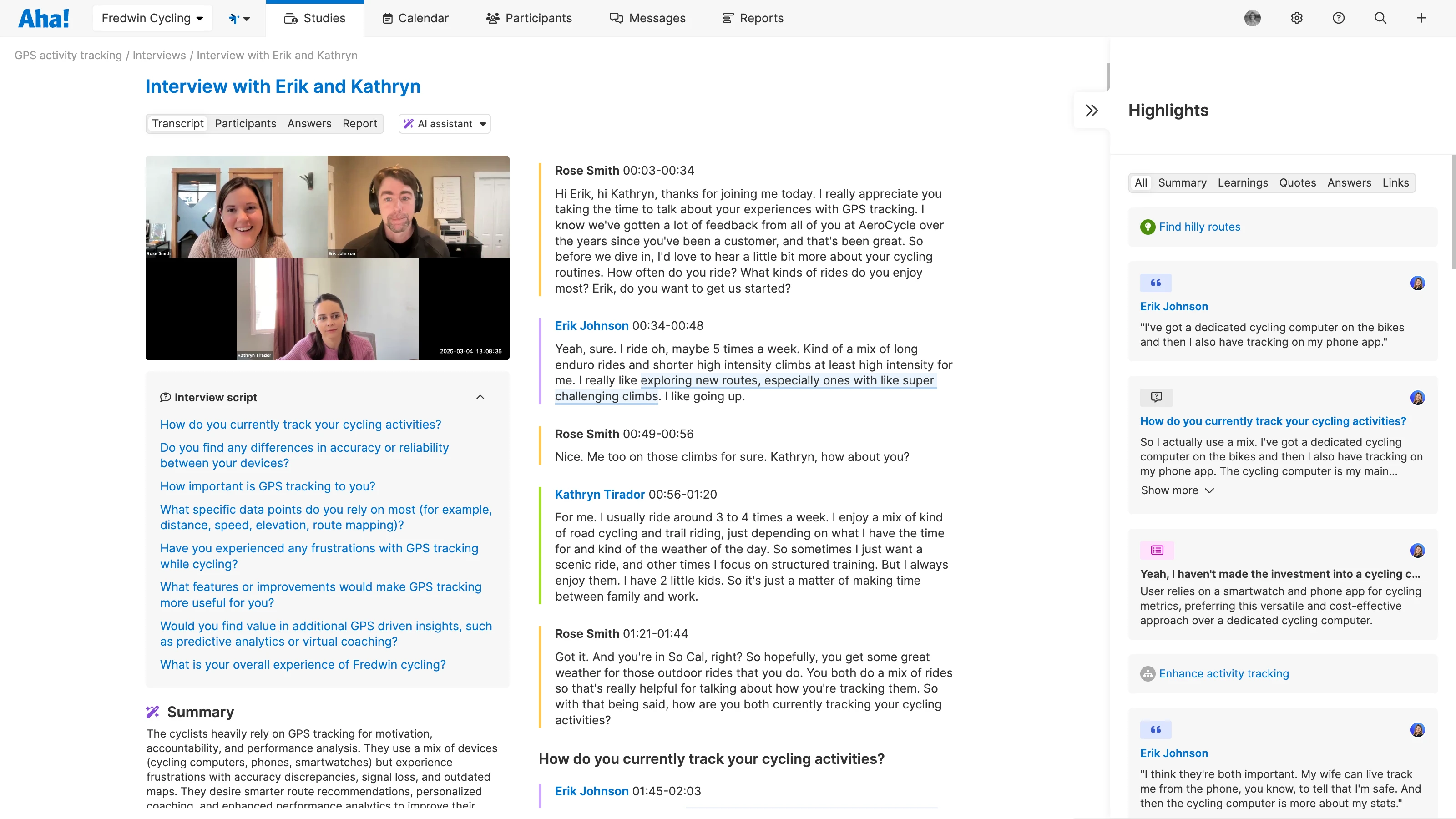
Choosing the right product discovery tool is just as important as training the team in preferred documentation methods.
Knowledge management best practices in continuous product discovery include:
Top
Challenges of continuous product discovery
Continuous product discovery is challenging because it involves people.
It starts with getting cross-organization buy-in to support discovery efforts. Then, you have to assemble the team driving the continuous approach — there will likely be knowledge gaps and impact on their core duties beyond customer research.
Finally, you have the customers themselves. It can be onerous at times to find folks who will consistently participate in a meaningful way.
Lack of experience
Many product teams have skill gaps when it comes to any type of research. Continuous product discovery will bring those issues to the fore. If continued or focused training is not available, focus on gradual skill development. (The latter requires strong product leadership.)
Resource allocation
Continuous product discovery does not require a dedicated team, but it does require that the team dedicates time. It may be hard to justify the investment. Seek out executive sponsors who can support research efforts, and consider implementing product discovery tools that encourage set processes and efficiency. A tool that offers structured workflows built in and AI-enabled research functionality could make the adoption process smoother (and save you plenty of time over the long term).
Maintaining a consistent cadence
Teams may experience difficulty establishing a regular research rhythm. A staccato flow can lead to inconsistent insights, missed opportunities, and gaps in customer understanding. Create structure with dedicated schedules.
Coordinating across teams
Without true cross-functional collaboration, you can end up with siloed research efforts. The result is duplicated efforts and conflicting insights. Outline expectations, roles, and responsibilities. And invest in a centralized research hub to ensure everyone is working from the same knowledge.
Processing large amounts of feedback
The ongoing nature of continuous product discovery can leave teams with a high volume of research to parse. This information overload can lead to analysis paralysis. Avoid missing insights by using AI to summarize content and mine for patterns.
Balancing discovery with delivery
Product discovery has to be in alignment with ongoing development priorities. Otherwise, you can end up rushing decisions or mired in technical debt. Prioritize lightweight research methods and embed product discovery into your team's product development processes.
Measuring impact
Because continuous product discovery is not tied to a specific feature, it can be hard to prove ROI. Without a way to track outcomes, organizational buy-in can wane, and it may be hard to justify the time and expense of ongoing research to executives. Set clear metrics that map to company goals and track how insights impact the business.
Top
How to implement continuous product discovery
If your organization is moving from fixed-cadence research to an integrated discovery approach, you may already be exploring how to make it sustainable. You can stave off some of the challenges outlined above with a thoughtful approach.
5 tips for implementing continuous product discovery:
Secure leadership's buy-in: Align on the time, budget, and resources needed to support ongoing discovery.
Success metrics: Agree on how to measure the business impact of discovery work.
Build research infrastructure: Create a customer database and set up the right tools to centralize your work.
Prepare the team: Assess skills, provide training, and clearly define each person's role in the process.
Embed into workflows: Identify where discovery fits into existing processes and make it part of how the team operates.
Bear in mind that going from periodic to continuous product discovery requires a fundamental shift in organizational mindset.