A product that helps plan its own future? Yes. With you leading the way. | Photo by Jodi B Photography
The AI product managers are coming
People love doing what they are good at. So it hurts and feels threatening when AI starts doing it too. Especially if it does it better than we do. The AI product manager is not here quite yet, but it is coming. Its precursor — the AI-automated product development lifecycle — has already arrived.
One of the senior developers on the Aha! team described his experience working with AI over the past few months. Since AI got really good at writing code, he has experienced the five stages of grief (denial, anger, bargaining, depression, and acceptance, in case you need a refresher). He resisted at first. Writing elegant code was an integral part of how he saw himself as an engineer. It was his identity. But he could not argue with the results. So he started letting AI do more of the coding.
He is at the acceptance stage now. He orchestrates the AI systems that write his code and spends his own time where he creates the most value: on the architecture decisions and thorny problems that require an experienced engineer. And there is even renewed excitement, because AI writes code so quickly that he gets through far more work than he could before. That gives him more time with our product managers to figure out which customer problems to solve next. Most importantly, we ship the improvements our customers need much sooner.
Most of us want to be good at our jobs. But it gets harder to say what that means when AI has the skills to do the work we built our careers on.
Product managers are confronting this too. You take pride in understanding why customers are frustrated and figuring out a solution the team is excited to build. Colleagues seek your opinion because you know the product deeply. So AI taking on more of the investigation and planning is personal. You want the assist — but you also want to feel that your expertise matters. If AI can contribute so much, what does that mean for your career? There is also a real urgency to figuring this out.
Engineering teams can now build far more than most product teams are ready to define or review. Product planning needs to keep pace.
I believe your role will become even more important. But you will play it differently in an era of autonomous product management and self-building software.
From agile to automated
I recently spoke with product leaders at one of the largest health insurers in the U.S. about this challenge. Their engineering teams have embraced AI in a big way. Their product managers are talented and working as hard as they ever have. But like most product teams, they are trying to support AI-powered development with a largely manual planning process. They wanted to know what their product managers should do differently.
You might be asking the same question. Can you just use AI to speed up the work you already do? Yes, in part. But think about what is involved in each stage. PMs review customer feedback and determine which needs matter most. You investigate possible solutions. Once you decide what to build, you translate that decision into a plan for engineering. AI can help with each activity, but someone still has to initiate the next one and coordinate what follows.
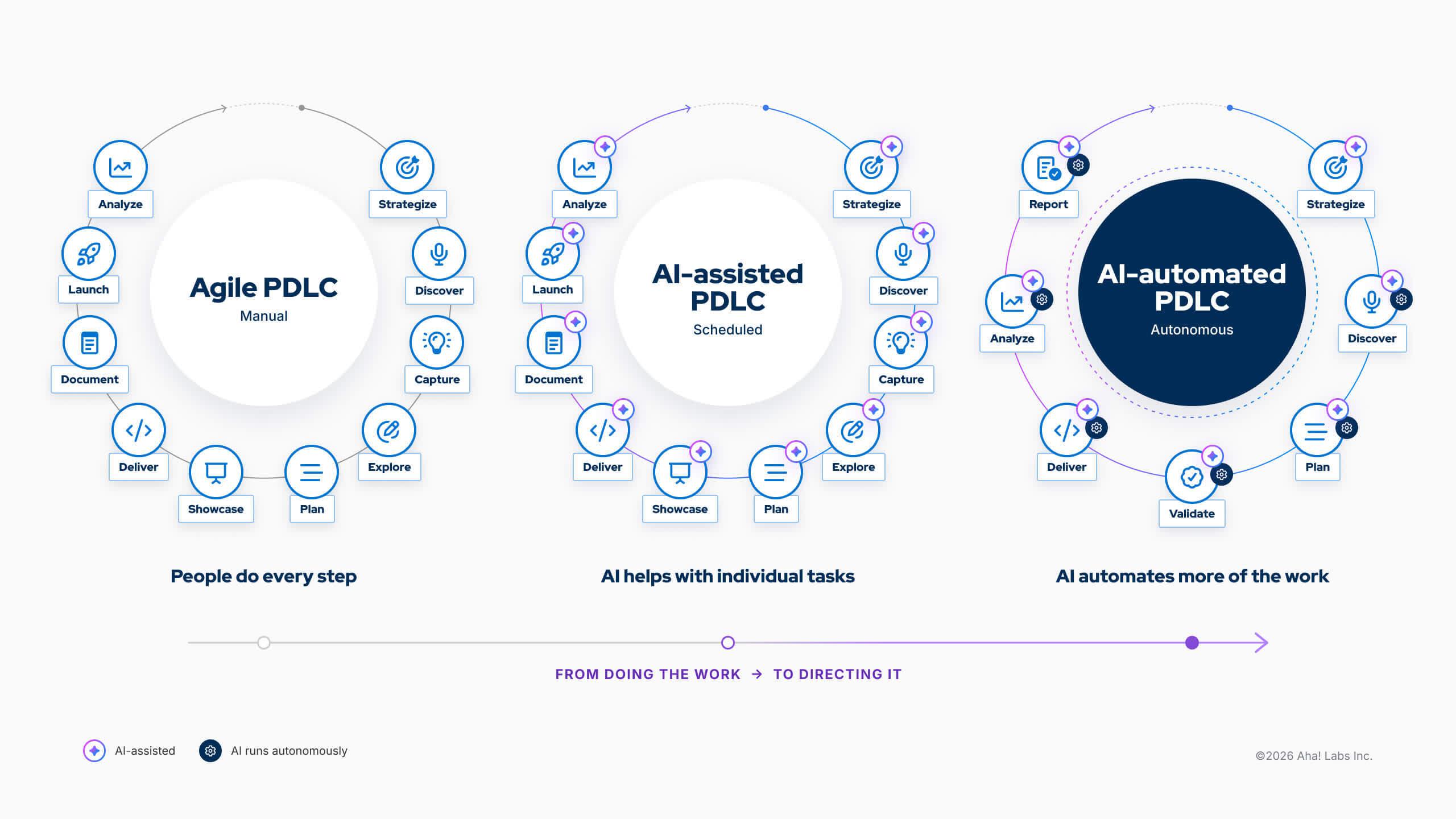
I think I have now lived to see three major generations of product management:
Agile product development lifecycle (manual, 2000s-early 2020s): People execute work at every stage, from setting strategy and discovering customer needs to planning, delivering, and launching. They also coordinate every handoff in between.
AI-assisted product development lifecycle (scheduled, early 2020s-today): AI helps with individual activities, like analyzing feedback or drafting plans. People schedule individual tasks and decide what to do next.
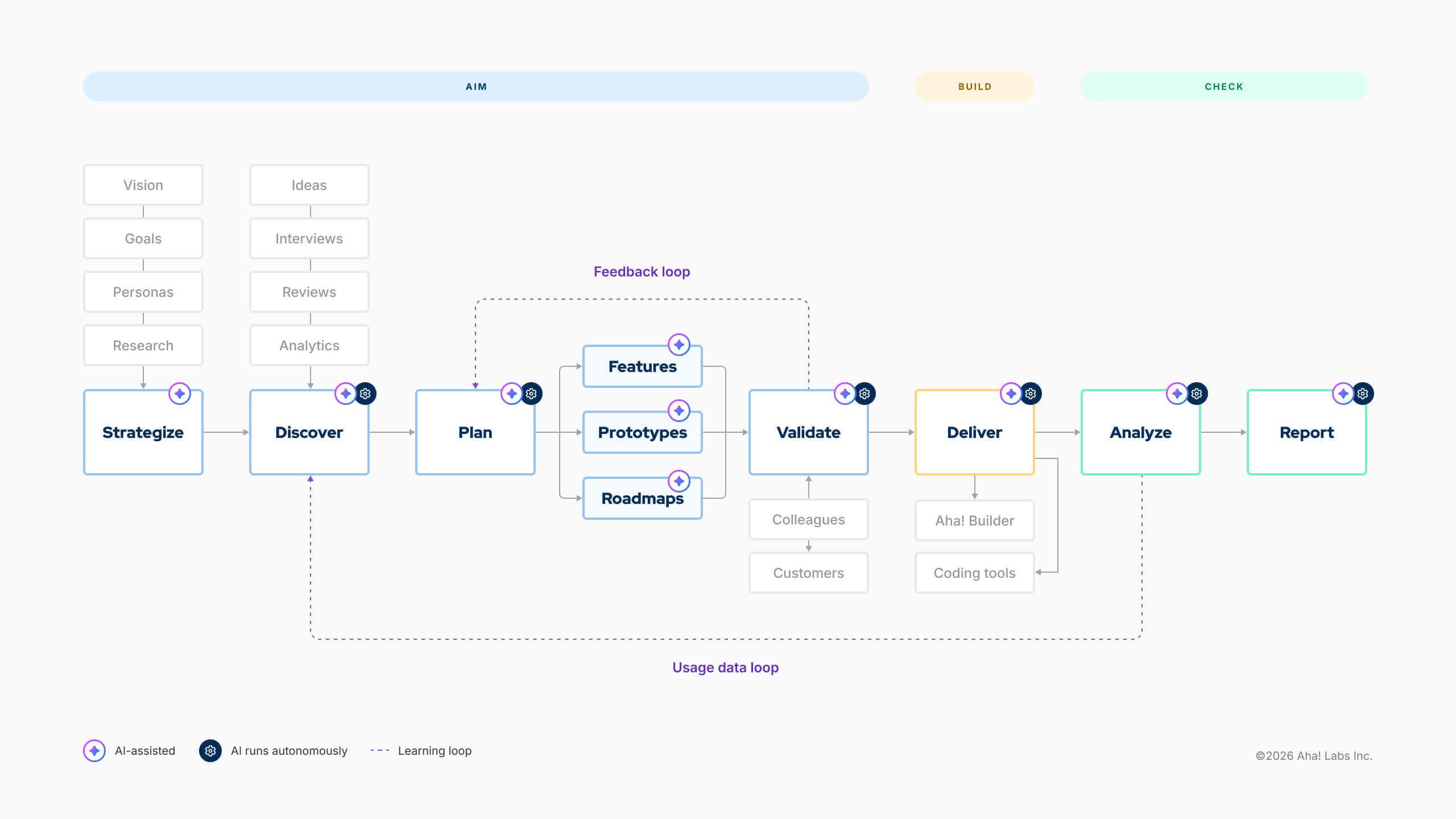
AI-automated product development lifecycle (autonomous, emerging now): AI will run connected activities on its own, from discovery and planning through validation, delivery, analysis, and reporting. People set the direction and determine which decisions require their approval.
Notice that the cycle includes validation before development and analysis after release. AI helps test proposed solutions and measure whether the improvements customers receive deliver the intended value.
Agile transformed how teams build software by giving people a shared rhythm for planning and delivering work together. With an automated product development lifecycle, AI advances the work between the approval points the team sets. A proposed improvement can proceed through validation and delivery once the team approves the plan — rather than waiting for the next planning cycle.
The promise of automated product management is that the product itself will participate in deciding what should be built next.
A product that helps build itself
Imagine arriving at your desk to discover that your product has been busy overnight. It investigated a customer problem and built a prototype that is ready for you to evaluate. Meanwhile, another improvement is awaiting your approval for development. And usage data from a recent release has turned up the next problem to solve.
You steer all of it from control planes that put the entire cycle in view. You see why AI recommended an improvement and whether customers benefited after release, without piecing together updates from each stage.
The dotted arrows show how the cycle learns. Customer feedback informs planning before development, and usage analysis directs new investigations after release.
Our own product team is already using Elle, the AI assistant in Aha! software, to inform our plans. Elle can reference the full history and context behind every product decision. We schedule tasks to comb through new customer feedback, score ideas against product goals, summarize progress on the roadmap, and much more — so we keep tuning our plans to what customers tell us, day by day.
I am eager to automate further. We have more than 13 years of experience getting to know our customers and refining how we decide what to build. I want our products to use all of that experience to solve customer problems before anyone has to ask.
We have always expected our products to serve us. Now, you may very likely serve your product. All while keeping in mind that it was and is built to help people.
How to serve your product
Serve your product? I know, that sounds backwards. But our products no longer need to be passive. As the AI systems connected to them take on more responsibility, they need to understand what we are trying to achieve and who we are building for.
We still need to provide the key inputs and review the outputs. But the workflow is changing and will start to look more like the following:
Strategic inputs: Guided by the product manager with AI's assistance
You will need to set clear goals and stake out a bold point of view on priorities. The more your product can investigate on its own, the more important it is to be clear about what matters most. Murky goals lead to murky recommendations.
Customer empathy: Guided by the product manager
You still need to meet with customers often. AI can find patterns in their feedback that you might miss. But as a product manager, you are the main proxy for the customer when deciding what to build. Bring what you learn from those conversations into the work AI does.
Decisions on what to build: Guided by AI with the product manager's assistance
AI will propose improvements and evaluate which ones will create the most value. You establish the criteria for making those decisions. At Aha! our product value scorecard evaluates ideas based on strategy, customer benefit, the potential for a lovable experience, and the investment involved.
Analyzing the results: Guided by AI
Did customers adopt what you released? Did it deliver the value you expected? You still need to know the answers, but gathering and analyzing the data should not consume your time. AI will measure usage against the goals you set before release. At Aha! we compare each feature's initial value score with its realized value.
Showcasing the results: Guided by AI
Your customers do not follow every release. And the more frequently you deliver improvements, the more likely they are to miss one that could help them. AI will prepare timely updates that explain what has improved and how customers will benefit.
Optimizing the cycle: Guided by the product manager
Pay attention to how well the entire process is working. Are the goals and criteria leading AI to make good decisions? Are you getting involved where your judgment matters most? Review and improve the process as you learn, and eliminate approvals that no longer serve a purpose.
So when I say serve your product, I do not mean waiting on it. I mean giving it and customers a clearer voice so you can spend more of your time delivering what will create value.
The extraordinary opportunity
You get to envision the future and rally talented people to build it. That is why I believe product managers have one of the best jobs in the world.
Now, there is even more you can envision and bring to customers. That is the adventure ahead of you. With an automated product development lifecycle, you can become even more:
Entrepreneurial: Go after markets you once dismissed because the investment was too high. AI can dig into customer needs and develop solutions alongside your current roadmap. And if customers respond, you might open up an entirely new market for your company.
Experimental: Challenge the assumptions behind your product. You could pursue a radically different approach to solving a customer problem without diverting the team from its work. And perhaps discover that the way you have always done it is no longer the best way.
Engaged: Remember the developer I mentioned earlier? He now spends more time with our product managers because AI writes so much of his code. I want PMs to have that same opportunity with customers and return with delightful solutions that reduce waste.
It will take some courage to let go of work you are good at. And perhaps even more to pursue ideas that once seemed too ambitious. But I believe you will. There are always significant customer problems waiting to be solved and lovable products yet to be built.
We all need to imagine a career that is more rewarding than the one we are afraid of losing.
What could you do with more time to think, explore, and build? Start automating your product work with Elle.