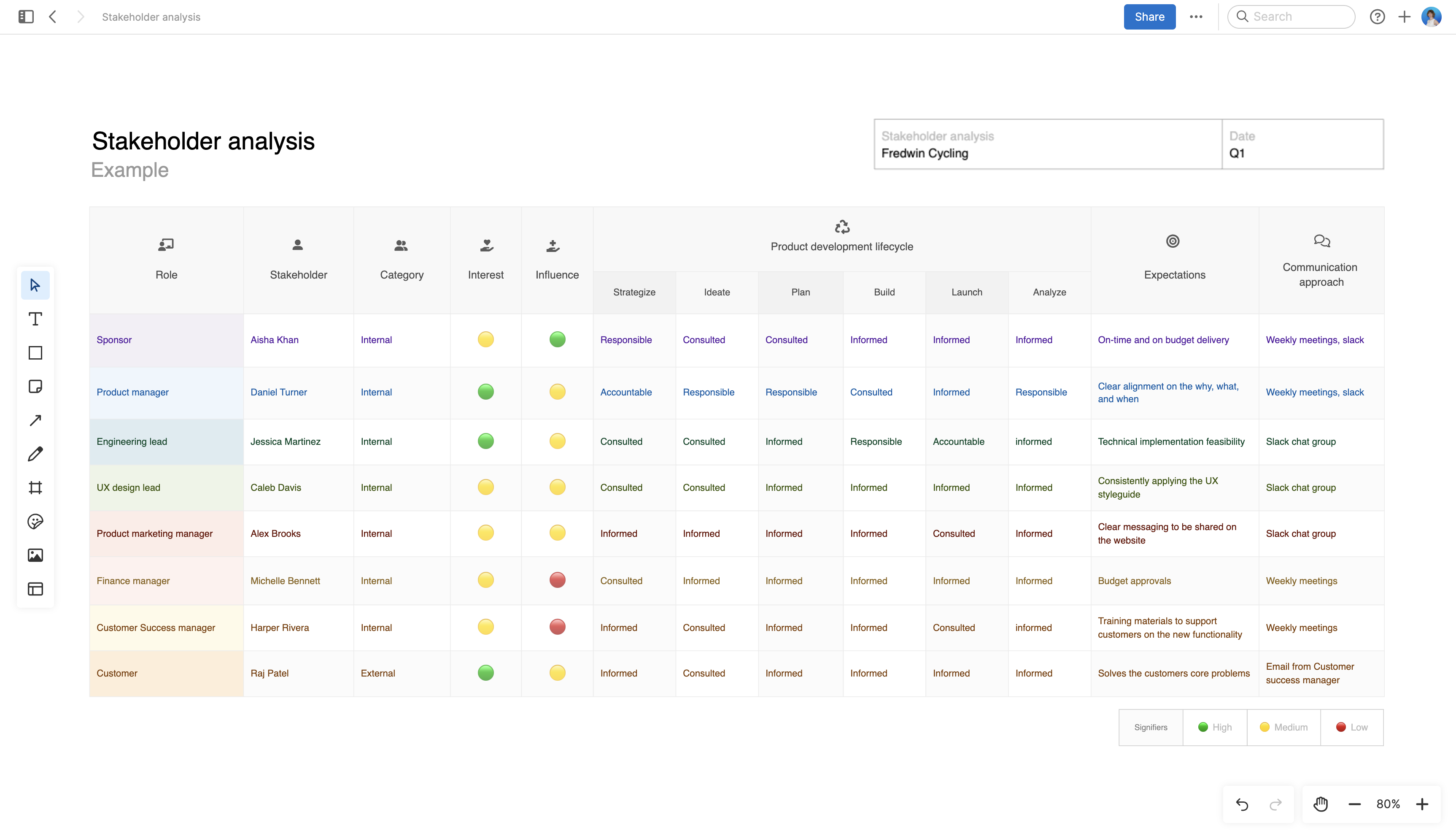
This information might be readily available, but it might also require interviews or 1:1s to gather insights. Do not shy away from direct interaction — taking the time to hear individual needs firsthand is how you build trust and transparency.
Here is a list of potential questions to choose from:
What are your primary goals (or concerns) related to the product launch?
How will this work impact your role or department?
What features are most important to you?
How do you envision contributing to the success of this launch?
How critical is the outcome of this product launch for you or the team?
How would changes or delays in the launch affect your objectives?
What information do you require to feel confident about the pace of progress?
How do you prefer to receive communication? How often?
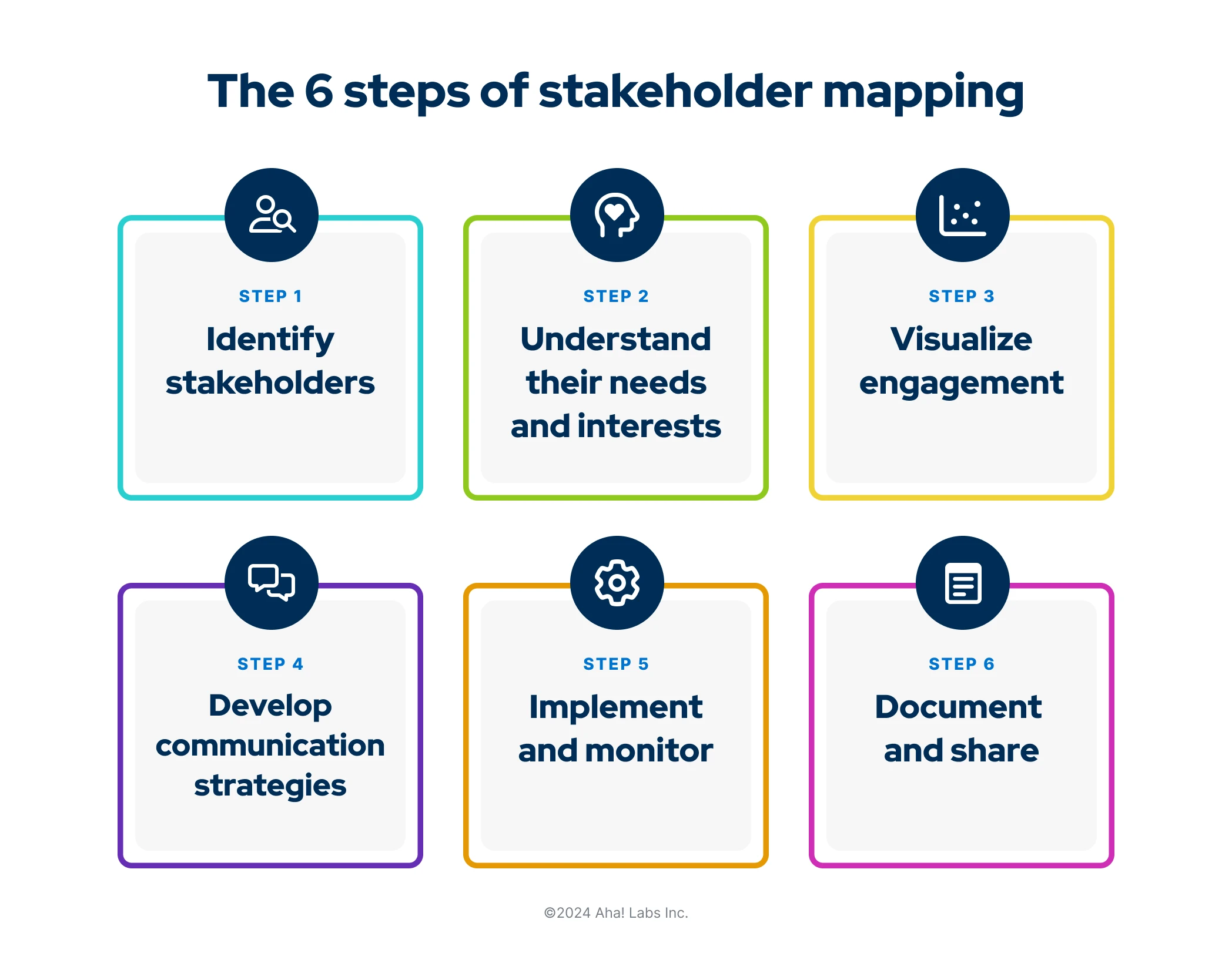
3. Visualize engagement
Assess and map everything out. Consider the potential influence and impact each stakeholder has over the product roadmap and launch. Although the words "influence" and "impact" seem similar in meaning, they hold different weights in a stakeholder map.
Influence refers to a stakeholder's ability to affect the outcomes of the launch, including:
Decision-making power: The authority to make decisions that directly affect the launch
Resource control: The ability to allocate (or withhold) necessary resources, including funding, personnel, or information
Network and connections: The capacity to influence other stakeholders through relationships and alliances
Expertise: The ability to sway the launch's direction through specialized skills or knowledge
Impact refers to how much the product launch will affect the stakeholder based on:
Professional interests: The degree to which the launch's outcome aligns with or contradicts the stakeholder's goals and interests
Operational changes: The extent of change the launch will bring to the stakeholder's role
Reputation impact: The impact on the stakeholder's reputation within the organization or industry
Financial impact: The potential financial gains or losses for the stakeholder due to the launch
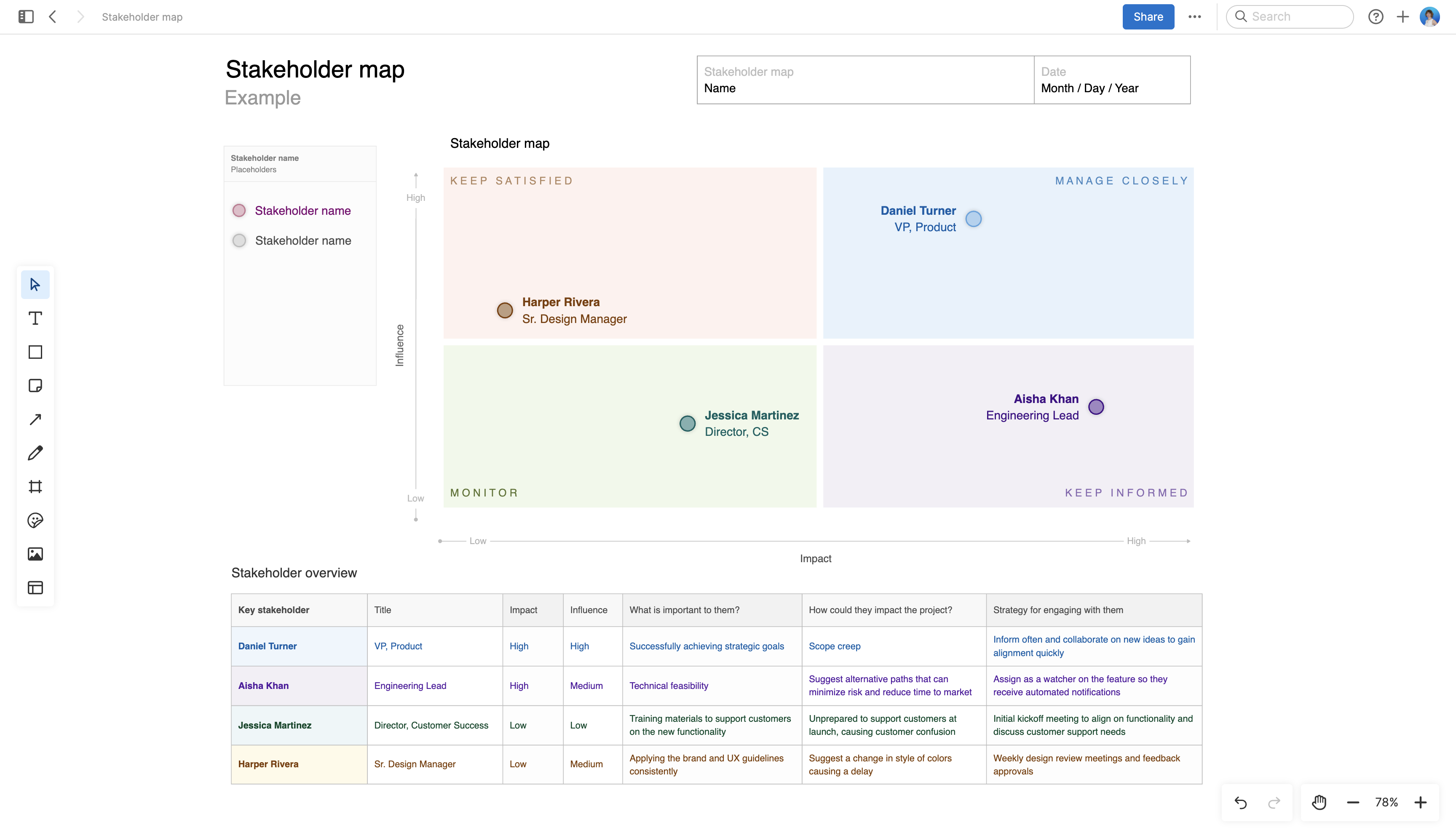
Gauge the balance of influence against impact (high to low) for each stakeholder using a matrix within your stakeholder map. All stakeholders will fall into one of four quadrants:
High influence, high impact (power players)
High influence, low impact (strategic allies)
Low influence, high impact (quiet giants)
Low influence, low impact (supporting cast)
You can use this influence-impact matrix to determine the best approach for working with each stakeholder. And keep this in mind: It is not about the label, but about making sure everyone feels like they are part of the process — at the speed and level of detail that best suits them. More on that next.
4. Develop communication strategies
Outline your approach. With your map in hand, tailor your communication strategy for each stakeholder based on their unique needs and contributions.
The matrix can help you define how to keep every stakeholder close, no matter what quadrant they land in. Let's zoom in on each one.
Power players (high influence, high impact)
These generally include executives and product leaders with significant influence and resource control. Keep them closely involved, as they have been integral since the beginning.
Sample engagement strategy:
Early involvement: Engage them early and often to align expectations.
Frequent updates: Provide regular updates on progress, milestones, and risks.
Collaborative decision-making: Involve them in key decisions to leverage their influence and expertise.
Feedback loops: Establish robust feedback loops to continuously gather and act on their input.
What this looks like in action:
Kickoff workshop: Host a workshop at the start of the product work to align on goals, roles, and expectations.
Executive summary reports: Send weekly updates linking progress to broader business goals and objectives.
Monthly strategic reviews: Make time for deep discussions on progress and involve them in any important decisions.
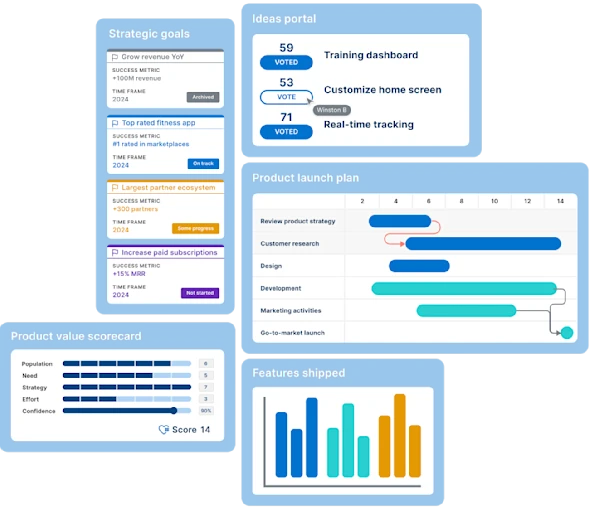
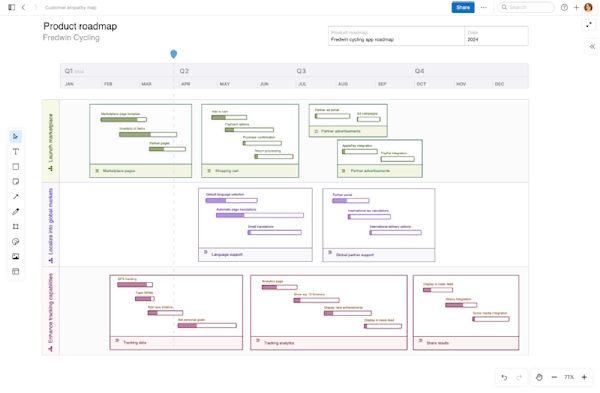
Real-time dashboards: Provide access to dashboards where stakeholders can track progress and metrics at their convenience. Include things like a release timeline, Gantt chart, and key roadmaps. In Aha! software, you can also add a text panel to summarize how the launch is progressing and schedule your dashboard to be shared via email — so everyone can get the insights they need.
Strategic allies (high influence, low impact)
These stakeholders (such as senior management) are influential, but not directly involved in the launch. They care about the big picture.
Sample engagement strategy:
What this looks like in action:
Executive summaries: Send brief monthly summaries on overall progress and key achievements.
Strategic briefings: Hold monthly or quarterly strategy sessions to discuss broader business objectives. Address any concerns they might have, answer questions, and leverage their influence where needed.
Recognition: In your updates, call out where their influence has positively affected the launch.
Quiet giants (low power, high interest)
These stakeholders, often cross-functional team leads, are deeply invested in the product’s success and can provide valuable insights and support.
Sample engagement strategy:
Regular updates: Keep them consistently informed on launch progress.
Active listening: Seek and value their input.
Empowerment: Provide the necessary resources and support.
What this looks like in action:
Consistent briefings: Regular weekly or biweekly updates.
Interactive workshops: Engage in detailed launch preparations, such as workshops, beta testing, or training sessions.
Feedback channels: Set up dedicated feedback channels, such as check-in meetings, a Slack thread, or email updates.
Resource support: Provide access to the necessary resources, training, and support. Use an internal product knowledge base to consolidate and streamline this information in one place.
Supporting cast (low influence, low impact)
These peripheral team members benefit from being informed. Keeping them in the loop also fosters a culture of transparency.
Sample engagement strategy:
What this looks like in action:
Monthly newsletter: Include a brief section on the product launch in your company's monthly newsletter.
Intranet updates: Post updates and more detailed information within your organization's internal product wiki.
General meetings: Showcase the product launch in a general or all-hands meeting.
Feedback option: Provide a low-effort way for them to give feedback, such as a public ideas portal.
5. Implement and monitor
Monitor stakeholder engagement across the map and periodically check how things are going, especially with your power players. Schedule time with the team to evaluate the communication plan. Does each group feel informed and engaged? Are there any gaps in understanding?
Stakeholder needs and launch dynamics change over time, so be ready to adjust your strategy. If you notice issues or get feedback that indicates frustration, you might need to refine someone's priorities, shift how you communicate with them, or even change what kind of information you share. Just be sure to document these changes — and the reasons behind them — so you can track improvement and ensure transparency.
6. Document and share
House your stakeholder map in a workspace that is accessible to your product team. This will keep everyone aligned on who to engage, when, and their preferred communication style.
Some teams might send this out as a static doc via email or share a link to the info housed in their Dropbox or Google Drive account. We recommend storing all your product team docs within an internal product knowledge base.
Also known as an internal product wiki, an internal product knowledge base gives you a centralized place to organize everything the product team and other stakeholders need access to. Some product knowledge bases (like ours) can also connect to your roadmapping software. This way, all your information links directly to your detailed product development work.
Related:
As a product manager, you get to rally the whole company around a fresh customer experience. It is a big responsibility, but also an exciting one. When you have a team that supports you, you can charge ahead with confidence knowing everyone is behind upcoming product plans.
Virtual whiteboarding software such as Aha! Whiteboards can help solidify those stakeholder connections. You can collaborate from anywhere and share ideas in real time. Likewise, quickly adjust your stakeholder map as plans evolve — adding, shifting, and removing individuals as needed. Our library of over 100 expert-built templates (including our stakeholder map) makes it easy to kick off work with your product team anytime.
FAQs about stakeholder mapping
Why is stakeholder mapping important?
Stakeholder mapping helps you identify who matters most to your product and understand their needs and influence. It makes it easier to communicate with and engage the right people, boosting support and reducing risks. Plus, it helps you allocate resources more effectively by showing you where to focus your efforts.
How do you identify stakeholders?
Identify stakeholders by analyzing who will be affected by or has an influence on the project, including internal team members, external partners, and customers. Conduct stakeholder interviews, survey people, and review product documentation to gather insights. Use tools such as stakeholder maps to categorize and prioritize them based on their influence and impact.
How often should a stakeholder map be updated?
A stakeholder map should be updated regularly — ideally at major project milestones and at least quarterly — to ensure it reflects current stakeholder positions, influence, and impact. Additionally, updates should occur after significant organizational changes, major project adjustments, or after receiving new stakeholder feedback.
What tools can be used for stakeholder mapping?
We recommend a whiteboarding tool such as Aha! Whiteboards. It integrates your visual whiteboarding work, including your stakeholder map, into your product management software. This allows teams to map out stakeholder relationships, align their interests with product goals, and incorporate stakeholder needs into roadmaps and strategic plans — enhancing decision-making and product success.