Stakeholder map template
Identify individuals and groups involved in product decisions
About the stakeholder map
Who are the key stakeholders for your product? How can you identify and prioritize their interests and concerns? A stakeholder map is a good place to start.
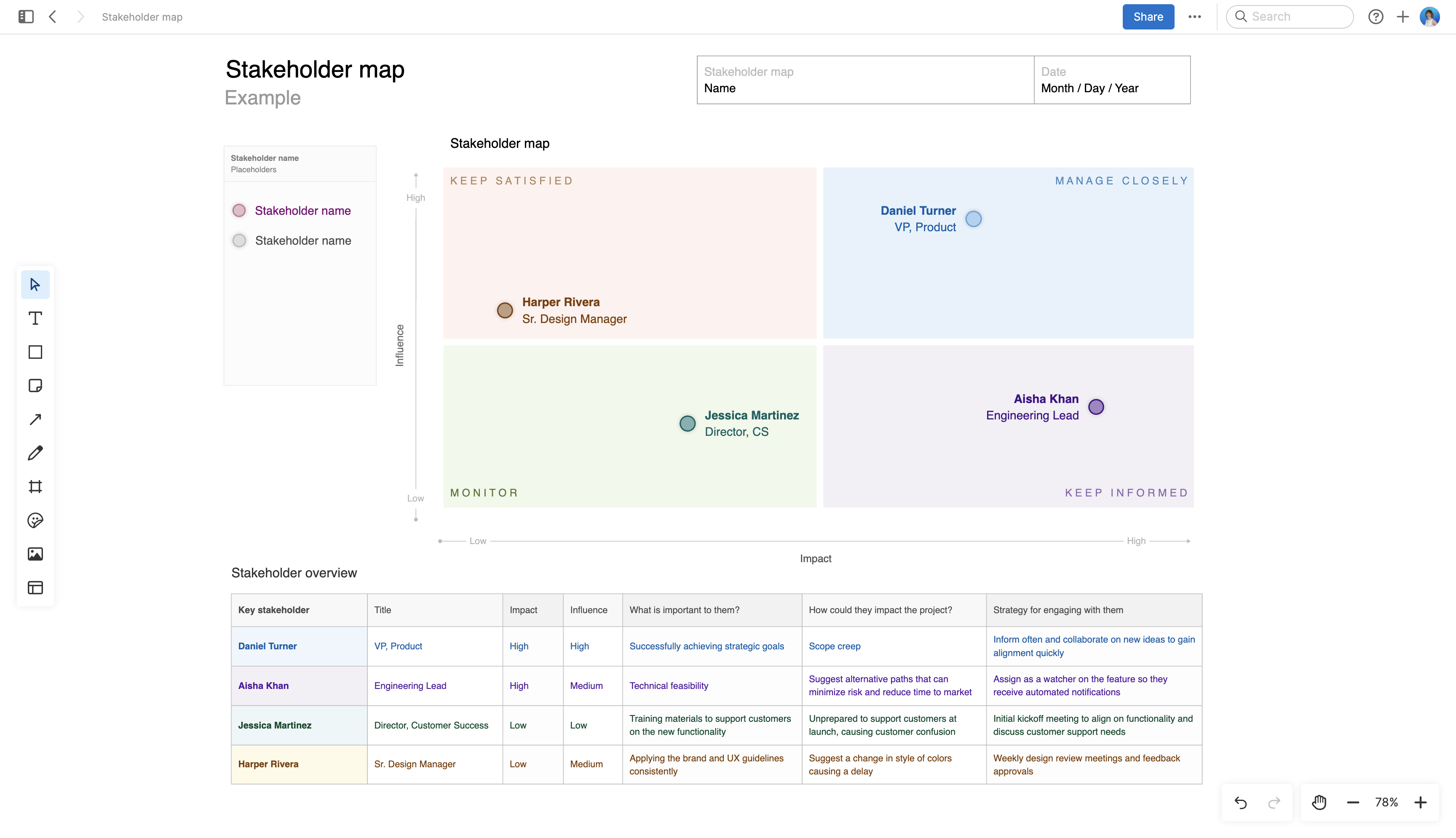
This template helps you identify, categorize, and understand the various individuals or groups that can influence or be impacted by product changes. The idea is to visualize their influence and impact on a map — so you have a better idea of how to proactively communicate the information they need and anticipate any areas of risk.
Think deeply about how you can align the interests of various stakeholders with your product's goals and vision. It is crucial to navigate relationships successfully and work with stakeholders to drive product success.
Best practices
Create a stakeholder map for a smoother product development journey.
Identify key stakeholders Start by filling in the Stakeholder overview table. List out the individuals, groups, or organizations involved and assess their influence and impact.
Understand needs and interests Analyze each stakeholder's expectations to get a clear picture of what matters most to them. Consider their level of interest and overall ability to make decisions, allocate resources, and impact outcomes.
Visualize relative importance Use the influence-impact matrix to figure out the best approach for working with each stakeholder — from managing them closely to keeping them satisfied or informed. Then, outline your approach for engaging with each stakeholder.
Monitor and update Regularly review and update your stakeholder analysis as work progresses and stakeholder dynamics change. New stakeholders may emerge and existing ones may change their level of interest or influence.
FAQs about the stakeholder map template
Who should use a stakeholder map template?
This template works well for product managers, program managers, and project leads who need to coordinate across multiple teams or departments. It is especially useful ahead of a major launch, a reorganization, or any initiative that touches groups outside your immediate team.
Why is a stakeholder map helpful?
Without a shared view of who is involved, it's easy to undercommunicate with people who need more attention and overcommunicate with those who do not. Mapping stakeholders by influence and impact gives you a rationale for how you prioritize outreach — rather than relying on guesswork or habit.
How does a stakeholder map fit into a broader product strategy?
A stakeholder map is not limited to a single meeting or milestone. Teams often revisit it whenever a strategy shifts, a reorg changes reporting lines, or a new group gains a stake in the outcome. Kept current, it becomes a reference for who to loop in whenever plans change.
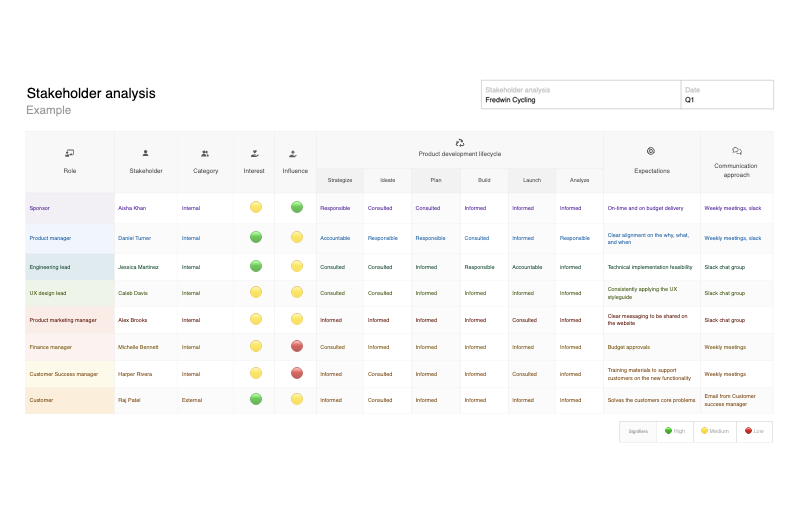
How is a stakeholder map different from a stakeholder analysis?
A stakeholder map focuses on visualizing influence and impact so you can plan how to engage each person. A stakeholder analysis goes a layer deeper, documenting each stakeholder's specific interests, concerns, and expectations. Many teams start with the map, then build out a full analysis for the stakeholders who need closer attention.
Is this template free to use?
Yes. To use this stakeholder map template, sign up for a free 30-day trial of Aha! Whiteboards. (You can also try this template in Aha! Roadmaps if you need a complete product management solution.) Easily customize the template to suit your needs, then share it with as many people as you want (for free) to streamline collaboration.