Key product roadmap components: What to include and why
Discover the core elements that make up a winning product roadmap
Last updated: September 2026
A product roadmap visualizes the plan for how your product is going to meet a set of business objectives. It details the direction of your product and the work required to get there. Product managers can also use a roadmap to share the product direction and progress to internal teams and external stakeholders.
So, how do set up a product roadmap that includes all the right pieces to communicate this effectively? In this guide we will show you how. Jump ahead to any of the sections below:
What should a product roadmap include?
A product roadmap should include the information your audience needs to understand product direction, planned work, and progress. The right mix of components depends on who will use the roadmap and the decisions it needs to support. For example, executives often need a strategic view of goals and initiatives, while delivery teams need more detail about releases, features, timing, and status.
But in general, most roadmaps rely on the same core elements. Here is an overview of what your product roadmap should include:
Product | A product can be an item (hardware or software), service, idea, method, or information that satisfies a need or a want. It has a combination of tangible and intangible attributes (benefits, features, functions, uses) that a seller offers a buyer for purchase. |
Goal | Goals are measurable, time-bound objectives that have clearly defined success metrics associated with them. They are included in a product roadmap to show the critical accomplishments required to make the product vision a reality. |
Initiative | Strategic initiatives represent high-level efforts or big themes of work that need to be completed to achieve the goals. You can overlay initiatives on a roadmap to show how specific releases and features relate to the strategy. |
Release | A release is typically the launch of new functionality for a product that provides value to customers. Releases often contain epics or multiple features that get delivered at the same time. |
Epic | An epic is a large user story that cannot get delivered as defined within a single release. It is often broken down into small features or user stories that can get delivered incrementally. |
Feature | A feature represents new or improved functionality that delivers value to users. Features provide more detailed information about new functionality. |
User story | A user story defines a new software feature from an end-user perspective — including what the user wants and why. You can use the words “feature” and “user story” interchangeably. |
Time | Product roadmaps typically include dates to show when new products and updates to existing ones will be completed and released. The time scale used depends on the level of detail required and can range from days and weeks to months, quarters, and sometimes even years. |
Status | Product roadmaps are even more useful when they clearly explain how the team is progressing against planned work. Status indicators for goals, initiatives, releases, epics, and features are a great way to highlight the current state of a plan. |
If you are unsure whether your product roadmap is complete, ask AI for another perspective. It can review your roadmap through the lens of a stakeholder, flag missing information, and surface questions your audience may have. In Aha! Roadmaps, AI can also help you assess how well planned features align with your product strategy.
Build a brilliant product roadmap — try Aha! Roadmaps
Related:
What should a product roadmap not include?
A product roadmap should not include every idea, backlog item, or bug. It communicates product direction and planned outcomes, rather than serving as a complete inventory of work.
Keep these planning artifacts separate from your roadmap:
Collections of customer ideas and feature requests
Backlogs of unprioritized or future work
Bug reports and other detailed issue-tracking records
Product roadmap examples: What to include for different types
You may create different roadmap versions depending on your audience or based on information you want to specifically highlight. A few examples of visual product roadmaps you can build in Aha! Roadmaps are listed below:
Portfolio roadmap
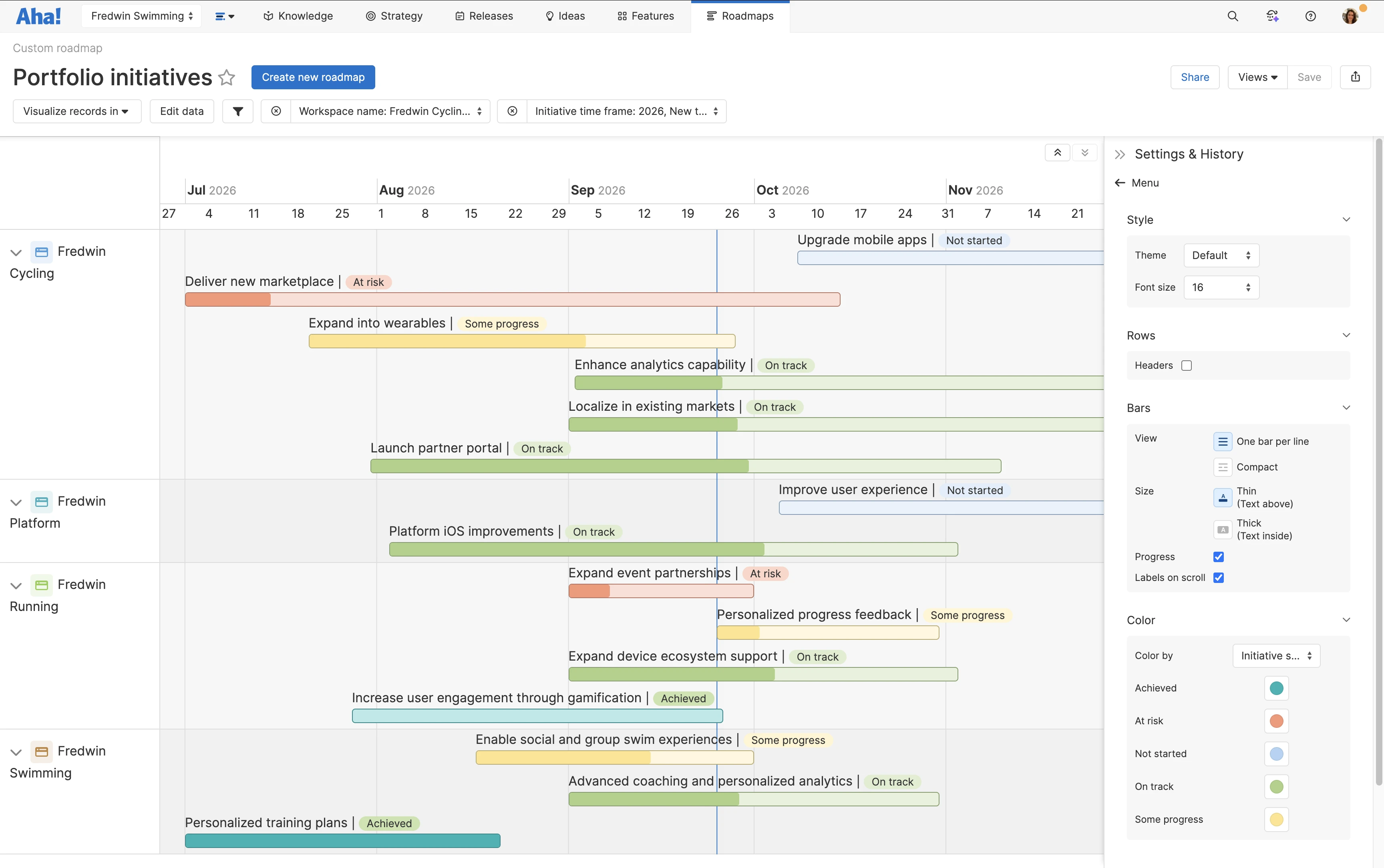
A portfolio roadmap is perfect for displaying your planned releases for multiple products in a singular view. You can use a portfolio roadmap when you need to provide a strategic overview to your executive team or advisory boards. It also helps your internal teams acknowledge how specific projects relate to one another.
This portfolio roadmap shows planned work throughout the Fredwin Software portfolio.
Strategy roadmap
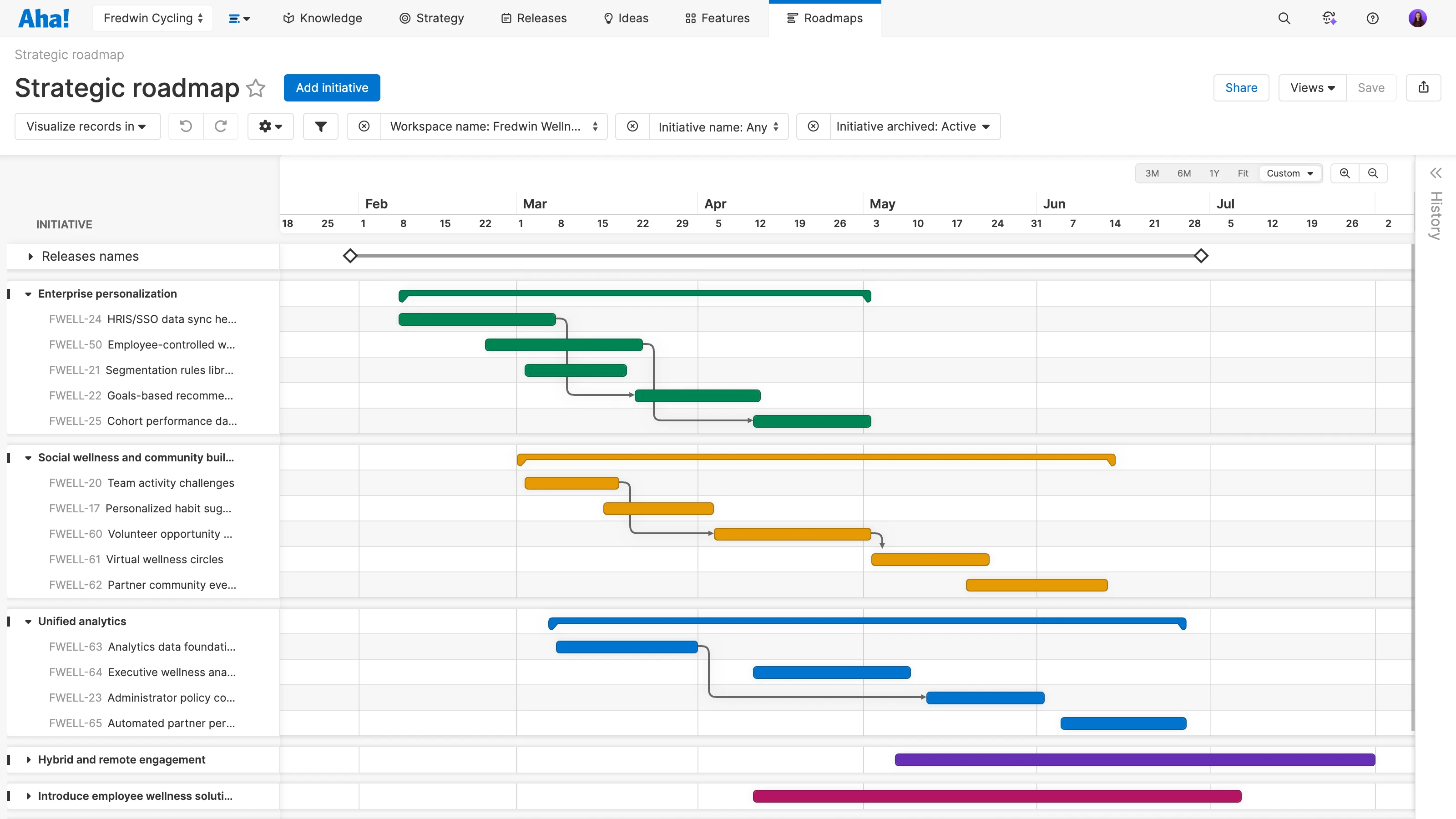
A strategy roadmap represents your strategic product initiatives. This is great for displaying the high-level efforts you need to complete to achieve your goals. It is an ideal view for executives and other stakeholders. It can also be useful to help internal teams understand how releases contribute to overall business strategy.
A strategy roadmap gives a high-level view of progress towards goals.
Releases roadmap
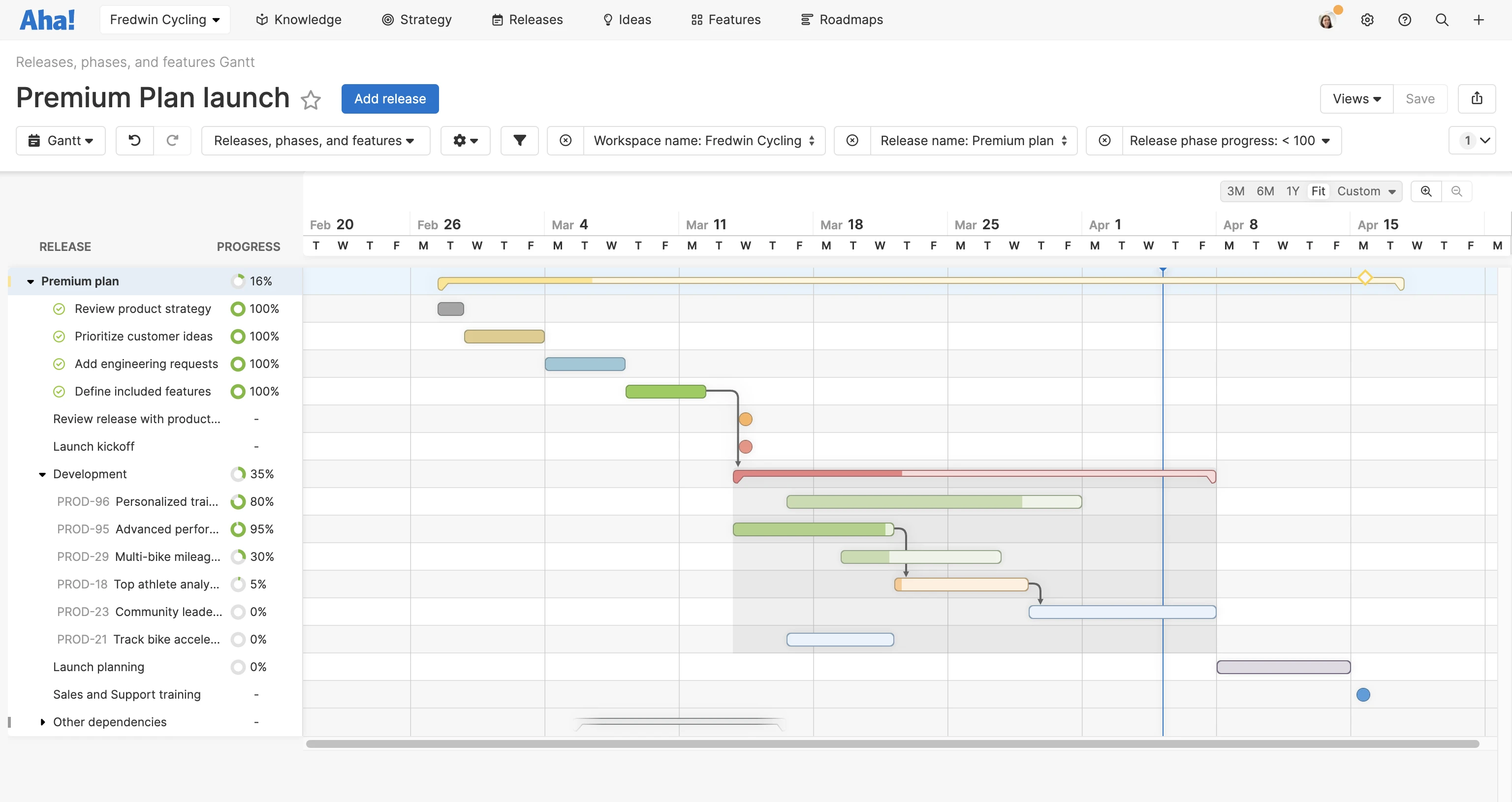
A releases roadmap is used to plan product releases. It is a good view for displaying key activities, such as phases and tasks that need to happen to bring your release to market. This roadmap is also great for communicating the delivery of critical features. Use a releases roadmap when you need to coordinate release activities with other teams, such as marketing, sales, and support.
A releases roadmap aligns everyone around what is coming, what needs to be done, and when.
Features roadmap
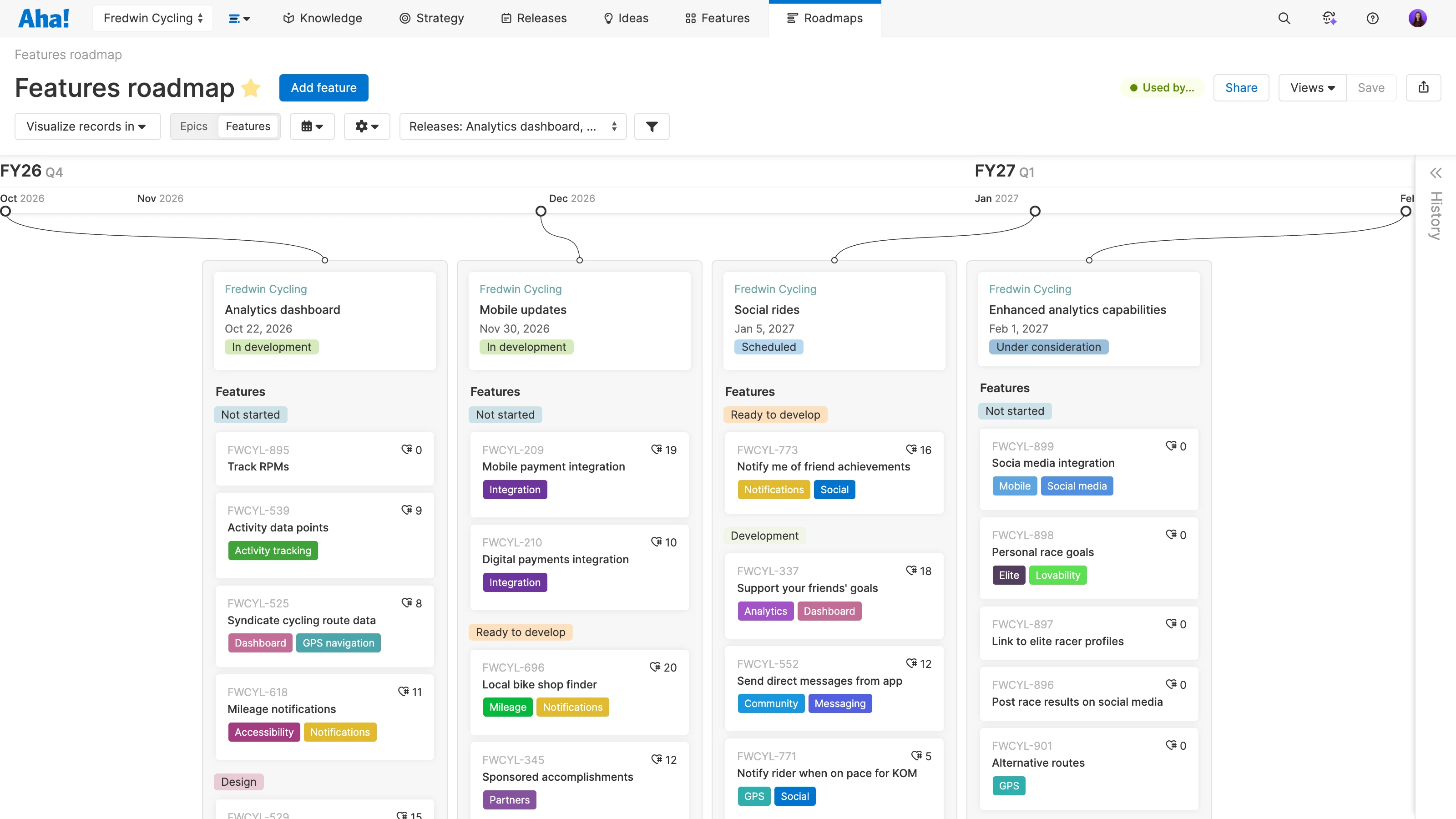
A features roadmap shows the timeline for delivering new features.. You can use a features roadmap when you need to provide details about what is coming relatively soon to customers or internal teams. For organizations that follow a continuous deployment approach, features roadmaps are helpful for communicating near-term product plans.
A features roadmap displays the features or user stories that will be completed in the coming months.
Choose roadmap components that give each audience a clear view of product direction, planned work, and progress. Start with your strategy, then select the goals, initiatives, releases, features, timing, and status information that will help people understand what is ahead and why it matters.