What is a product portfolio roadmap?
Last updated: February 2024
Managing a product portfolio suite is complex work. Besides keeping track of multiple dates and dependencies, you have to make sure that each product is progressing against the broader goals and supporting all the other products in the portfolio. This is why many teams rely on portfolio roadmaps to link the complex relationships that exist across different products.
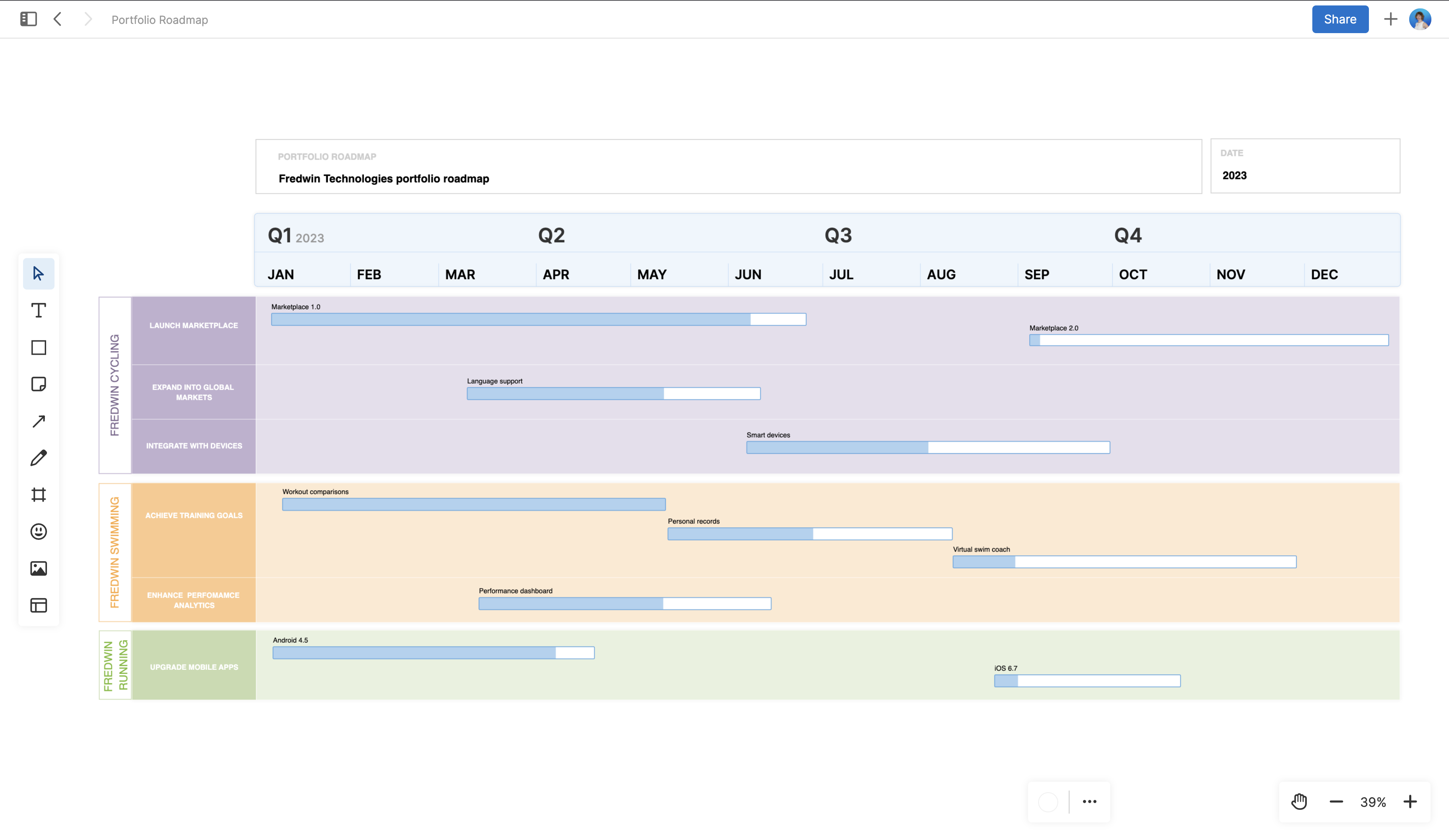
A portfolio roadmap is a tool that provides a clear picture of a company's overall product strategy and timeline for all its initiatives. Portfolio roadmaps showcase multiple product plans on a single roadmap to help executives and product managers understand how each product relates to the overall goals and initiatives.
Constructing a product portfolio roadmap brings visibility to the key areas of strategic investment across your comprehensive product portfolio. Seeing everything laid out in one view makes it easy to track progress and keep the team aligned on the work that matters most.
Create your own portfolio roadmap in Aha! Roadmaps — free for 30 days.
Use the following links to jump ahead to a specific section:
Benefits of a portfolio roadmap
When you create a product portfolio roadmap, you can link strategy across products as well as up to the product line, division, and ultimately, the company. Connecting the goals and initiatives within a product portfolio ensures that the strategy set at the product line level is consistent with the strategy set for each product. This provides organizations with much-needed clarity and analysis at the macro level.
For example, consider a suite of products with a shared underlying platform. If one product has an initiative to improve analytics, the company can deliver a more consistent user experience if all the products in the portfolio adopt this as an overarching initiative. Instead of each group focusing on its own offering in isolation, teams can work together to make sure that the initiatives set for each product support the initiatives set for the product line. (This is also why many companies choose to bring portfolio product managers and program managers on board. These folks focus more on the success of related products or projects that support specific strategic initiatives.)
Portfolio planning can also spur innovation — because seeing the portfolio-level direction in one view makes it easier to notice any gaps in strategy. This can spark new ideas as you spot opportunities that could support the goals you have already established.
Below is a sample portfolio roadmap for a fictitious product line called Fredwin Platform. Within the product line, there are multiple products: Fredwin Cycling, Fredwin Swimming, and Fredwin Running. This single view presents the overall direction and links across the products.
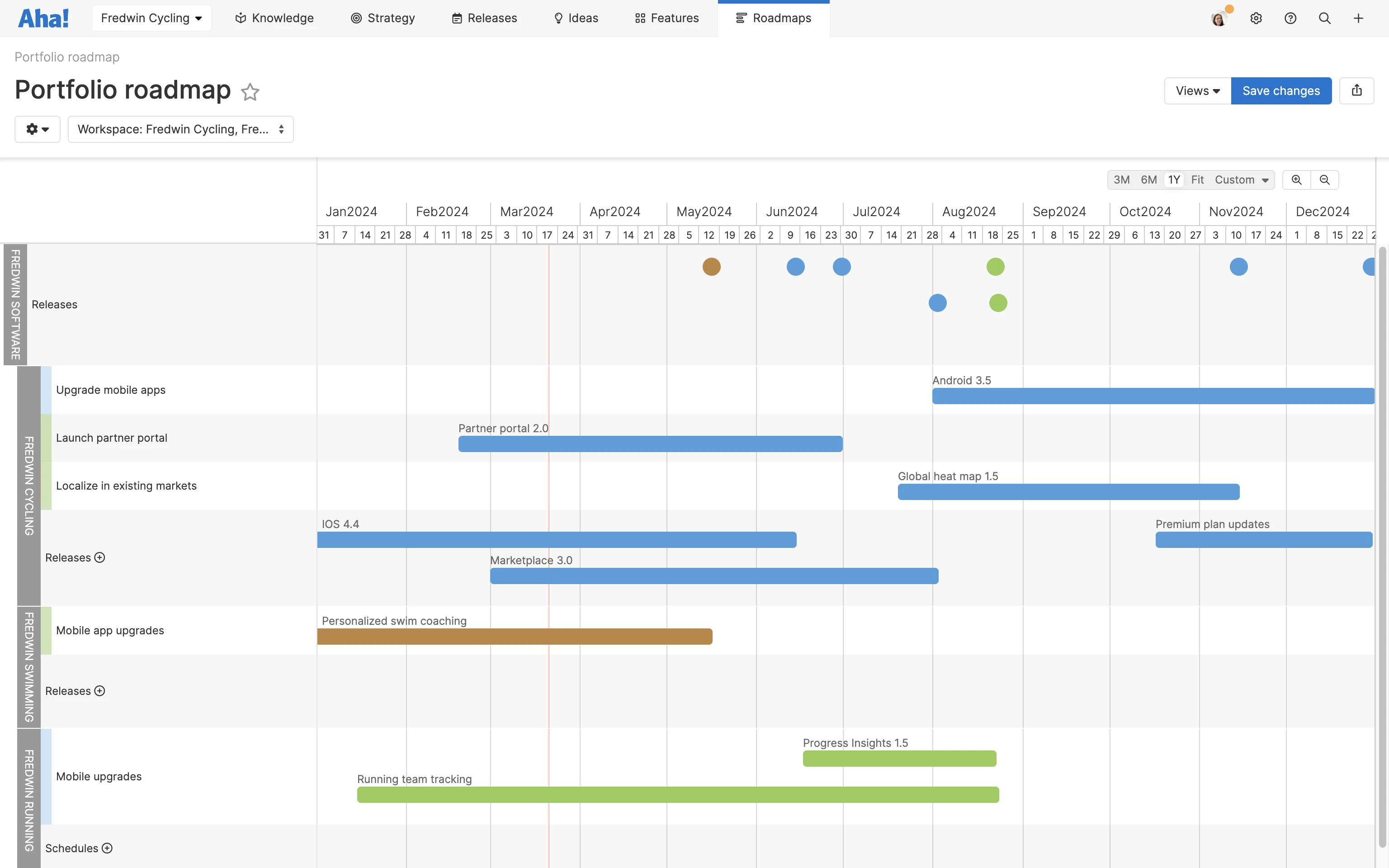
In this example, note that there is one item in the general "Releases" swimlane for Fredwin Cycling. This means one product had a release that did not roll up to any particular company or product line-level strategy — underscoring the importance of adhering to strategic tie-ins during execution.
A centralized view ensures that each product in the portfolio is working toward building the right features and is focused on the key initiatives that roll up to initiatives at the product-line levels.
Related:
How to create a portfolio roadmap
Use a portfolio roadmap to show executives and teammates a consolidated view of product plans. Here are four key steps for building your first portfolio roadmap:
Step 1: Identify your goals
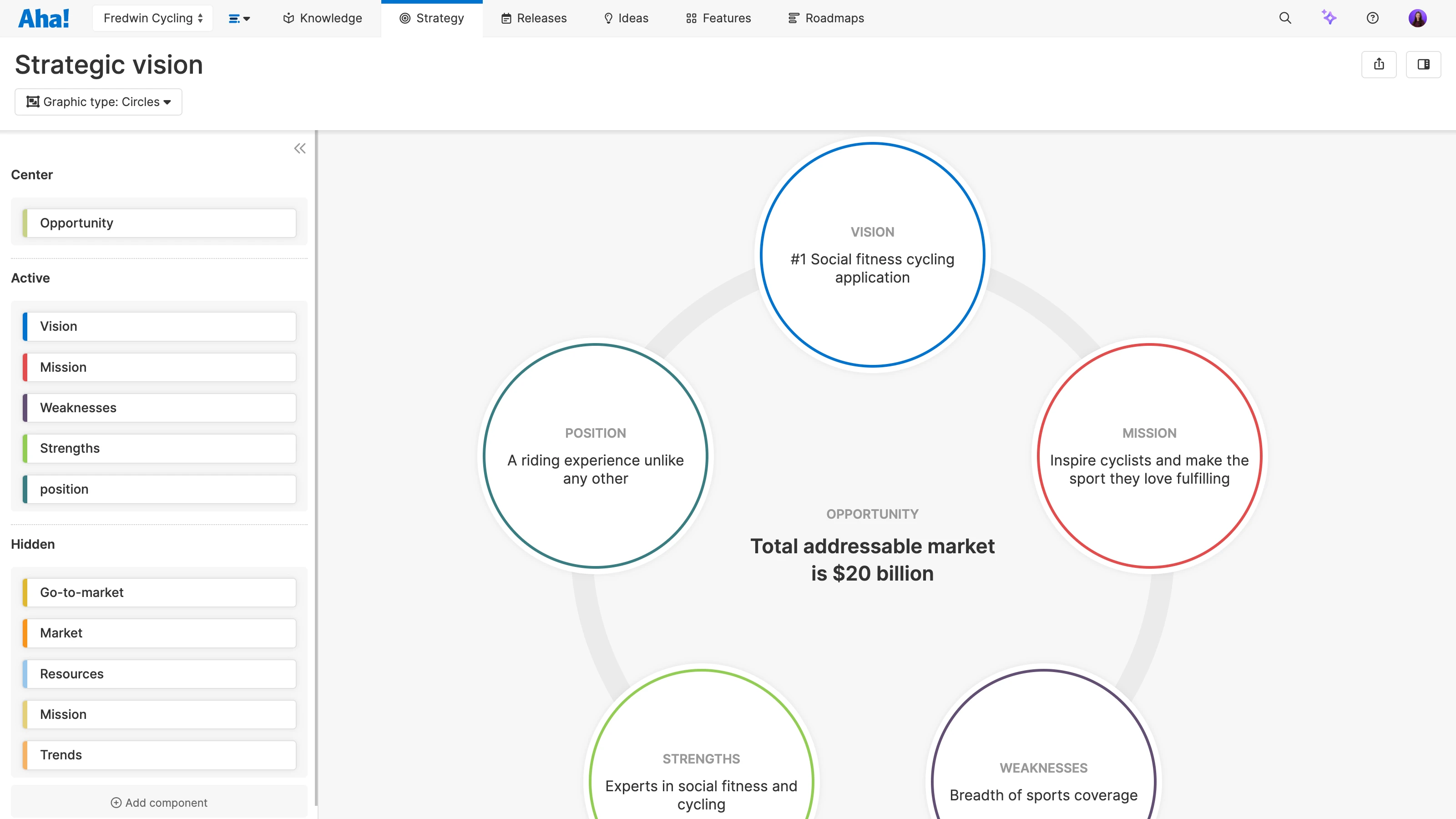
Set the overall vision and identify goals at the top level of your product portfolio. You can set strategy at either the product-line level or company level. Identifying the vision and business goals for the portfolio helps the organization better understand where you are going as well as the success metrics that you want to achieve.