12 SWOT analysis templates for product teams
Last updated: March 2024
Building a comprehensive business or product strategy is no simple task — but it is critical for establishing a vision that can lead your team to success. There are a number of important elements to consider when planning how to turn your product ideas into viable solutions that customers love. Strategic planning templates can help make this process easier and more organized.
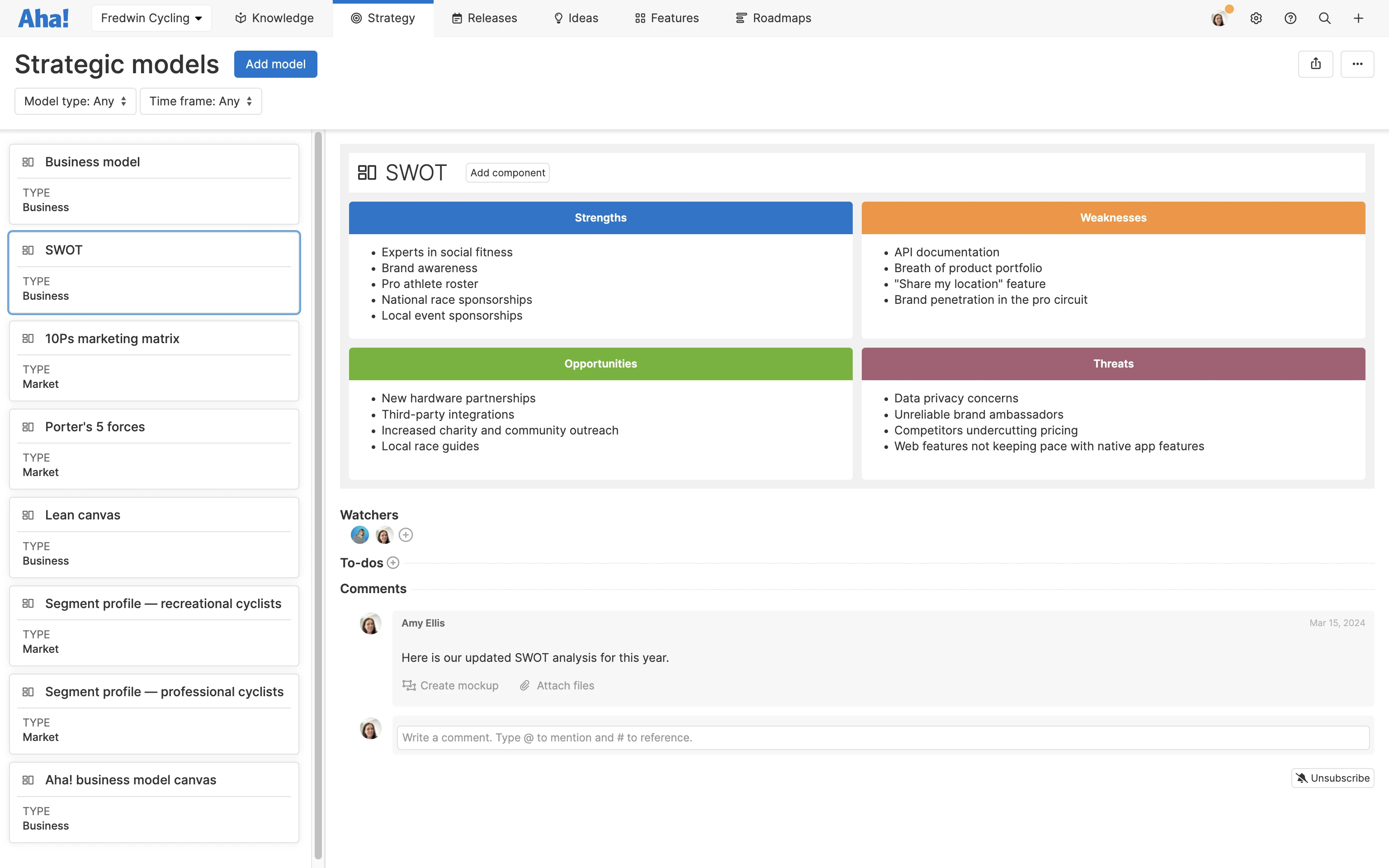
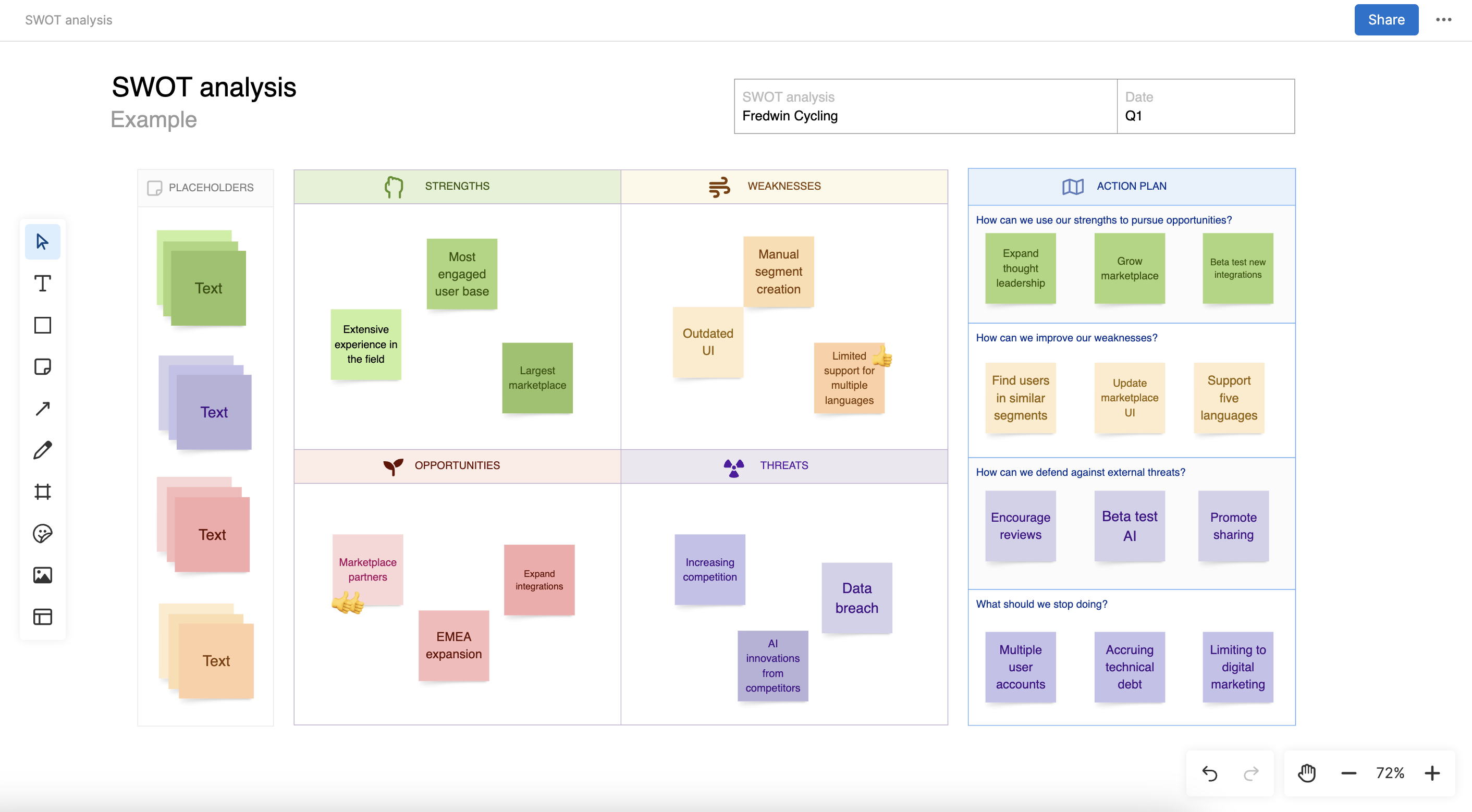
One of the most common strategic planning templates is a SWOT analysis template — strengths, weaknesses, opportunities, and threats. Many business leaders and product managers use SWOT analysis templates to get a clear picture of internal and external factors influencing their success.
Folks using Aha! software can conduct this analysis with built-in SWOT templates to streamline this work. You can also use the Excel and PowerPoint templates found in this guide.
Customize a SWOT analysis template in Aha! software. Sign up for a free trial.
Excel SWOT analysis templates
These Excel templates are a great starting point to bring visual planning into spreadsheets.
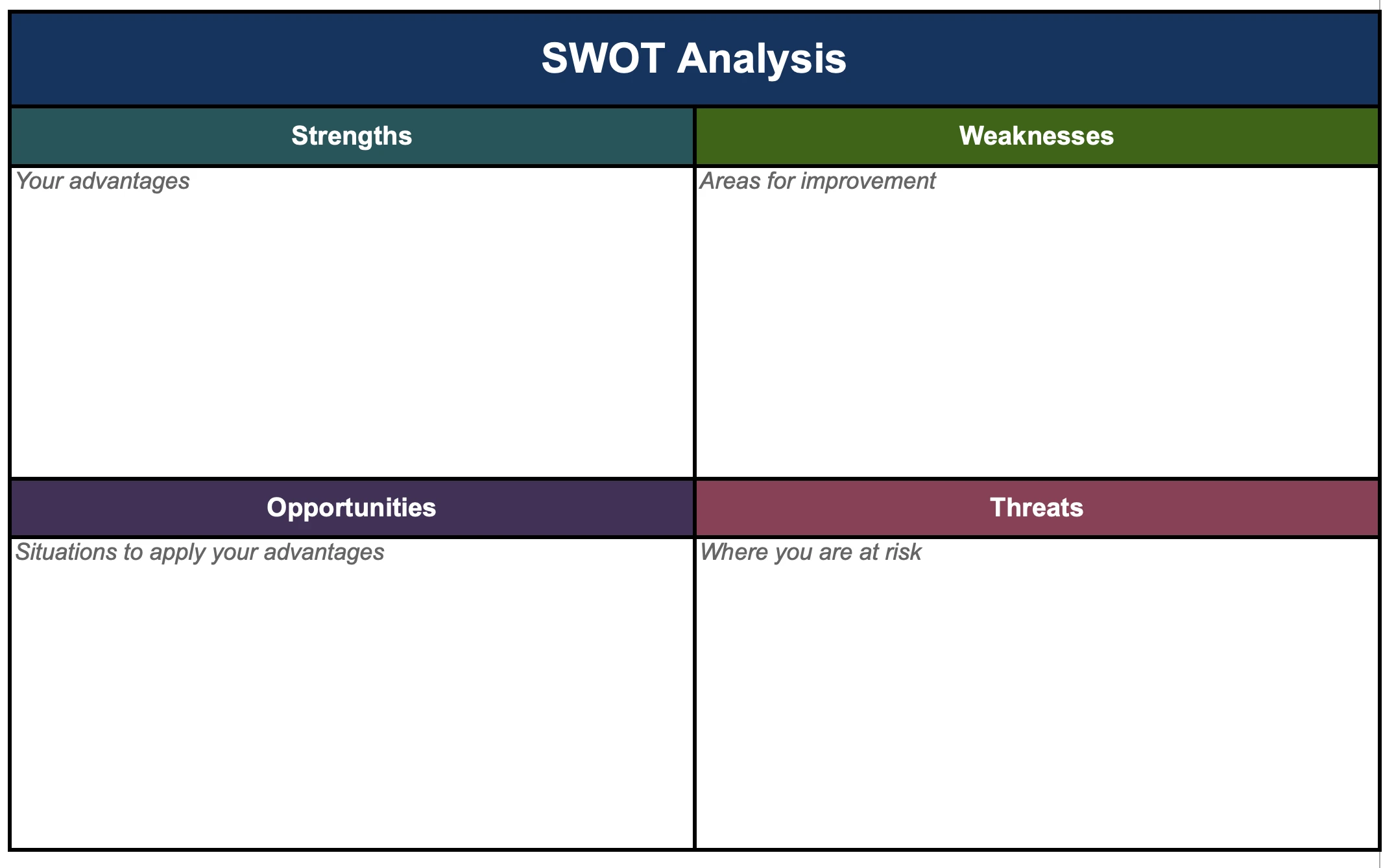
Simple matrix SWOT analysis template for Excel
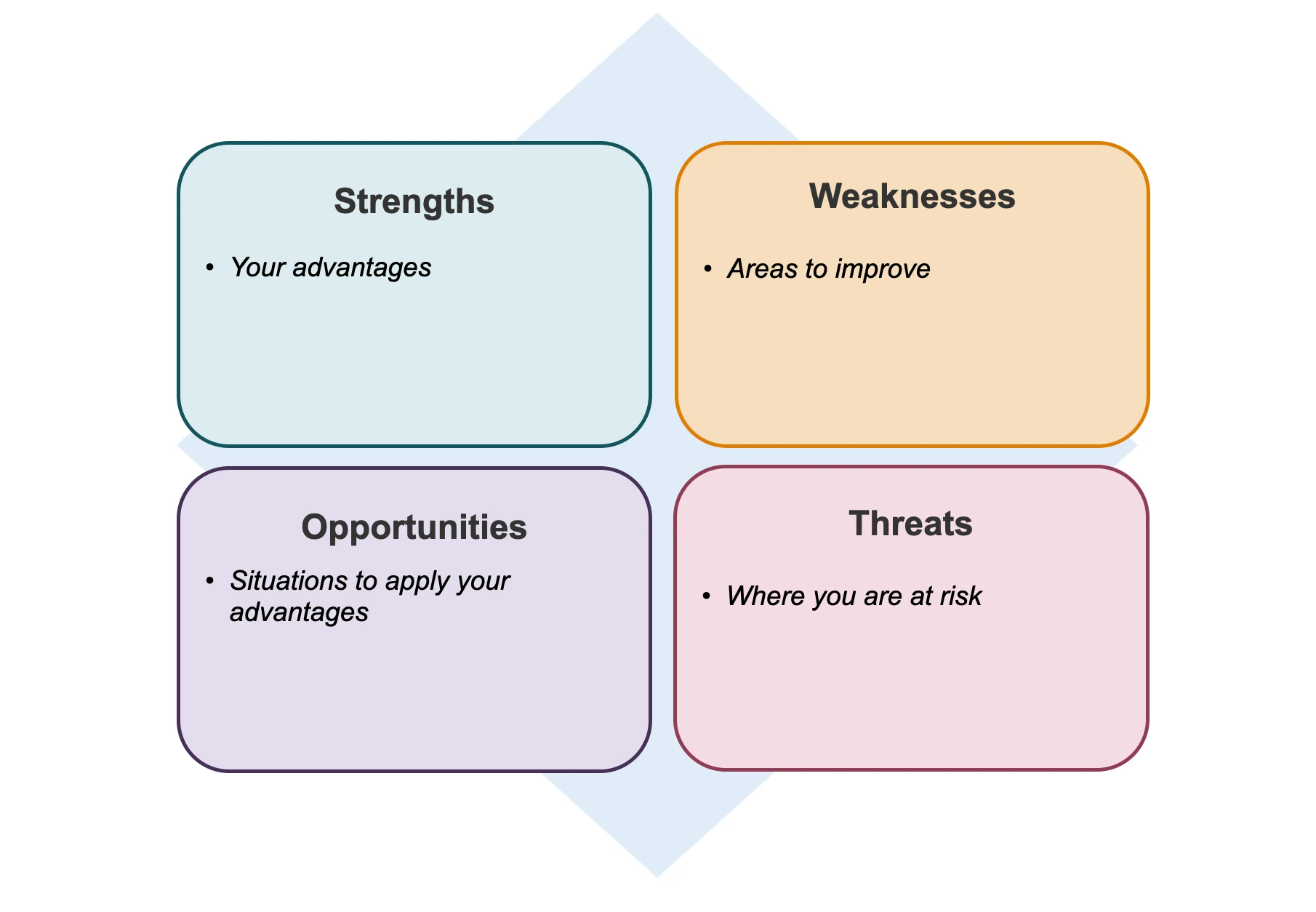
The basic SWOT matrix template is a four-quadrant table that includes strengths, weaknesses, opportunities, and threats in a color-coded grid.
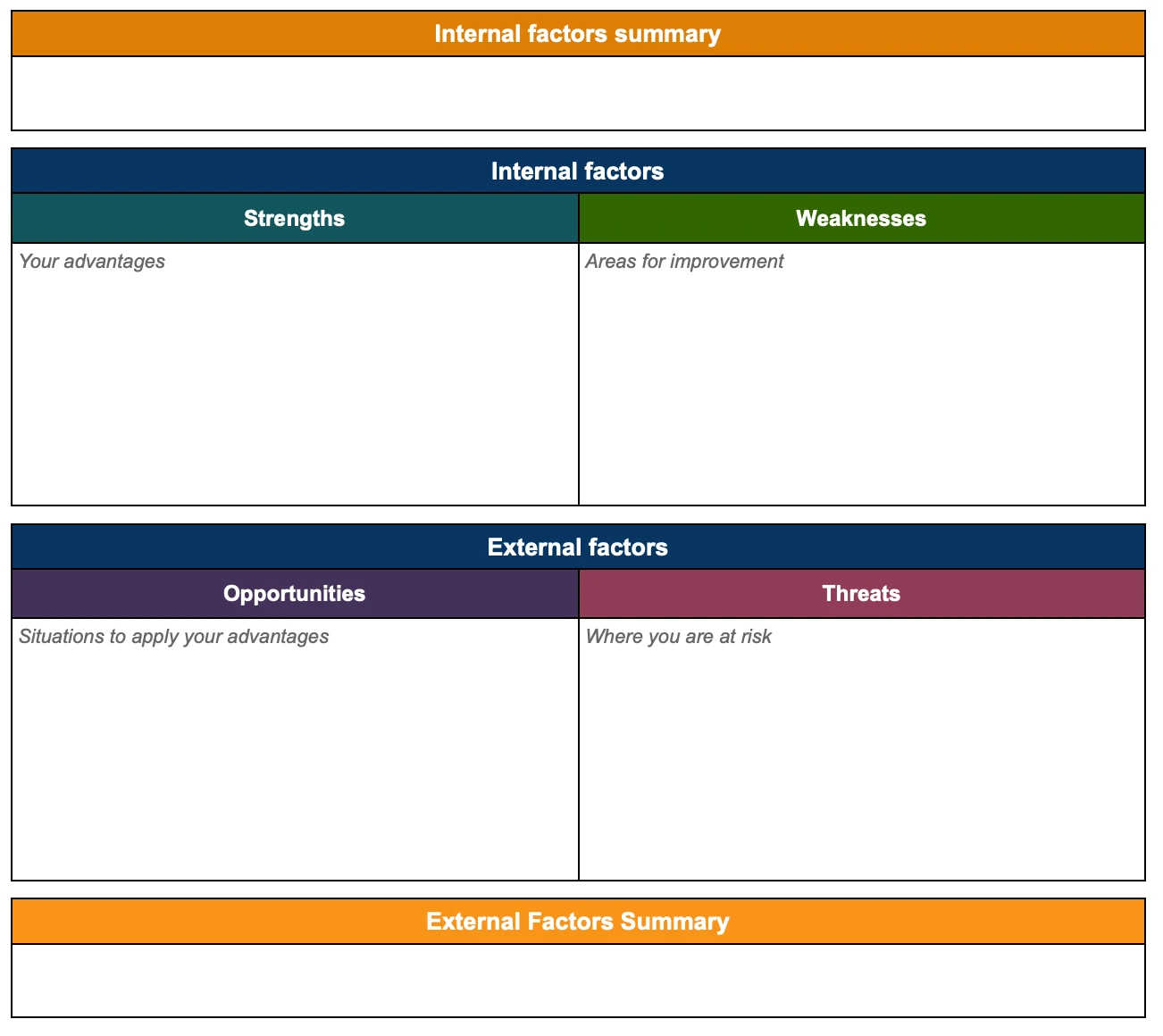
SWOT analysis template for business planning in Excel
The business planning SWOT template allows you to summarize key information at the beginning and end of your template — so you can provide extra context for the internal and external factors listed in the quadrants.
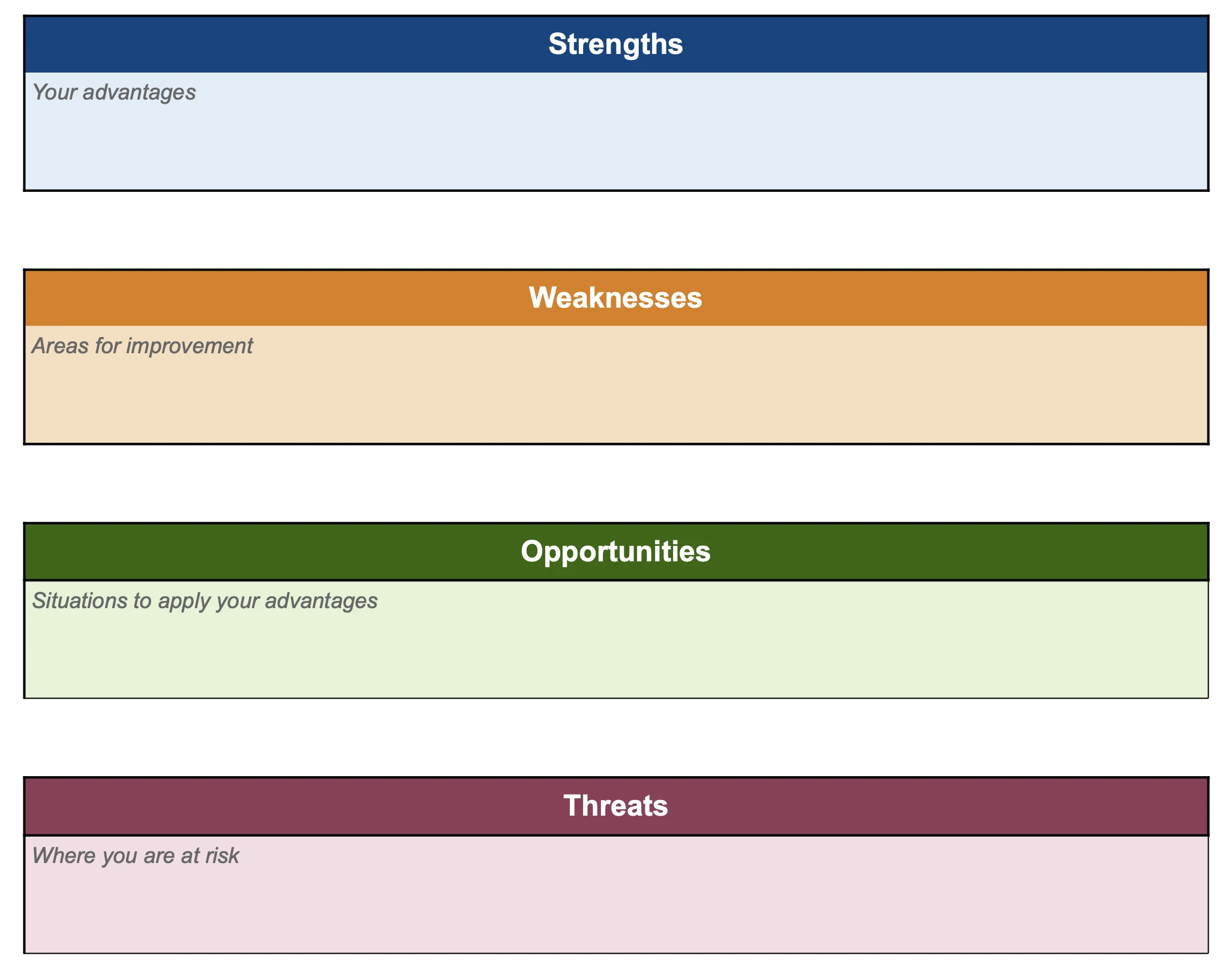
Top-down Excel SWOT analysis template
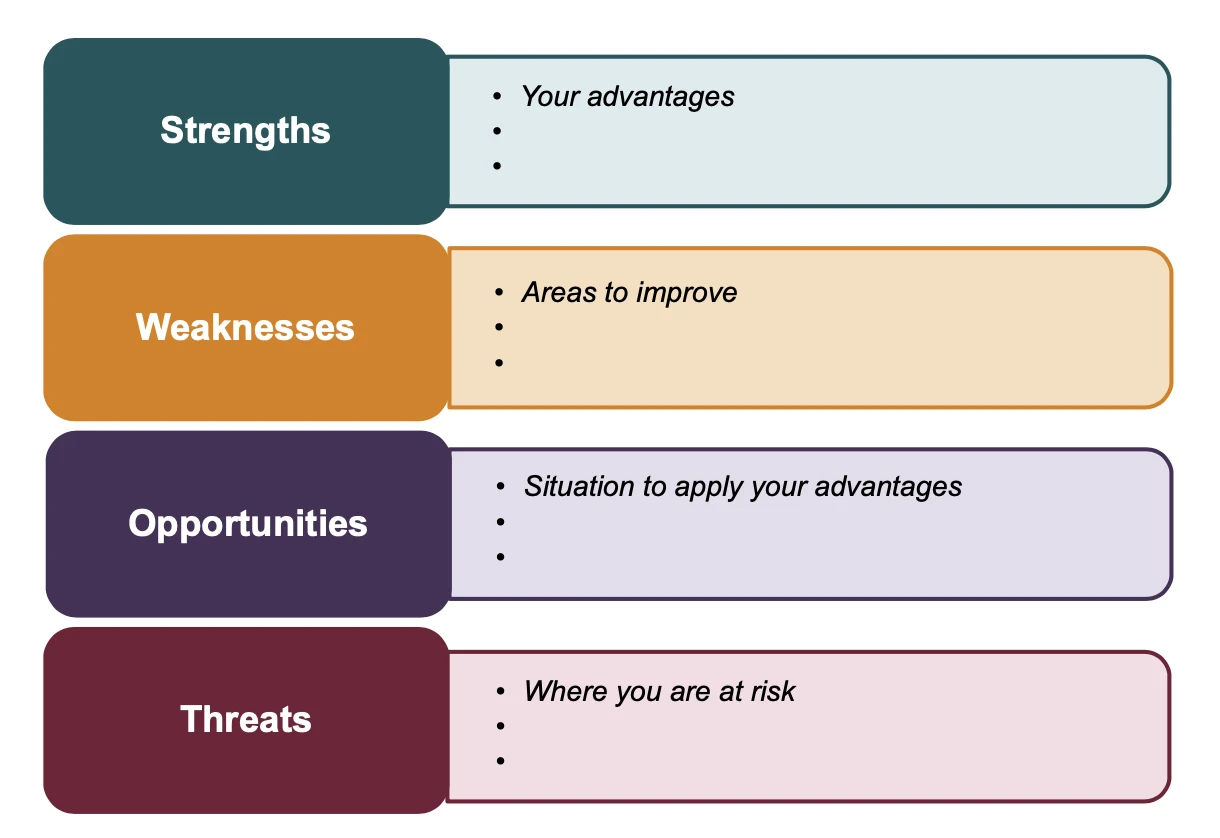
The top-down SWOT analysis template helps you focus on one component at a time and allows more flexibility to expand where needed.
Top-down PowerPoint SWOT template
This template is useful when you need to add longer descriptions. Similar to the top-down SWOT for Excel, this colorful PowerPoint template arranges the components in a vertical layout.
Competitors PowerPoint SWOT template
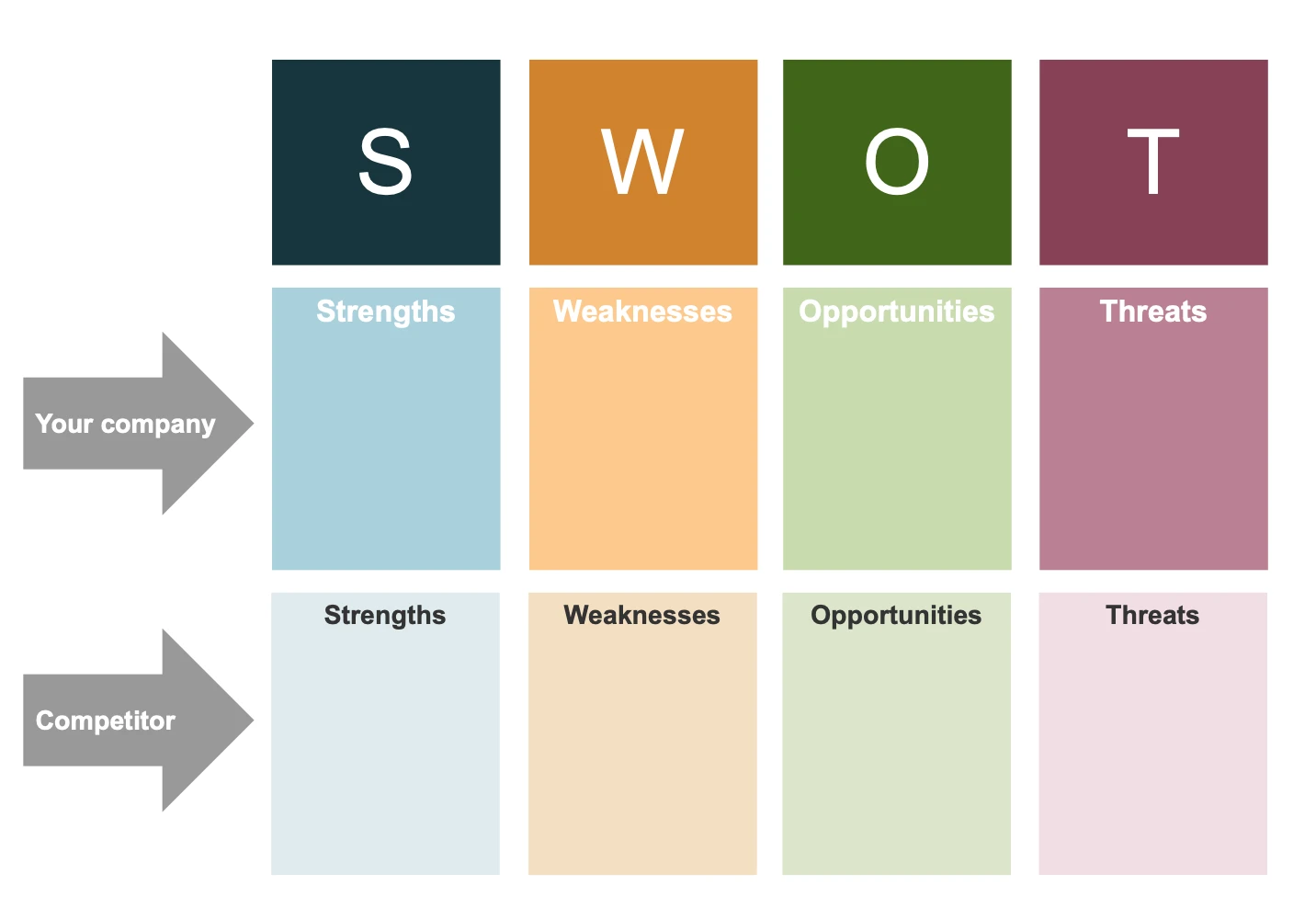
This SWOT analysis template allows you to compare internal and external factors for your organization with one competitor or a set of competitors — so you can make better decisions about where to take your product next.
Circle PowerPoint SWOT template
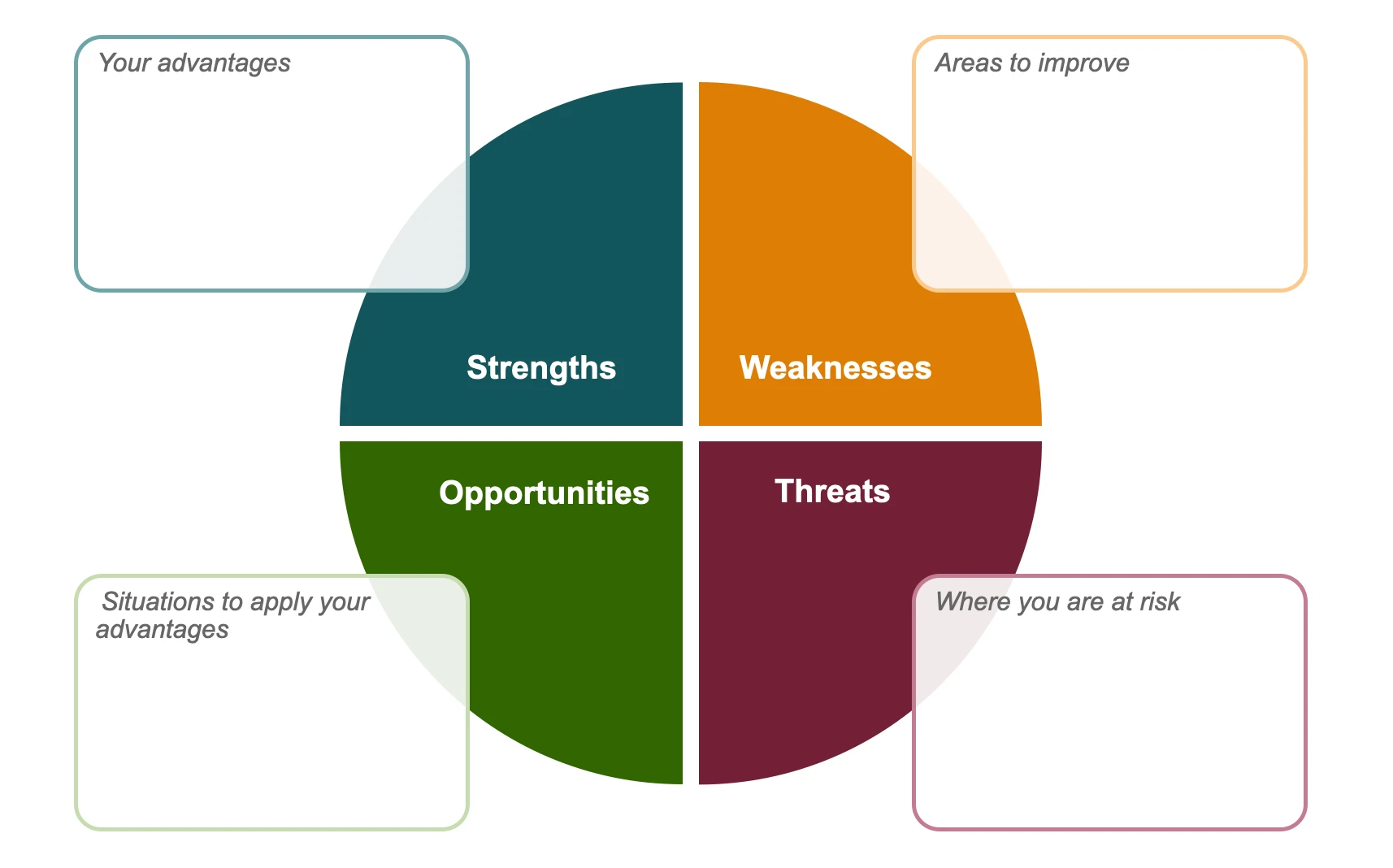
The circle template shows the SWOT matrix in the middle with call-out text boxes for each component — perfect for adding additional details and talking points.
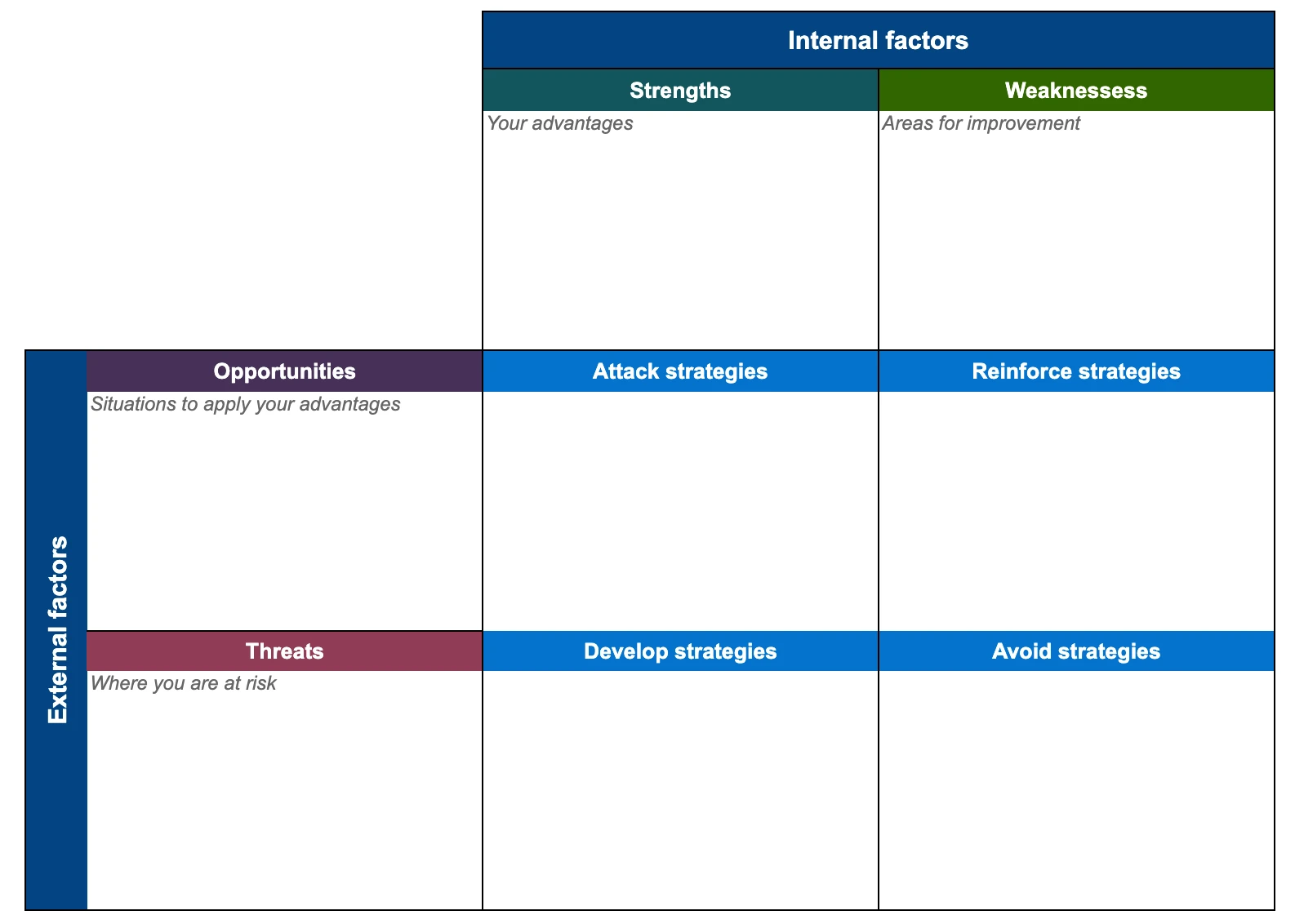
Growth PowerPoint SWOT template
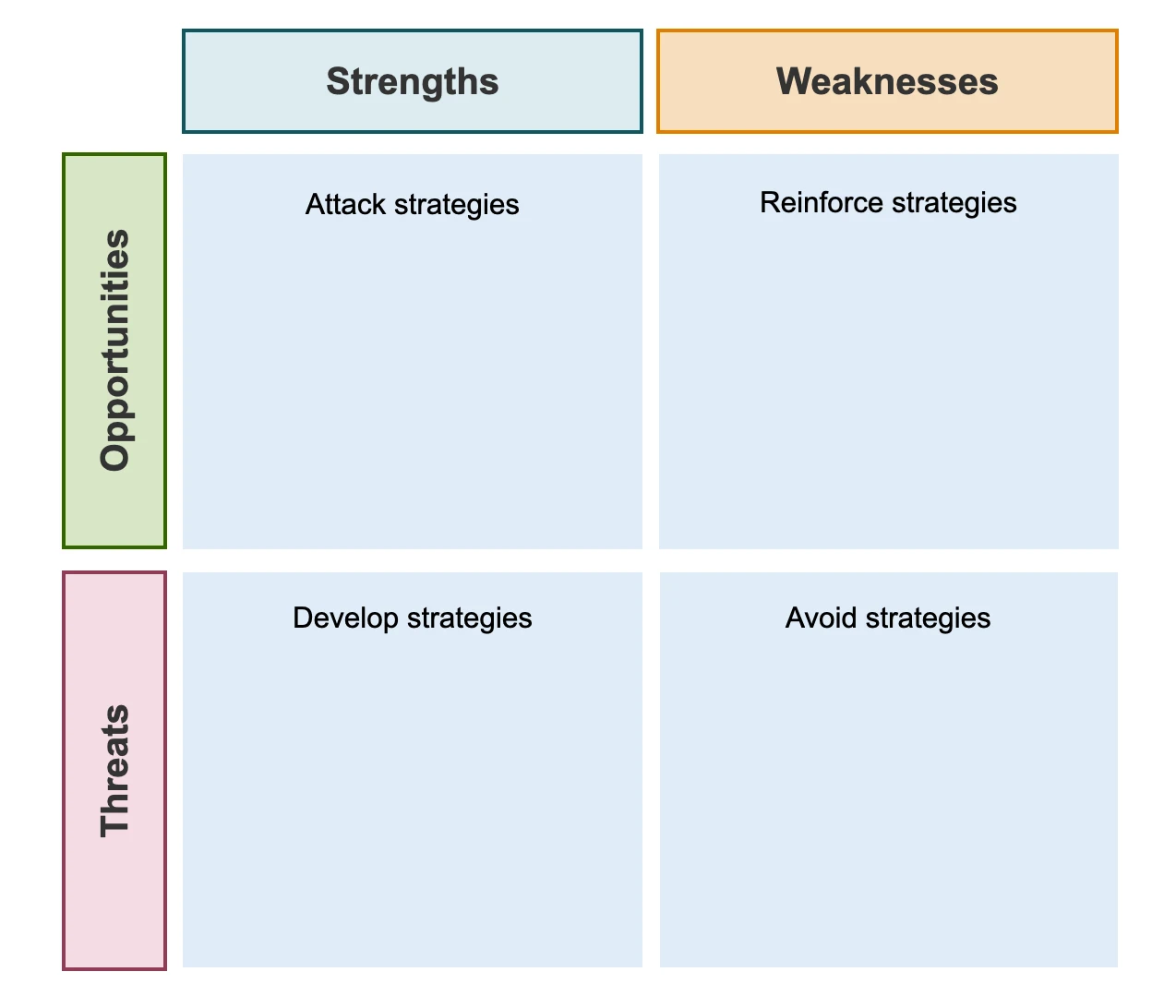
This SWOT analysis template incorporates growth strategies into the SWOT framework with forward-looking statements for each component. This is useful when you want to come away from the analysis with an action plan.