8 feature prioritization templates for product teams
Last updated: April 2024
You cannot build everything — even if you wanted to. That is why the best product plans are streamlined. You want to help the team focus on the features that will bring the highest value to customers and the company. But product plans are also dynamic. As plans shift, most product managers and engineers will have strong opinions about what to build next.
Common sources of conflict? Opinion and preference. In the absence of strategic goals and prioritization, people argue their own viewpoints and make decisions based on who has the most influence in the room.
Product teams deserve clarity and stability. Prioritization frameworks provide a more objective, repeatable way to score features in the backlog based on strategic value. The free templates included in this guide can help you be more intentional about prioritization so you can deliver new customer experiences with confidence. Download and customize them to suit your unique needs. When you find a framework that serves the team well, consider bringing it into a roadmapping tool like Aha! Roadmaps — where you can integrate strategic planning, idea management, and feature prioritization all in one system.
Jump ahead to any section:
What are some common prioritization criteria?
There is no one-size-fits-all prioritization framework. You will need to thoughtfully consider criteria that maps to business value — such as new conversions, customer adoption, and sales revenue. It may take some trial and error to find the right mix of factors. It is well worth the effort when you identify a prioritization framework that supports your product goals and provides transparency to the rest of the organization on how work will be prioritized.
Some common questions to ask during prioritization include:
Will the feature help to gain new customers?
How many customers will the feature impact?
How does the feature help to increase revenue?
How does the feature help to retain customers?
How does the feature create more awareness in the market?
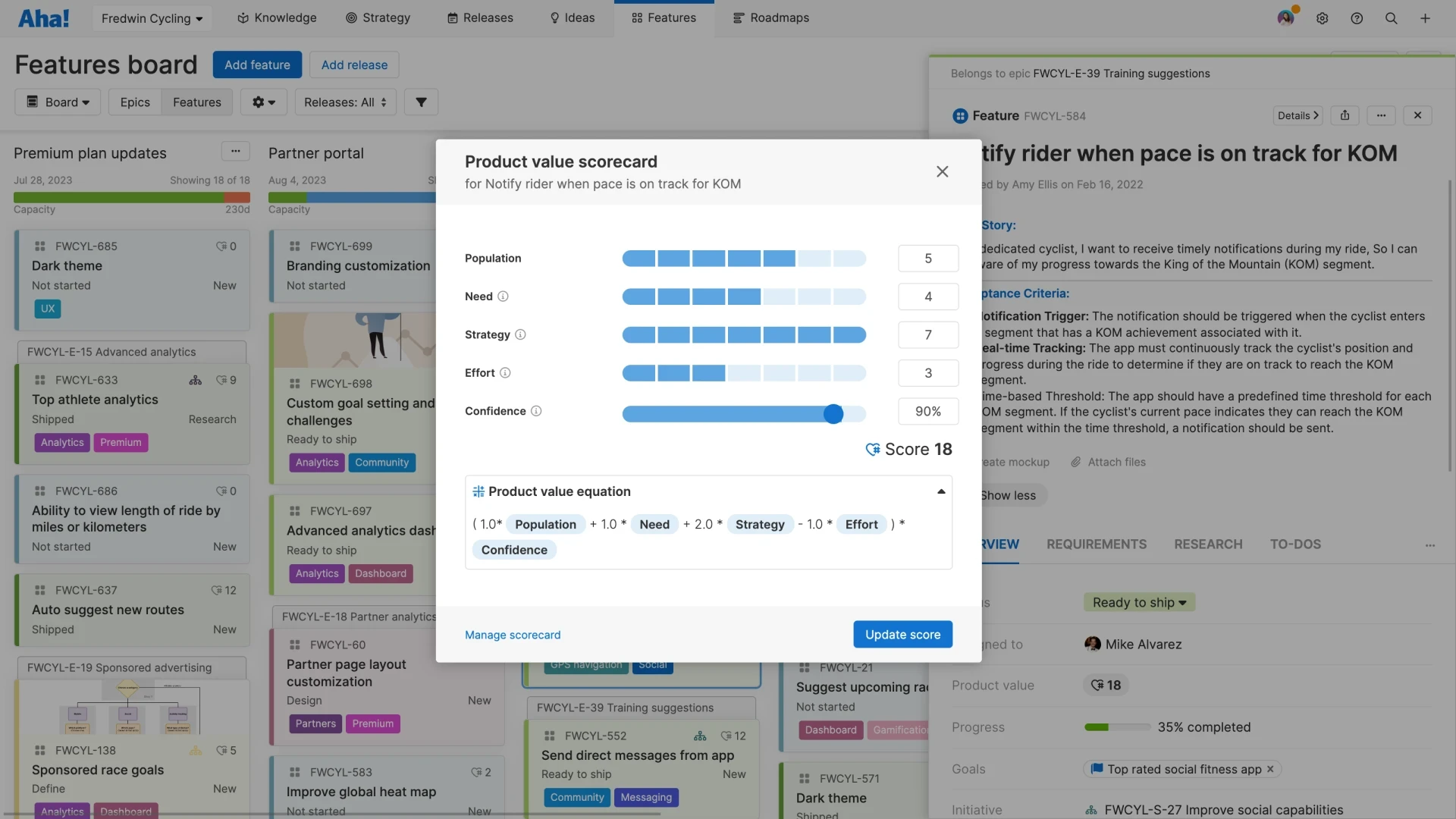
Let's look at an example prioritization framework. The Aha! scorecard is one of the most comprehensive available. Product managers can assign unique metrics and define an equation to score each initiative, idea, or feature. In this particular example, the equation adds up population, need, strategy, and confidence — while subtracting development effort.
By using a consistent scorecard that is built into your roadmapping tool, you can make quick decisions about the overall importance and relative effort for each feature.
Related:
7 versatile product prioritization templates
If you are just getting started with prioritization, experiment with the templates below. These are based on the most common product prioritization frameworks — some are fairly simple and others are more complex. Remember that greater complexity does not mean the framework is any better or more advanced. What is more important is choosing a framework that your team values and will use consistently.
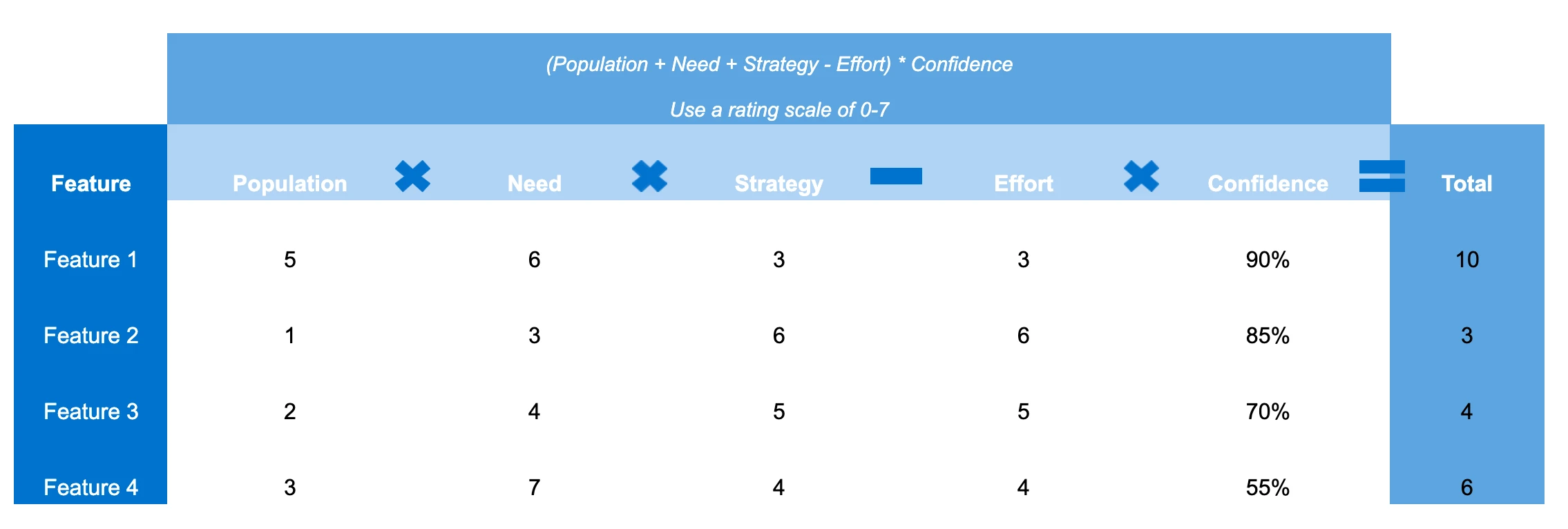
Aha! product value scorecard template
The Aha! product value scorecard gives you a way to estimate, update, and track the value of what you are building throughout the entire product development lifecycle. We have included the scorecard below in an Excel file so you can try it. However, it's far more streamlined to use the scorecard that is built into Aha! Roadmaps and integrated with all of your feature work.
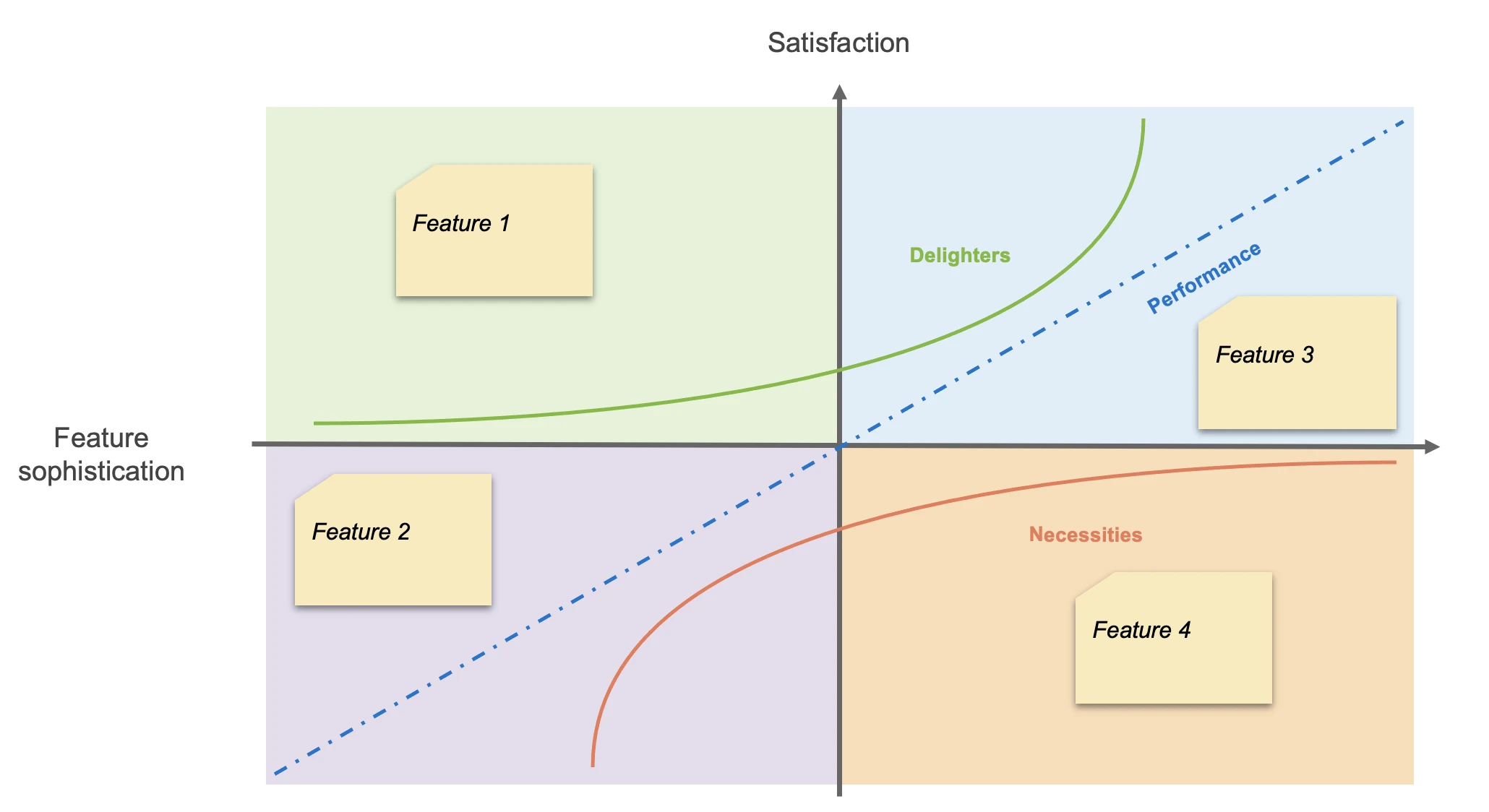
Kano model template
The Kano model weighs customer satisfaction with feature sophistication to determine what to build now and what to deprioritize. It is especially useful for teams that are bringing a new product to market and need to understand where to focus time and energy.
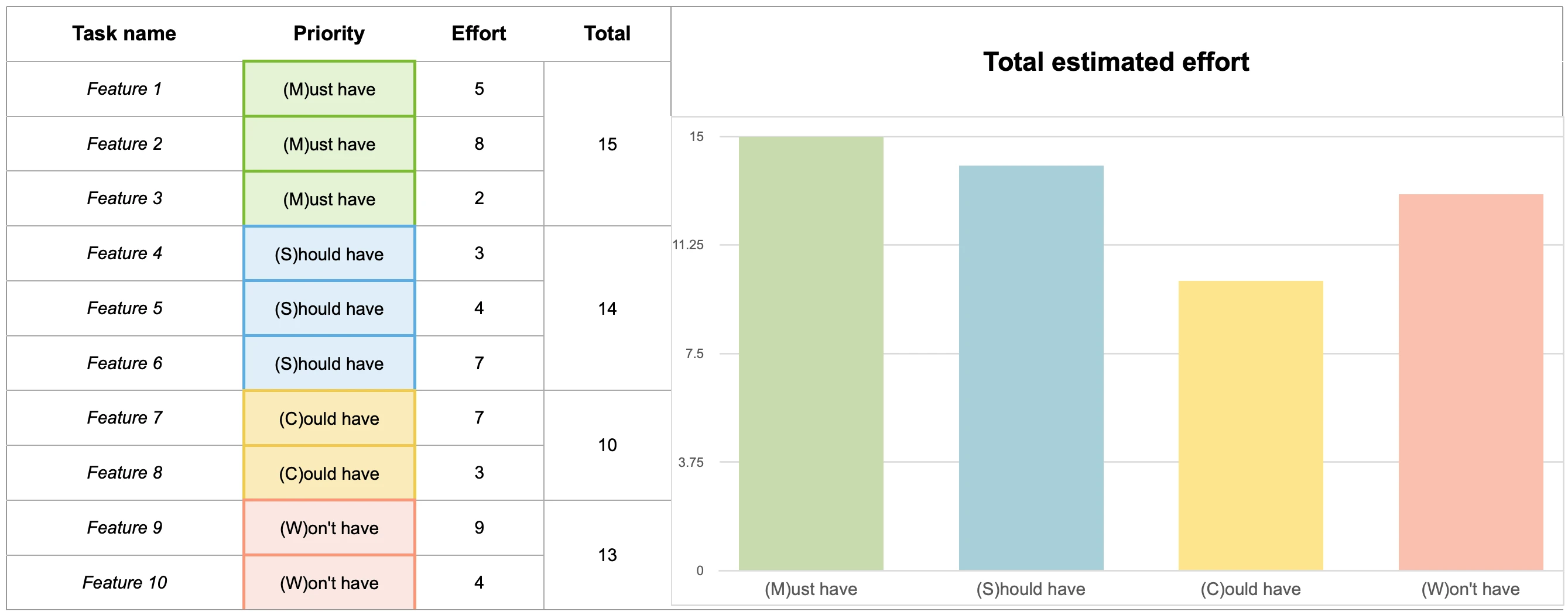
MoSCoW template
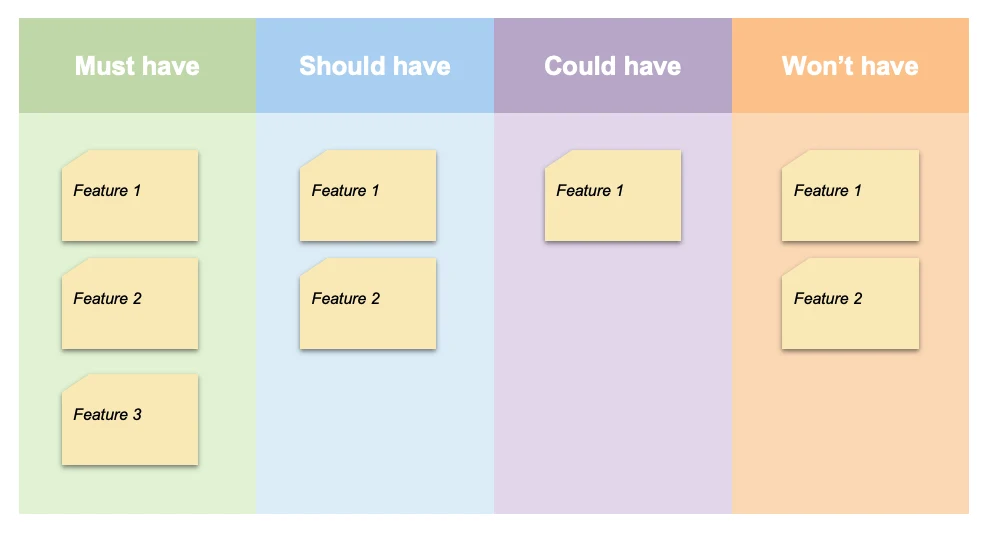
The MoSCoW framework focuses on reaching consensus by sorting features into Must haves, Should haves, Could haves, and Won't haves. The goal is to deliver incremental value across each of the categories. Use either of the two templates below that visualize the MoSCoW method.
RICE template
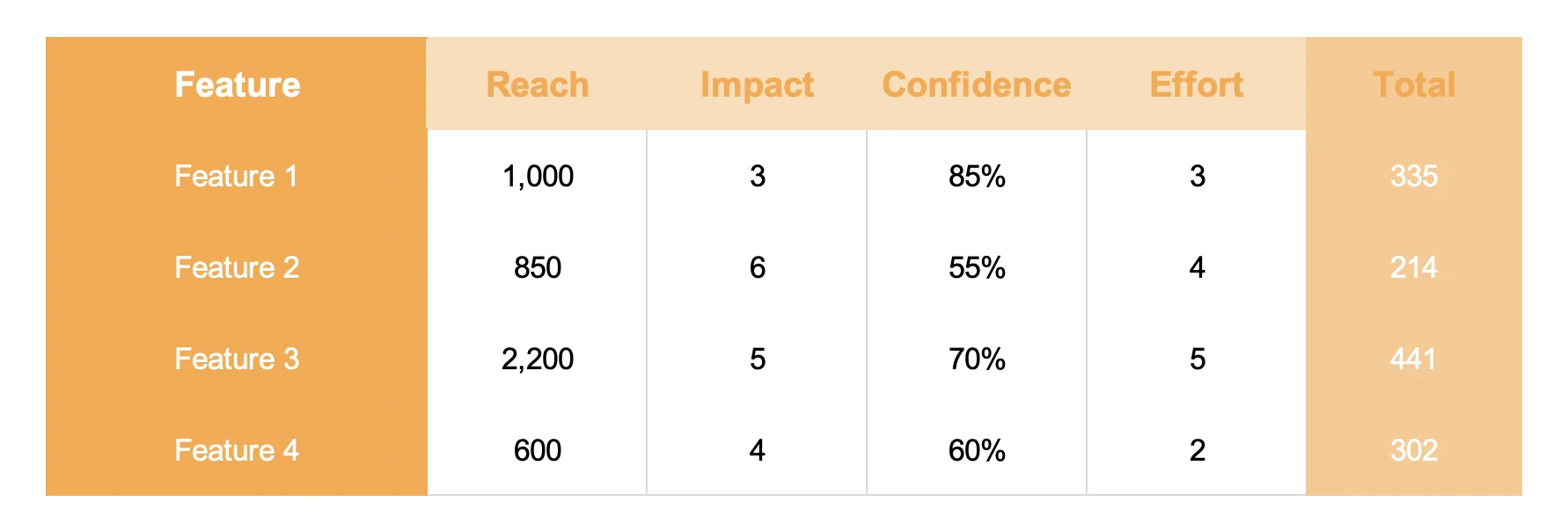
The RICE framework scores features based on Reach, Impact, Confidence, and Effort. It is another simple way to balance value against effort and minimize feature creep.
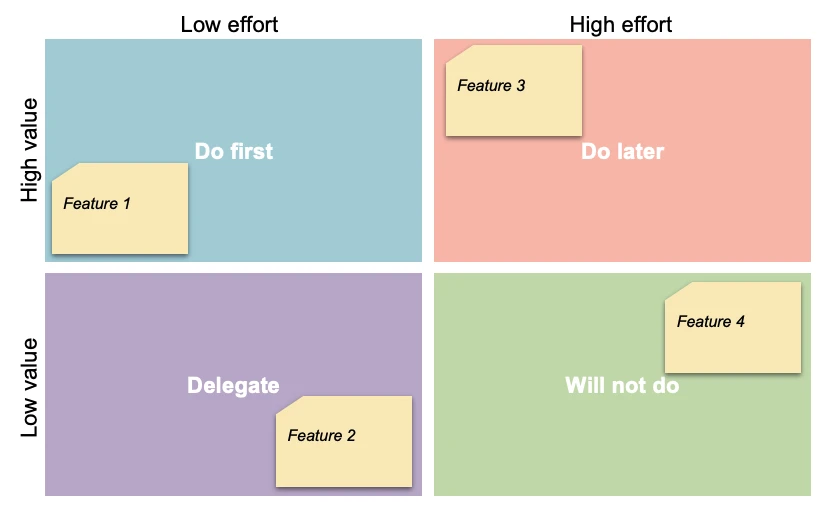
Value vs. effort template
The value vs. effort framework classifies work into four quadrants — do first, do later, delegate, and will not do. This simple method, favored by lean teams, places features in these quadrants based on the organizational effort and customer value.