Daily note template
Organize your day and track priorities, meetings, and progress
Use template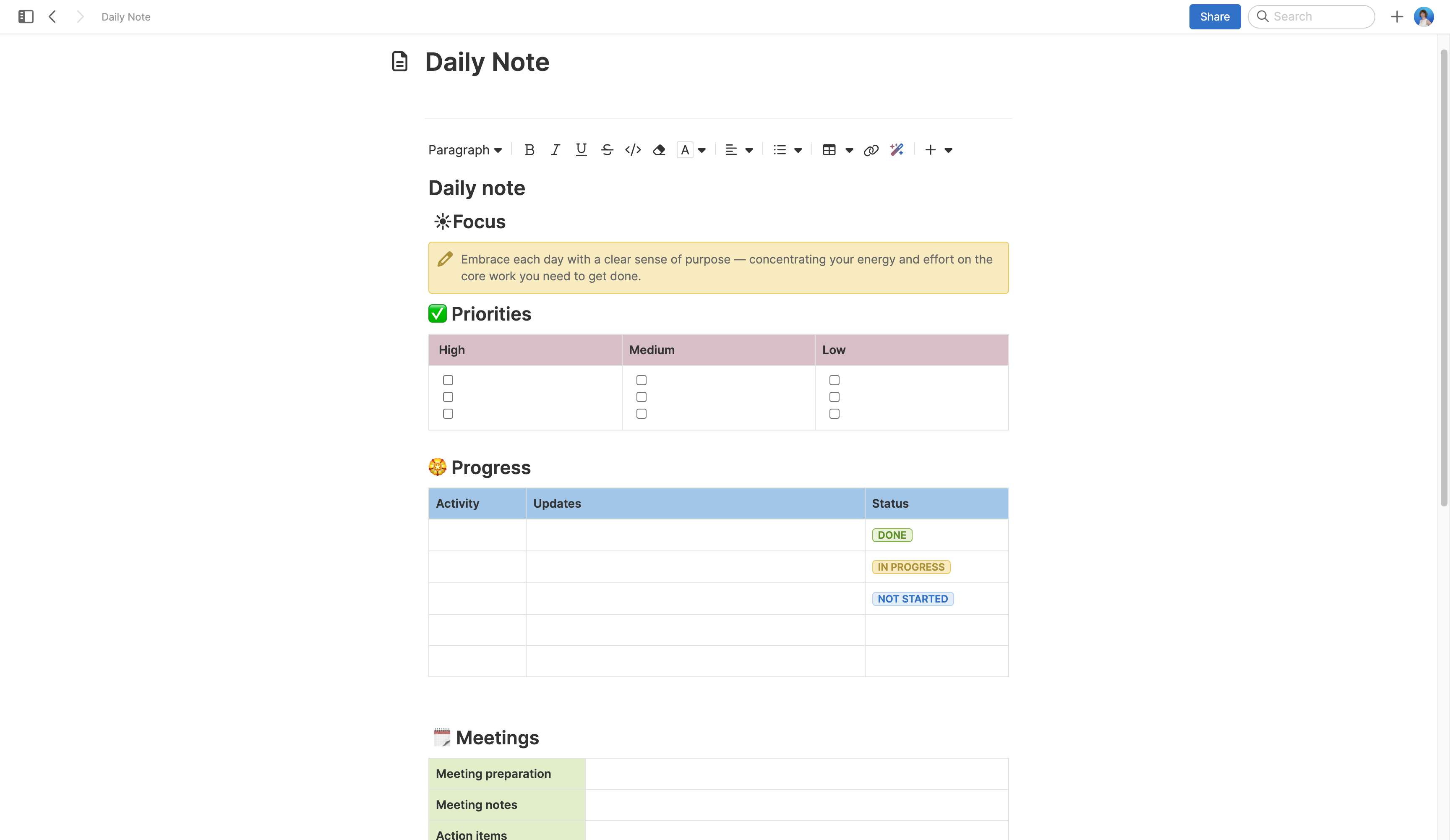
About the daily note template
Some days start with a clear plan, and others require you to sort through shifting priorities as the day unfolds. The daily note template gives product managers one place to do both. Set your focus for the day, sort tasks by priority, and track meeting prep, notes, and action items as they come up. An embedded scratchpad gives you room to sketch out raw ideas, and a reflection section helps you capture what you learned at the end of the day.
Included in the daily note template
This daily note template includes built-in capabilities such as:
A structured layout with sections for focus, priorities, meetings, and notes
Pre-built tables to sort tasks by priority and track daily progress
An embedded whiteboard scratchpad for sketching out raw ideas
A rich text editor to format meeting notes and reflections cleanly
Inline comments so teammates can add context when you share the note
How to use the daily note template
Use the daily note template each morning to set direction before the day gets away from you. Start in the Focus section by writing one sentence on what matters most today, then sort your remaining tasks into the High, Medium, and Low priority columns. As meetings come up, create prep notes ahead of time and capture decisions and action items during the discussion itself.
Use the Notes table to track research, insights, and product feedback as you come across them throughout the day. And when something needs more room to think through, open the scratchpad and sketch it out. Close the day with a few lines in the Reflection section: what worked, what did not, and what you would change tomorrow.
FAQs about the daily note template
Who is the daily note template for?
This template works well for individual contributors and managers alike, especially anyone juggling multiple meetings, tasks, and ideas in the same day. Product managers in particular benefit from having priorities, meeting notes, and reflections in one place instead of scattered across separate tools.
Why use a daily note instead of a general to-do list?
A to-do list tracks tasks, but it does not leave room for the context around them, like meeting prep, product notes, or a reflection at day's end. The daily note template keeps that fuller picture in one place, so you can look back and understand not just what you did, but why.
How does the daily note template support product teams specifically?
Product managers often move between strategy discussions, customer feedback, and cross-functional meetings within a single day. Having one note that tracks all of it means insights and product feedback do not get lost between separate documents, and they are easier to pull into planning conversations later.
Can I customize the sections in the daily note template?
Yes. Add, remove, or rename sections to match how you actually work, whether that means adding a section for customer calls or removing one you don't use. Many teams also embed views from Aha! Roadmaps directly into the note to keep related work visible.
Is this template free to use?
Yes. To use the daily note template, sign up for a free 30-day trial of Aha! Whiteboards. (You can also try this template in Aha! Roadmaps if you need a complete product management solution.) Easily customize the template to suit your needs, then share it with as many people as you want (for free) to streamline collaboration.
Best practices
Make the day's priorities visible.
Name one focus before anything else: Write your focus area first before filling in tasks or meetings. This keeps the rest of your day anchored — instead of you reacting to whatever lands in your inbox first.
Sort tasks by priority, not by order received: Tasks that show up first in your inbox are not always the most important ones. Assess and label each one based on impact, not urgency or noise.
Separate meeting prep from meeting notes: Jot down what you want to raise before a meeting starts. Then, use a separate space to capture what was actually decided.
Make the reflection section a habit: A few lines on what worked and what did not only pay off if you write them consistently. Patterns across a week or a month are far more useful than a single day's notes.