Product teams have the opportunity to move faster than ever before and deliver lovable applications. | Photo by Jodi B Photography
Let's talk about product management slopware


Creating software — by generating code — is now possible for the same people who define it. We are seeing this firsthand in the Aha! Builder early access program. Product managers who would never describe themselves as technical are building prototypes and applications that range from proofs of concept that replace a static mockup to applications that automate workflows teams were managing manually. Being able to do this without queuing up a request for engineering is an incredible expansion of the PM role.
Building something users will adopt and use long term requires more than just a good idea. This is the part that should excite product managers the most — because this is your job.
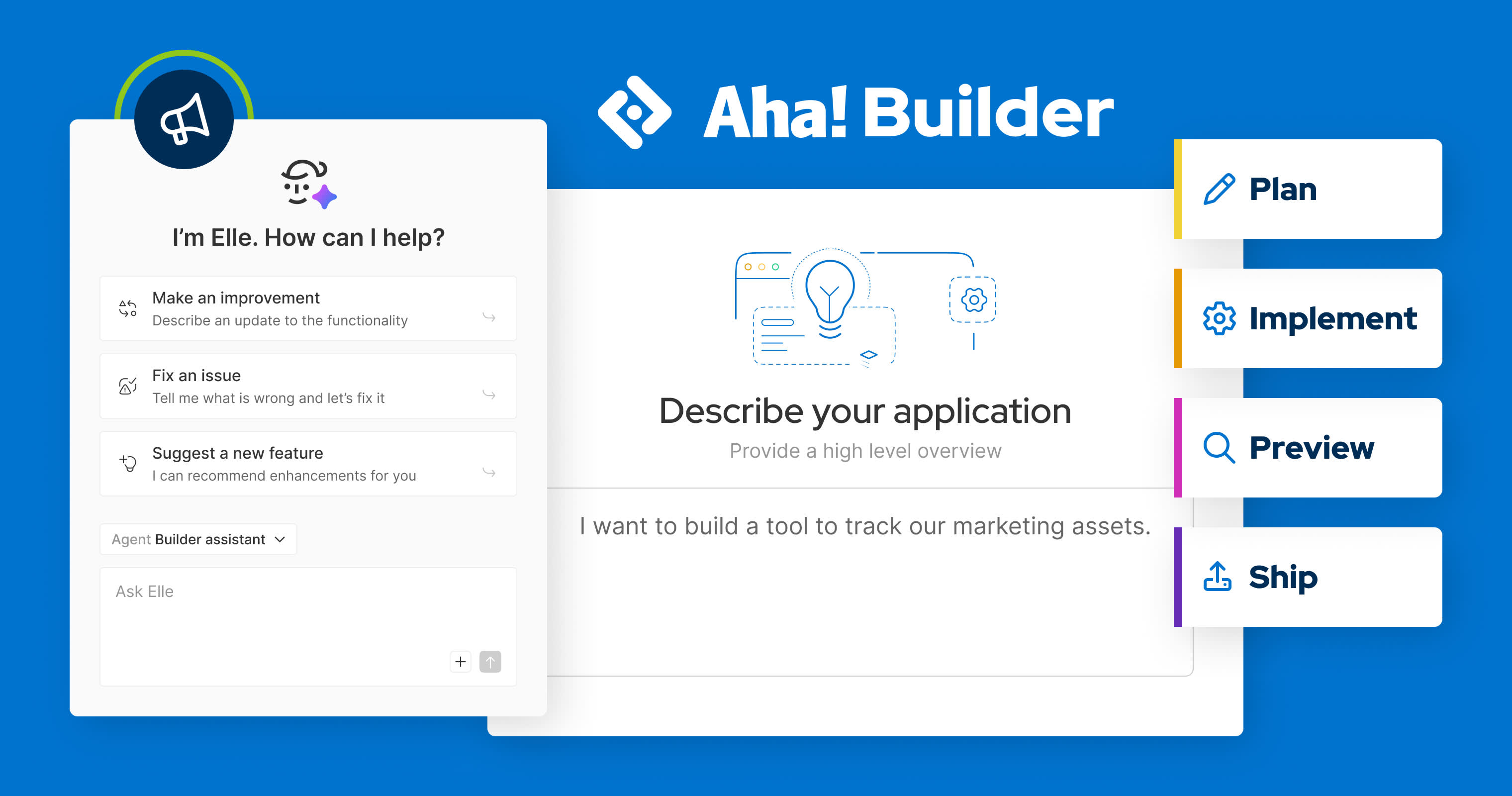
We designed Aha! Builder around the concept of PM coding. The environment cues you to think deeply about the user, the problem, and the desired experience before generating any code. The output carries your specified styling, includes a planning board for managing future updates, and runs on enterprise-grade infrastructure — with a database, authentication, and secure hosting built in.
And it builds incredibly fast. Just one example: Our marketing team built an asset manager in under an hour that catalogs and tags creative assets by campaign, format, and team. Search and filtering are built in, too.
Speed is the point. But moving fast does not mean skipping the strategic thinking and discovery work that determines whether what you build is actually worth using.
You probably remember shelfware — the expensive software companies bought that nobody used. Slopware is the AI equivalent. It happens when you rush to build without doing the foundational work first.
On the Aha! product team, we have been talking about what its opposite (should we call it "valueware"?) looks like. Any new experience we build for customers or our own team has to meet the standards we have always applied to lovable software. That means it needs to be:
Significant: It solves a validated problem and delivers meaningful value.
Secure: It protects data and adheres to our required privacy standards.
Scalable: It is architected to grow and handle increased usage without breaking.
Supported: The team is committed to maintaining and improving it over its lifecycle.
If you are anything like the product leaders we have been talking to, you already have a list of things you want to build. Run each idea through the tests below before you start. They connect directly to the criteria above and help you assess whether an idea is ready to build or needs more thought first. (And if you want to go even deeper, apply the Aha! product value score. Its formula assigns a numerical score to each idea based on factors like reach, urgency, and effort.)
The necessity test
Would you build this if it required engineering resources?
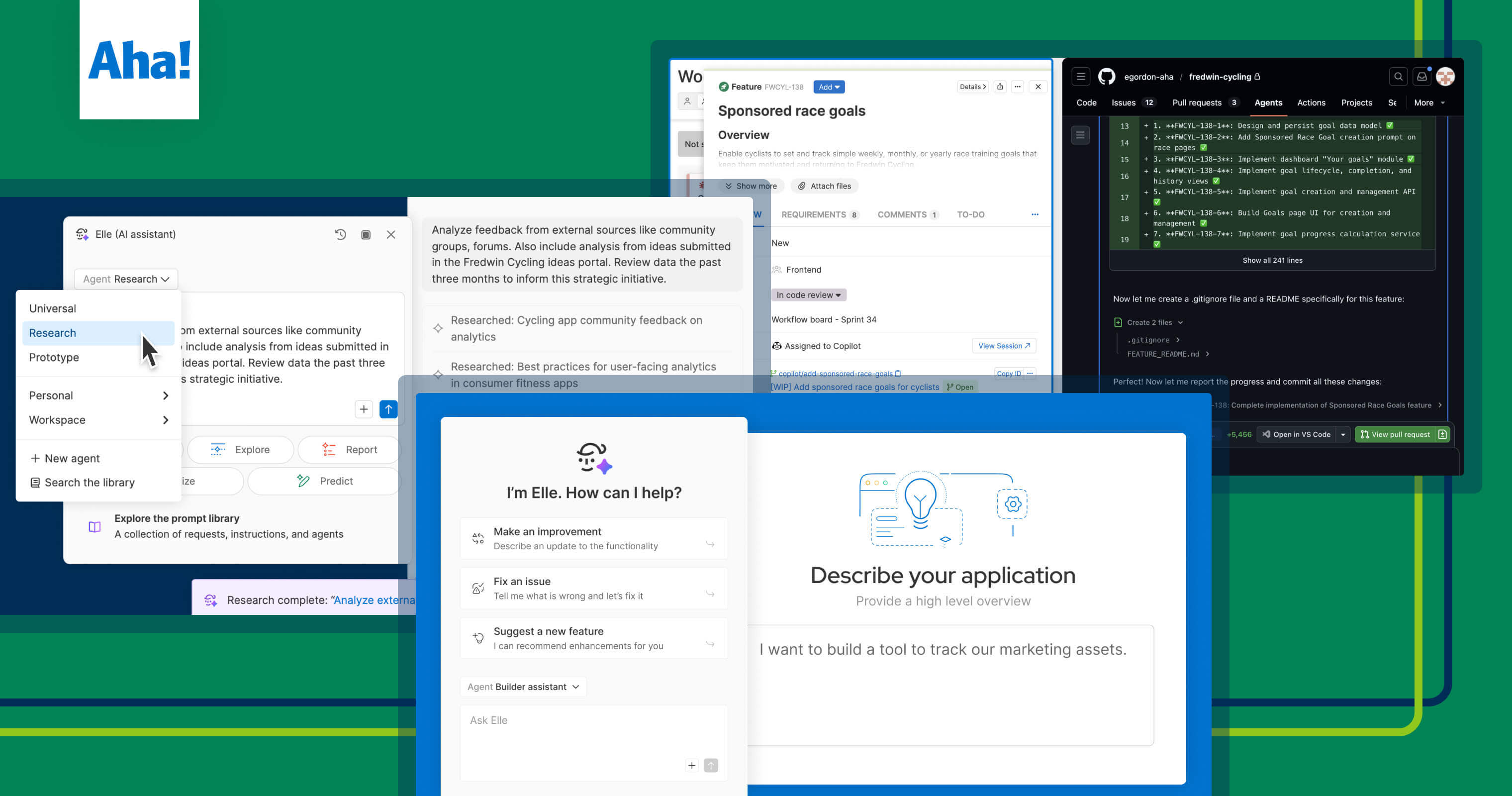
It is easy to mistake the thrill of generating something new for actual value. You can chat with Elle, the AI assistant in Aha! software, and get to "done" in a single afternoon. But you still need to start with a depth of user understanding before you get going.
Consider whether the idea would survive a formal request to another team or a strict review from leadership. If the answer is no, you have not yet completed the work to truly understand the underlying need.
The exposure test
Who actually gets to use and view this?
Aha! Builder handles the heavy lifting of secure hosting and authentication. But you still have to think critically about the information flowing through the application you want to build. For example, a partner onboarding tracker would likely hold contract details. A customer escalation log could contain sensitive account information.
You need to define the right user permissions or run the details by IT. Speed does not excuse sloppy access controls.
The adoption test
What happens when more people want to use it?
You might design an application for a specific group of users. Then more folks in the company hear about it, or new people want access, and suddenly you are supporting an audience far larger than you planned for.
Before building, think through exactly who should be using the application and why. If another group wants access, will the existing workflows serve their needs — or will they require something different entirely?
The forever cost test
Are you prepared to be the admin?
Any tool you ship demands updates, bug fixes, and support. When a user cannot log in or needs a new field, they will come to you.
Someone has to commit to that ongoing investment. If you are not ready to own it, it probably should not be built.
The ease of creation must be matched by the rigor of strategic planning.
You have the opportunity to move faster than ever before and deliver applications people will depend on. Apply your product discipline, reject the urge to build slop, and use this new advantage to create lasting value.
Related reading:
The Aha! Framework for software built by product teams: A complete process for established product, UX, and engineering groups that defines discovery to delivery
The Aha! Framework for software built by product managers: A streamlined process for emerging product managers who want to create prototypes and applications with AI
How to manage AI application development: Learn how to develop AI applications and set standards to build, maintain, and improve them
Aha! Builder is available to everyone soon. What will you create?