The Aha! Framework for software built by product managers
A streamlined process for emerging product managers to create prototypes and applications with AI
This adapted product framework is designed to support the PM coding approach. It gives product managers a way to build AI‑generated tools quickly without losing strategic discipline. Use this guide to learn when to choose this lighter framework, how it compares to traditional product development, and the key activities.
Editor's note: The contents of this guide refer to The Aha! Framework for software built by product managers. We also have a more traditional multistep approach to product development suited to product teams building software — read about it here.
AI is reshaping every stage of product development. Product managers can now move from idea to working solution much faster. Many are using AI to generate interactive demos, lightweight customer‑facing experiences, and internal apps — without the usual cross-team handoffs.
Your existing product workflow is likely excessive in these scenarios. When an independent "full stack" product builder or small team can use AI to code a new experience in minutes, rigorous roadmap planning feels like overkill. Yet you still need a clear framework so that you can deliver value with AI (and avoid churning out slop).
This is why we are introducing a new model of our own: The Aha! Framework for software built by product managers. It is an abridged version of our proven methodology, adapted for PM coding. It gives you an alternative approach to follow based on what you are building with AI.
This guide explains how the new framework functions and when to use it. Let's dive in:
Why do teams need more than one product development framework?
In the past, you chose a product development methodology to create a repeatable way of working. Teams aligned on one standardized framework to follow, often combining strategic planning with agile delivery across multiple phases.
This traditional product development approach still works well for enterprise teams building complex customer-facing products. But it becomes too process-heavy when you are creating quick prototypes or applications with AI. That is where you can skip some steps. For example, instead of writing requirements to pass to UX and engineering, you can move straight to development by prompting an AI tool with that information.
This shift calls for an additional product framework — one you can apply in these "lightweight" building scenarios. Think of it as a stripped-down version of the process you already follow. This lets you take advantage of AI's speed while retaining the essential steps of setting strategy and gathering customer feedback. You can choose the approach that aligns with what you are building and maintain a consistent way of thinking across both frameworks.
Related:
What is PM coding?
PM coding is a disciplined way for product managers to use AI to build working applications. You work to deeply understand and validate the customer problem, then treat AI as a force multiplier for execution once you are clear on what needs to happen and why. The goal is to move quickly while still following a thoughtful plan.
After all, AI makes it possible to build almost anything. But that ability alone is not a reason to build. You still need a strategic approach. Without it, you are just vibe coding: plugging in a few prompts to see what AI generates just because you can. This often produces "slopware" that nobody wanted or needed.
PM coding is a step above vibe coding. But it is still lighter than the traditional product development process. It is the style of working that the new model of The Aha! Framework is designed to support, giving you a focused way to build with AI when you do not need the entire multiphase methodology.
Here is how to distinguish the two frameworks:
The Aha! Framework for software built by product teams | Supports traditional full-cycle product development |
The Aha! Framework for software built by product managers | Supports a PM coding approach |
Related:
When to use this new framework (based on what you are building)
This streamlined version of The Aha! Framework is ideal for independent product managers (at growing or established companies), plus startup founders without a dedicated product function. But the clearest way to decide between this framework and the fuller product development process is based on the output — not who is building it. Here is a quick way to help choose your approach:
Start with what you are building: Product managers create a range of outputs, from low‑fidelity prototypes to fully launched applications. Decide which output best serves your goal.
Determine who it is for: Who are the primary users? Does the output solve an internal need or an external one? You might build something just for your product team, a broader group of colleagues, or for paying customers.
Consider complexity and clarify who will build it: Will you need support from existing product, UX, and engineering teams, or will you handle it yourself? AI is capable of producing high-quality outputs, but some things demand deeper code changes and formal reviews, which benefit from cross‑team involvement.
Match the method to the output: After you think through steps one through three, it should be clearer which framework applies. In general:
For complex, customer‑facing applications and large‑scale changes: Follow a traditional product development framework.
For prototypes, internal applications, and lightweight tools: Follow a streamlined PM coding path.
Lightweight prototype | Robust prototype | Improvements to an existing application | New internal application | New external application | |
Purpose | Visually represent a new feature; no real data or logic behind it | Let users interact with a working version backed by a database | Enhance or extend an existing application, whether customer-facing or internal | Build a new application for colleagues to use | Build a new application for customers to use |
Primary users | Product team | Product team, customers | Colleagues, customers | Colleagues | Customers |
Who can make improvements | PM; no engineering needed | PM; no engineering needed | PM or engineering; depends on the change | PM; no engineering needed | Engineering; code changes required |
Which method to use | PM coding | PM coding | PM coding or traditional product development; depends on the change | PM coding | Traditional product development |
The Aha! Framework adapted for PM coding
When you decide that a PM coding approach is the way to go, the stages below will show you how to apply the new, lightweight version of The Aha! Framework. The table also highlights how it differs from our original framework, as many phases are streamlined, combined, or skipped.
This version still covers the fundamentals — defining strategy, listening to customers, and iterating on solutions — but without the roadmap planning and launch coordination large releases require. The other major difference is in the Explore and Deliver phases, where AI tools replace the need for traditional handoffs to UX and engineering.
While there are fewer handoffs, you do have to learn to use the right AI tools and manage the outputs responsibly. (We will touch on that more in the next section.)
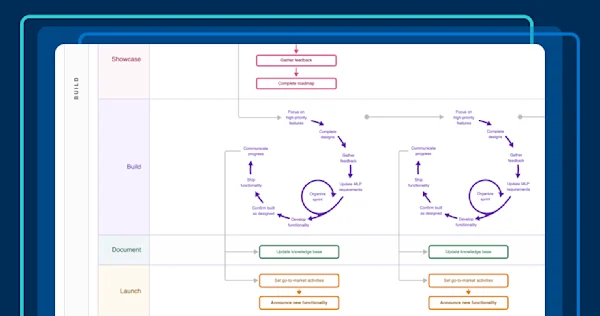
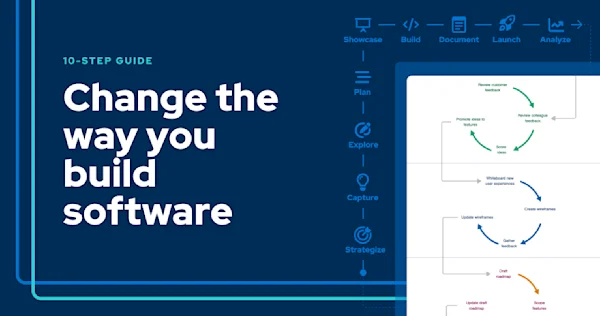
Phase | The Aha! Framework for software built by product managers A PM coding workflow for independent product managers | The Aha! Framework for software built by product teams A traditional product development framework for existing product management, UX design, and engineering teams |
Strategize | Clarify what you want to build, who it is for, and why it matters. | Define vision, personas, goals, and initiatives. Connect strategy to execution to guide the team's work. |
Discover | Conduct interviews to deeply understand what customers want. | Conduct interviews to deeply understand what customers want. |
Capture | Consolidate feedback and prioritize the top ideas. | Consolidate feedback and prioritize the top ideas. |
Explore | Generate robust prototypes that users can interact with and capture ideas for improvement. | Build wireframes and lightweight prototypes to explore how new functionality should work. |
Plan | Prioritize features and create release plans — aligning on scope, timeline, and dependencies. | |
Showcase | Present the roadmap to stakeholders for review and adjust based on feedback. | |
Deliver | Use AI to build new applications and functionality and draft user manuals at the same time. | Send features to engineering. Use coding agents to accelerate development. |
Document | Write user guides, best practices articles, and release notes. Publish them in a knowledge base. | |
Launch | Coordinate go-to-market activities across marketing, support, and sales. | |
Analyze | Review outcomes against goals. Use analytics and feedback loops to inform the next cycle. | Review outcomes against goals. Use analytics and feedback loops to inform the next cycle. |
AI tools for prototypes and business applications
You can use AI in many ways throughout this framework, but two core capabilities matter most. You need:
AI prototyping: Turn ideas into interactive flows and visuals. This allows you to quickly validate concepts with teammates and customers before you invest more effort.
AI or no-code app generation: Build functional applications from natural language prompts or prototypes without needing to code.
Many AI app builders include prototyping features so you can sketch early versions and make them into full applications in the same tool. For example, Aha! Builder helps you prototype ideas, turn the best ones into trusted business applications, and manage feedback and improvements in the same environment. It is the product we use for PM coding on our team, and it supports our streamlined framework in practice.
If you are building a software application, remember that many of the same principles should apply whether you create it with AI or in the traditional way. You still want to solve real customer problems and deliver a quality product they can trust — not just one you can build fast with visually appealing results.
That is why it is important to look beyond basic AI prototyping and app generators to tools that help you manage outputs safely and responsibly. Look for:
A built-in database and secure hosting so applications can scale
Governance features that support security, privacy, and compliance
Enterprise controls for managing access and permissions
Ability to apply your design and brand standards across prototypes and applications
Built-in ways to collect user feedback so you know what to improve
Workflows for managing improvements and shipping updates through the tool
This new model of our framework gives product managers a clear, lightweight way to build with AI while staying grounded in your vision and customer insight — so you reduce handoffs without skipping the strategic thinking. The result is faster experimentation and delivery, supported by a disciplined approach that helps you create valuable experiences customers and colleagues can rely on.
FAQs about product management frameworks for AI
PM coding is a disciplined approach to building with AI. Product managers start with a clearly defined customer problem and validate it through research — then use AI tools to prototype, iterate, and ship applications that deliver value.
Vibe coding is more experimental and unstructured. People jump straight into prompting AI to build ideas without customer input or strategic alignment. This often leads to one‑off experiments instead of durable, valuable products.
PM coding is a lighter, faster way for product managers to build with AI. A single product manager or small team defines the problem, gathers user input, and then uses AI tools to create and ship prototypes or applications with fewer handoffs.
Traditional product development is a full multiphase framework. Cross‑functional product, UX, and engineering teams align on strategy and robust plans before building. This type of methodology is better suited for complex customer‑facing products and larger long‑term initiatives.
Product managers need two core capabilities for PM coding: an AI prototyping tool and a no-code app builder (these are often combined in one).
AI prototyping tools help you turn ideas into interactive visuals you can test quickly with your team or customers. You can then use an AI app builder to turn the best concepts into secure, production‑ready internal tools or lightweight customer‑facing applications. Together, these AI tools enable product managers to move from insight to delivery without requiring handoffs to UX or engineering.