User story template
Get right to the heart of why a new feature matters to your customers
Use template
About the user story template
A user story describes a product feature from the perspective of the end user. It is a concise way to convey what the user wants or needs from new functionality — often in one or two sentences.
User stories provide structure and meaning to agile software development work along with themes, epics, and tasks. Because they explain the desired outcome from the user's point of view, user stories help your team clearly understand the value a new feature will provide, rather than focusing only on functionality.
These user story templates provide simple formulas for capturing the "who,” “what,” and “why” behind features. Include acceptance criteria and customize the templates as you see fit. Detailed technical requirements come later.
Best practices
Capture new product functionality from the user's perspective and define your acceptance criteria.
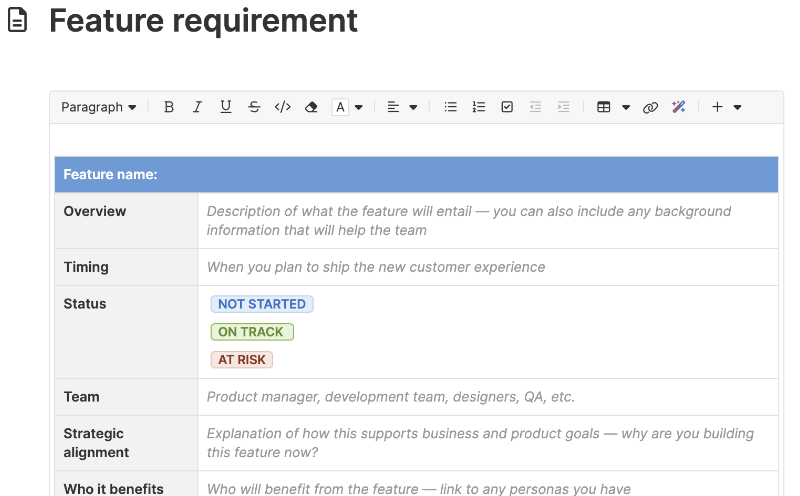
Select your template Each of the four templates offers a slightly different layout based on the level of detail you want to include.
Write user stories The basic template for an agile user story is: "As a [type of user], I want to [perform some task] so that I can [achieve some goal]."
Add acceptance criteria Describe what the functionality must do in order to satisfy the user's goal. The basic template for acceptance criteria is: "Given that [some context], when [some action is carried out], then [a set of observable outcomes should occur]."
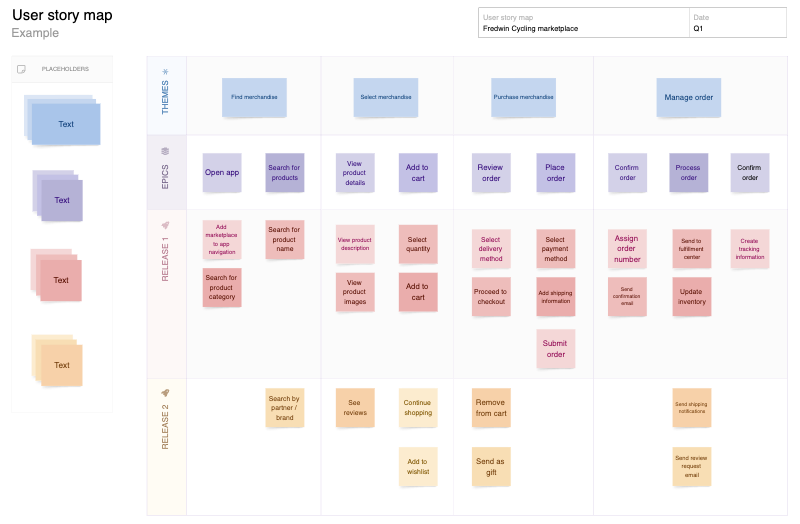
Take it to the next level Group user stories into a user story map to help clarify which features will provide the most value to your customers — then prioritize accordingly.
FAQs about the user story template
Why is a user story template important?
A user story keeps the team focused on what the customer needs to accomplish rather than jumping straight to implementation details. This template gives everyone — product, design, and engineering — the same starting point before deeper planning begins.
What are some user story best practices?
Keep the story focused on a single user and goal. Save acceptance criteria for stories that are close enough to being built that "Done" needs a real definition, and revisit stories as priorities shift.
Who is the user story template for?
This template is ideal for product managers and product teams who need a consistent way to describe new functionality before it moves into design and development. It is also useful for organizing related stories into epics as a release comes together.
Is this template free to use?
Yes. To use this user story template, sign up for a free 30-day trial of Aha! Whiteboards. (You can also try this template in Aha! Roadmaps if you need a complete product management solution.) Easily customize the template to suit your needs, then share it with as many people as you want (for free) to streamline collaboration.