The new workplace anxiety: wondering if the prompt is worth the cost. | Photo by Jodi B Photography
The psychology of token remorse


If you manage a software budget, you know what it feels like to watch costs. And if you use AI tools with usage caps or credit limits, you probably have some awareness of how close you are to the ceiling at any given time. That is reasonable. But a conversation I had a few weeks ago made me wonder whether that awareness is turning into something less productive.
A product operations leader shared this with me: "When I know I am low on credits, I am constantly refreshing the page to make sure it does not go into the negative. And I am making sure my prompt is as short as possible so the AI does not spit back too much."
Is visibility into AI costs making capable professionals afraid to use the tools?
Of course, managing software costs is a very real part of building a sustainable business. And yes, enterprise AI contracts are expensive in the aggregate. I know many companies are now blowing through their initial budgets, and CFOs are starting to clamp down to avoid runaway spending.
But what this product operations leader was describing is not strategic cost control over a massive budget. It is anxiety over microtransactions — or token fear and remorse.
It is similar to buyer's remorse: that regret you feel when you make the wrong purchase and beat yourself up for doing it. But here we are talking about a few cents most of the time.
Traditional user-based software pricing hides the cost of individual actions. You pay a flat fee for a seat and go about your day. But AI use depends on an underlying infrastructure that has real costs, whether a company pays for it directly or it is bundled into a product the company depends on. And AI usage does add up across a business, so we are about to see even more energy spent trying to contain those costs.
The psychology behind this is not a mystery. We know that people experience losses much more intensely than equivalent gains. A visible $5 charge feels worse than an invisible $10 charge buried in a contract. When you can see each token depleting in real time, those losses register as a threat.
The pain of watching the balance drop is immediate and visceral — especially if the output was not useful.
Using AI credits when they are limited for something that does not create value feels like waste. And thoughtful professionals do not like to create waste. This is even more pronounced with the growing scrutiny of data centers and their demands on electricity and the environment. Thoughtful use makes good sense, but an irrational focus on it can be debilitating.
Keep perspective
There is real value in being intentional about how you use AI. Optimize your prompt to get more specific and better answers. Choose the right model for the task. Tell the AI to keep a response under 500 words, because that is all you need. That is smart. The problem starts when awareness of the cost combined with fear of running out of credits influences everything you do.
Think about how product teams work with engineers. An hour of an engineer's time costs the business significantly more than a handful of AI tokens. Yet we do not agonize over whether a feature discussion takes eight minutes or nine. We might track velocity or cycle time to improve our planning, but we do not obsess over micro-optimizing every single hour. We understand that building meaningful solutions takes time, and that deep collaboration is worth the investment.
When you start stripping out helpful context or compressing your language into cryptic shorthand just to keep the output short, you have lost the plot.
Use AI for anything that clearly makes you more efficient. This assumes you are using it in compliance with your specific organization's policies. Invest effort in making your prompts clearer and grow your wisdom through use. But do not waste your valuable time trying to shave cost off individual requests.
Help people
I have been talking about individual behavior so far. But if you are the one setting the budget, you have an even bigger role to play. Make it explicit that optimizing for outcome quality and speed is what matters. Micromanaging token spend does not. Your team's deep focus for 10 minutes is worth far more than 10 cents of AI compute time.
If you are building products that incorporate AI, this applies to you too. Pricing shapes user behavior. Constantly displaying red warning lights trains people to use your product less (and likely get less value out of it). But hiding the costs is not the answer either. One SVP recently told me that he thought a lot of vendors were trying to gamify the use of AI and hide the costs to keep people going.
There has to be a middle ground. People deserve to understand what they are paying for without feeling punished every time they use the product. If your pricing model makes people hesitate before they type a prompt, something is off.
And this is not just a product pricing question. The same dynamic applies to the person watching their credits, the leader deciding how tightly to cap usage, and the company figuring out what to charge. It is easy to stare at the costs and forget to look at what those costs produce.
Token remorse is a psychological trap. And as businesses enforce tighter credit limits, I think we are going to see a lot more of it.
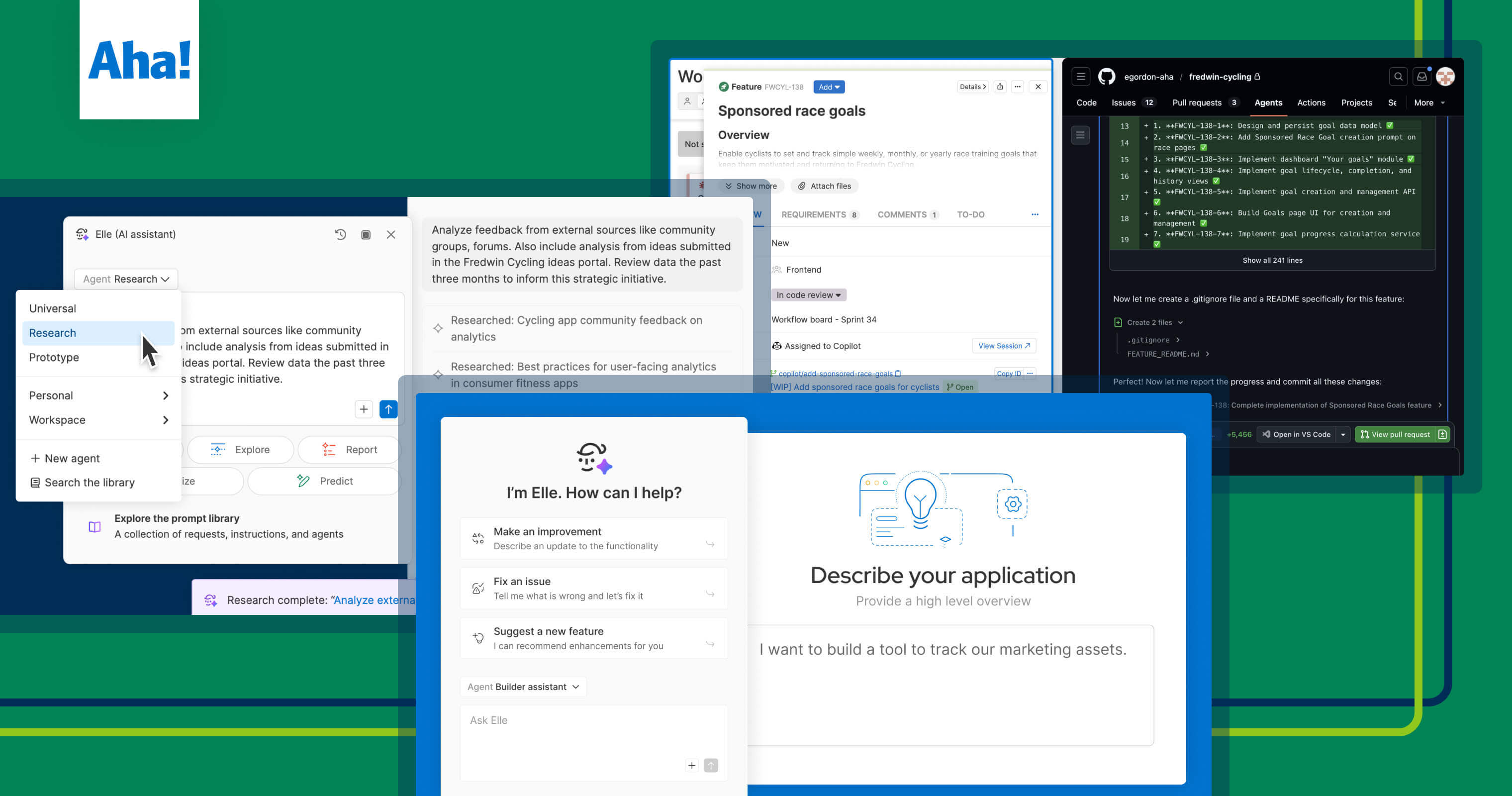
See what Elle (the AI assistant in Aha! software) can do — no token remorse required.