Jump ahead to the guide sections that are most useful for you:
What is a sprint retrospective?
Sprint retrospectives are held after a sprint concludes — usually immediately after the sprint review. During the retrospective, agile development teams discuss what went well, what did not go well, and what you can do to make the next sprint even better. This practice is essential to the agile philosophy of continuous improvement. Overall, the emphasis should be on what you have learned and how you can apply those lessons to the next sprint.
Retrospective meetings are a dedicated time to dig into current processes and tools. It is a space to share triumphs as well as areas of concern. And the conversation should lead to an understanding of why the team ran into obstacles and how efforts led to success — talking about underlying causes can help you repeat or avoid similar outcomes in the future.
Everyone should walk away from retrospective discussions with a tangible list of action items to implement in the next sprint. These should be easily achievable tasks that help you either reinforce positive results or reduce negative ones.
Related:
Top
Why do I need a sprint retrospective template?
Sprint retrospectives meetings are a blend of a discussion forum and a working session. Conversation frameworks can support both meeting purposes — bolstering connection and productivity at the same time.
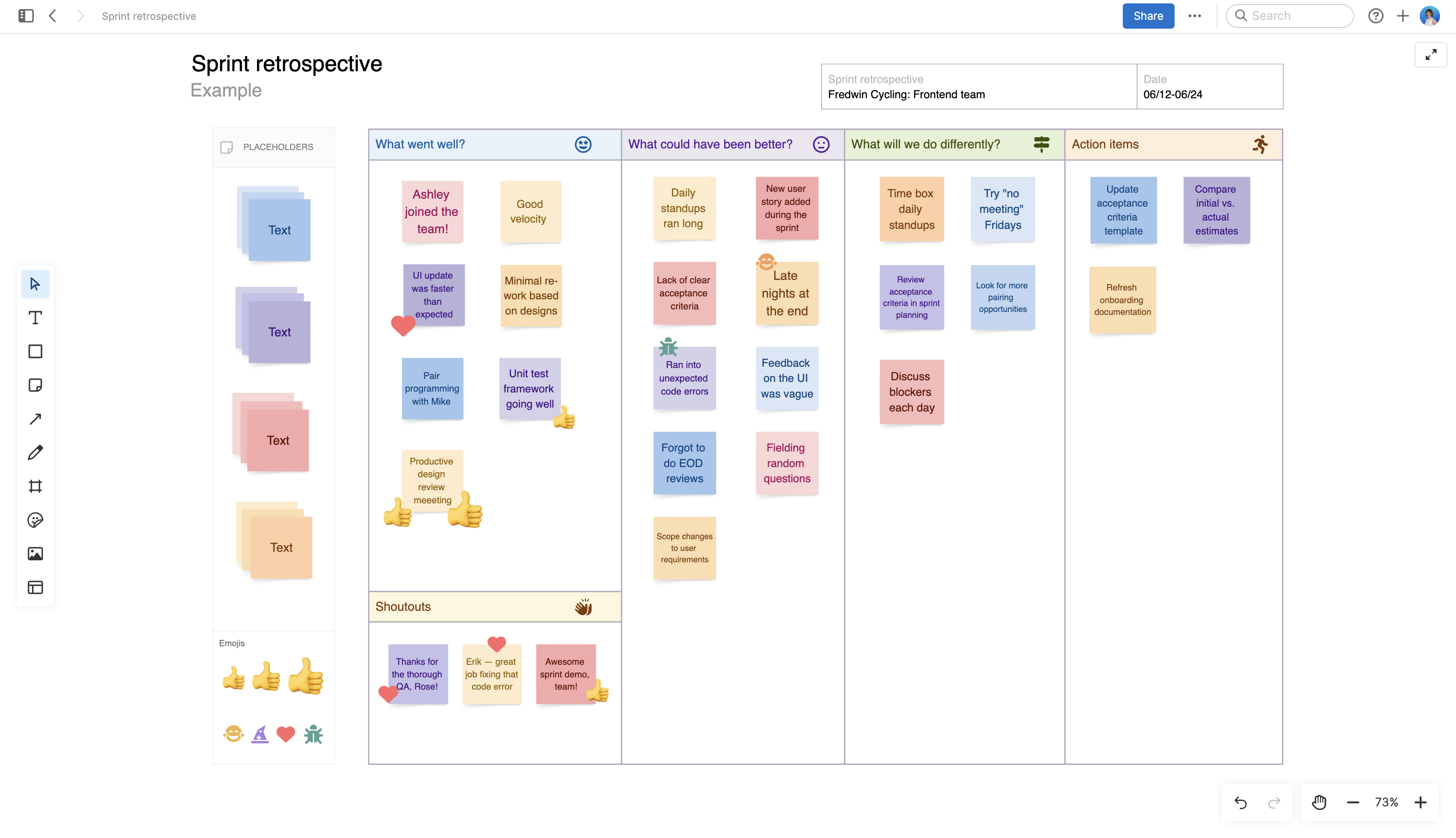
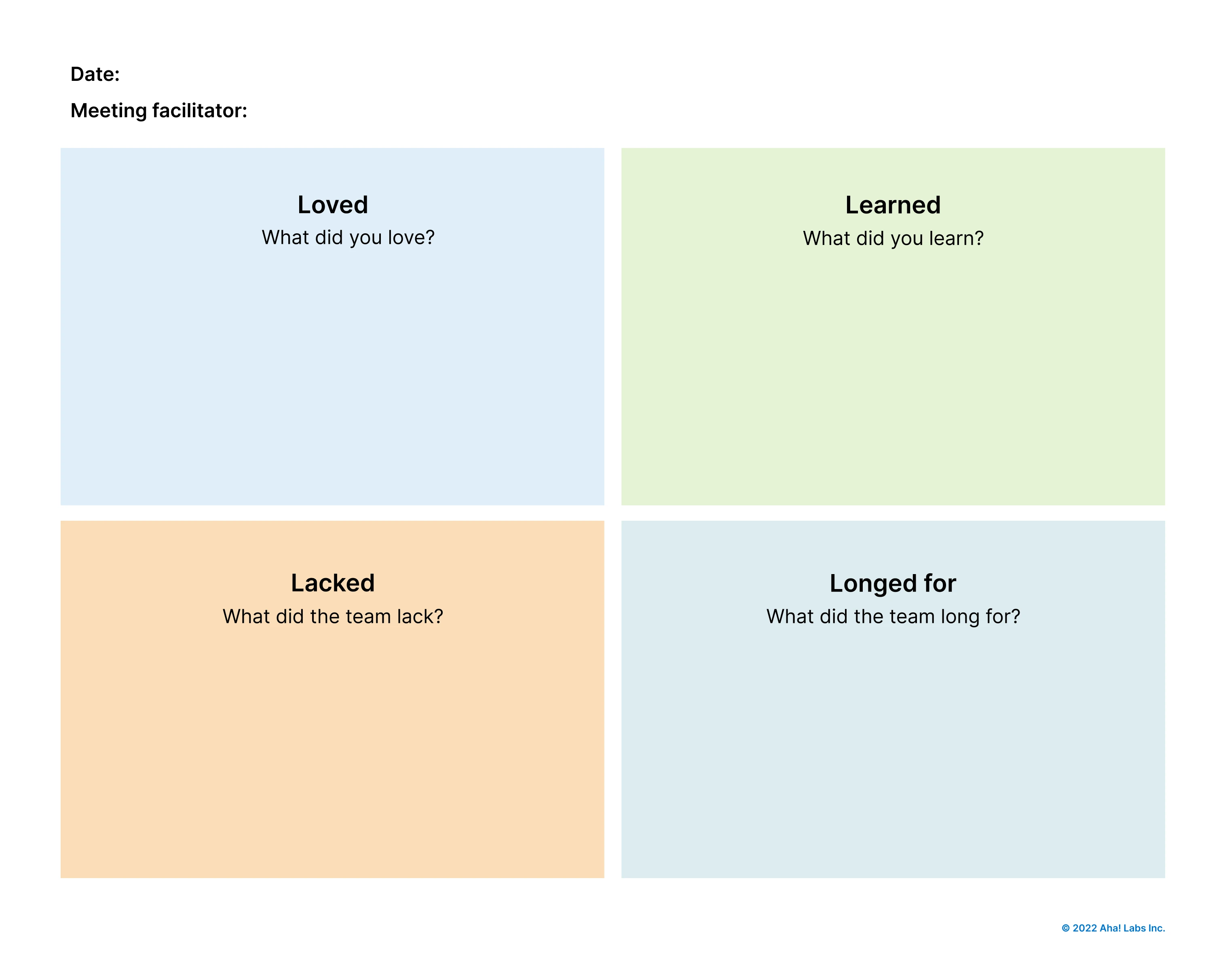
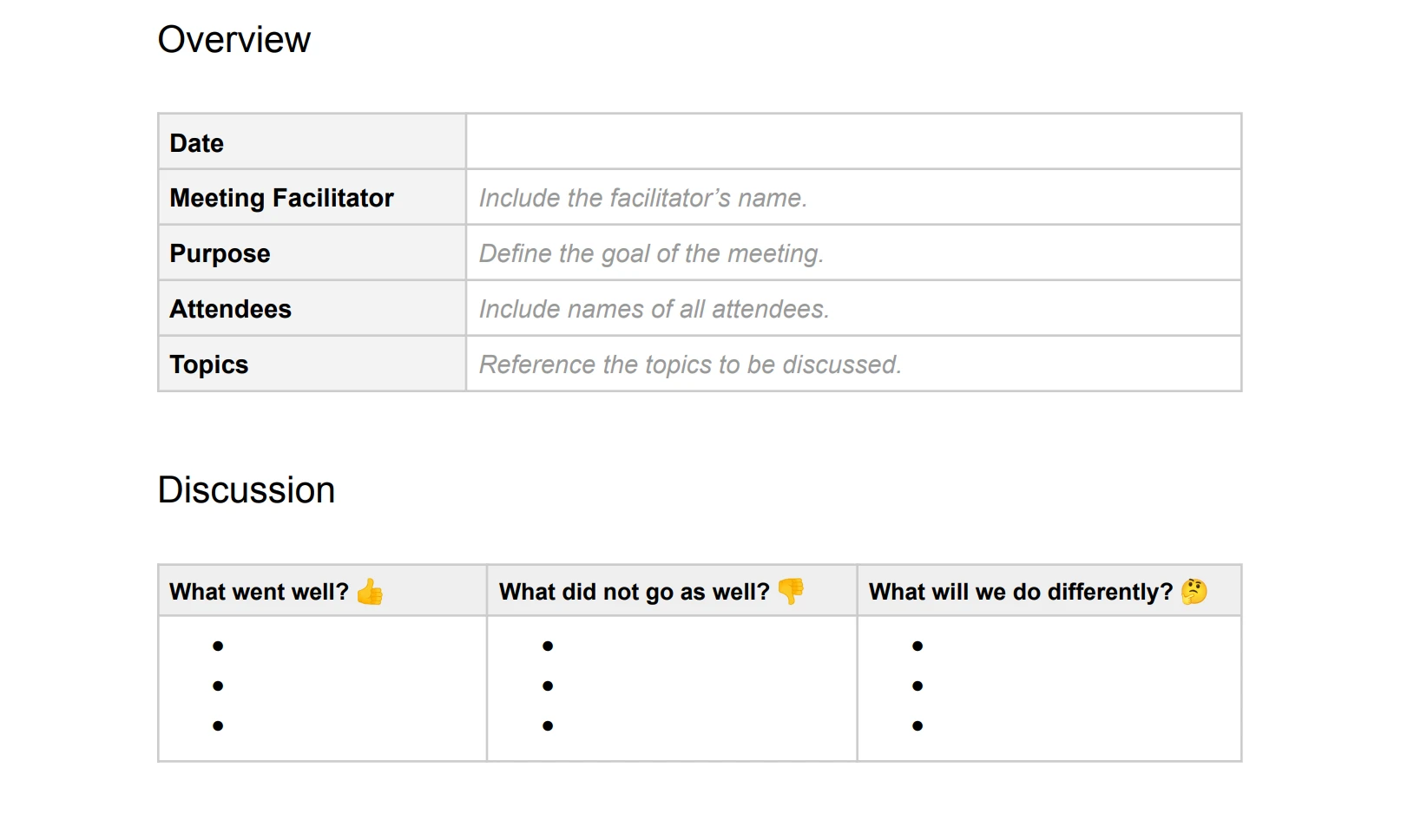
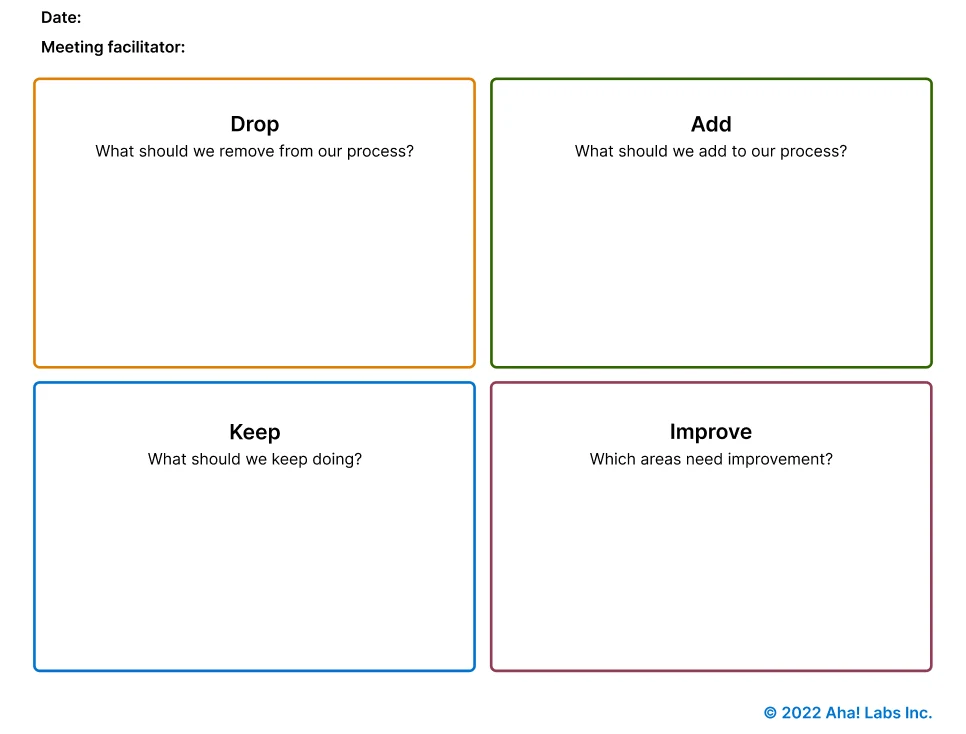
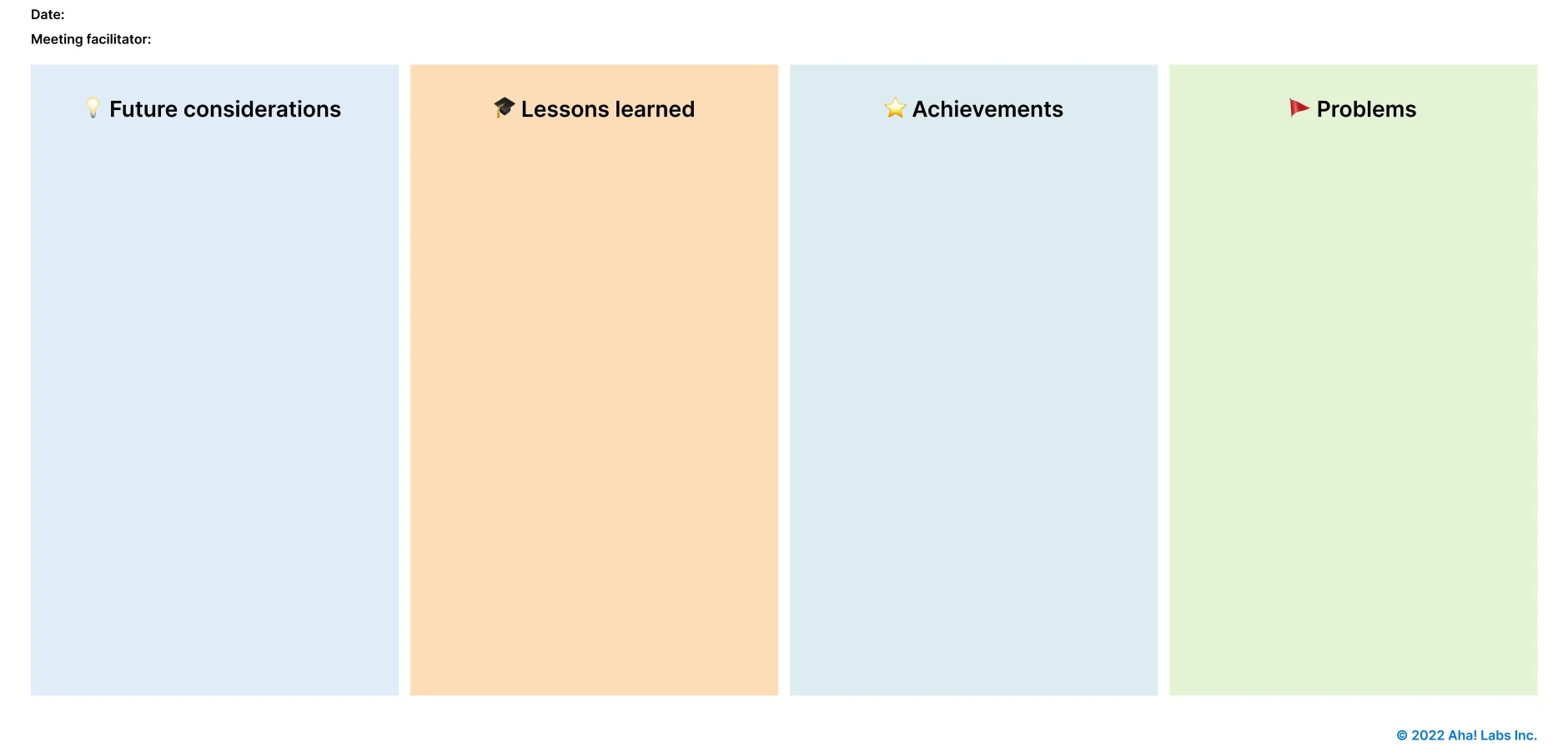
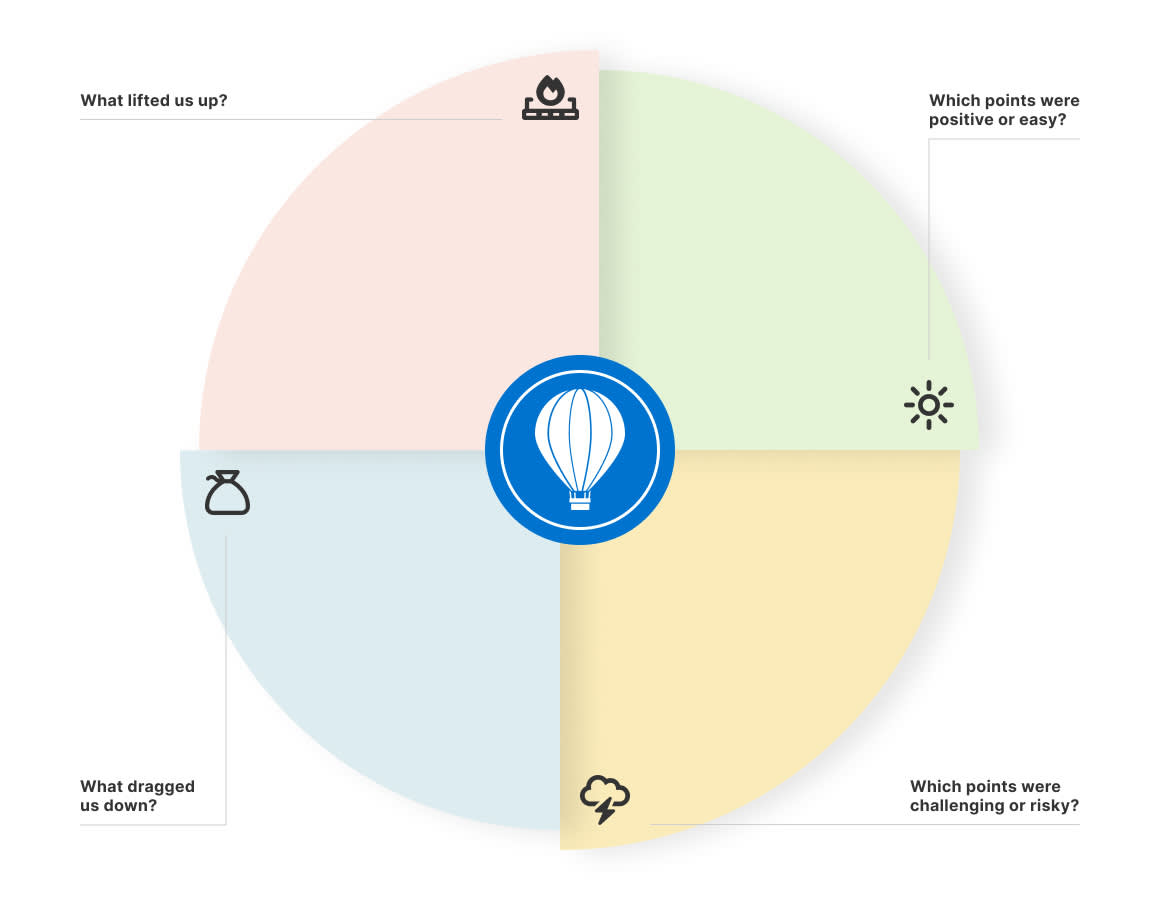
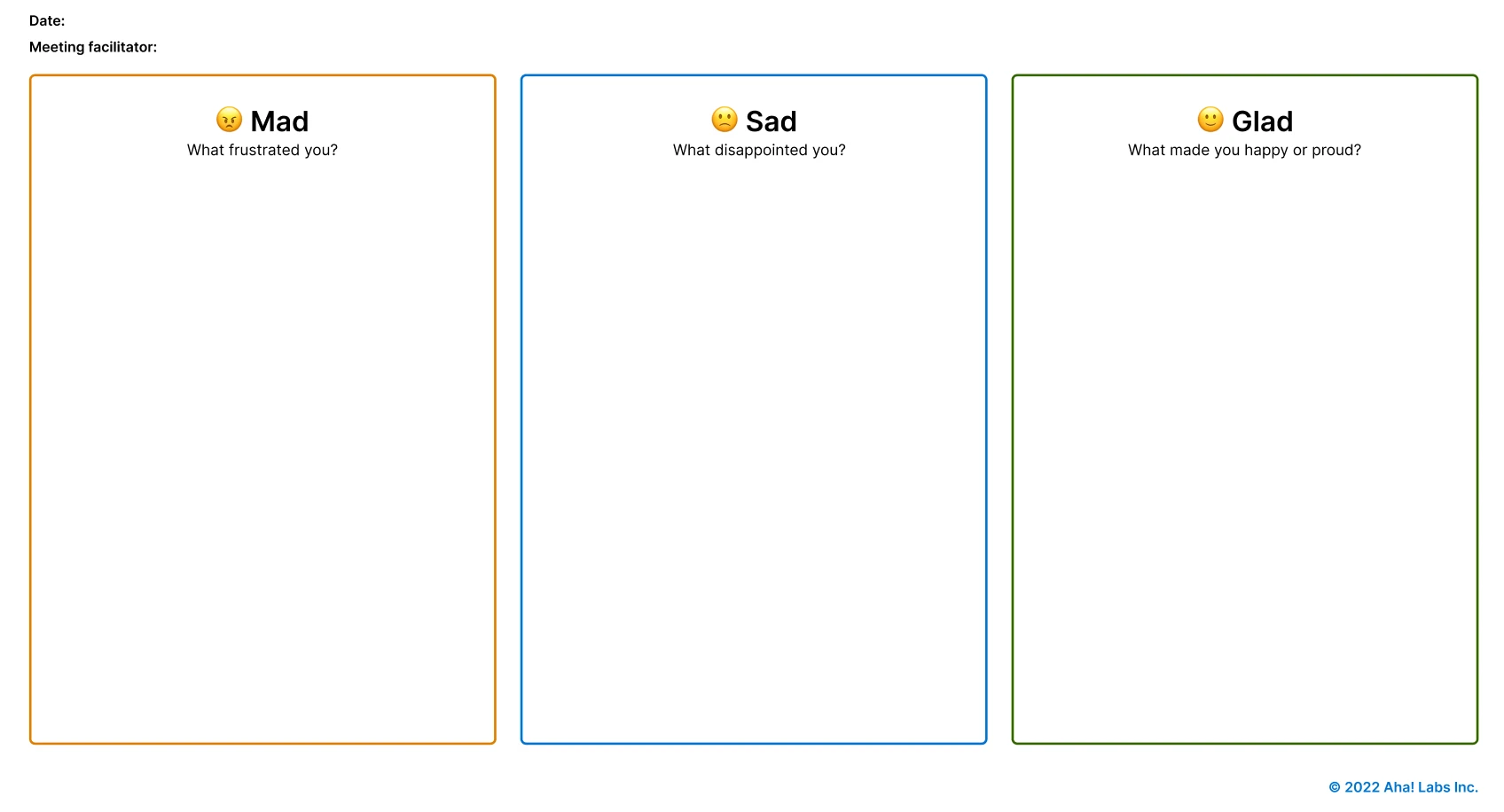
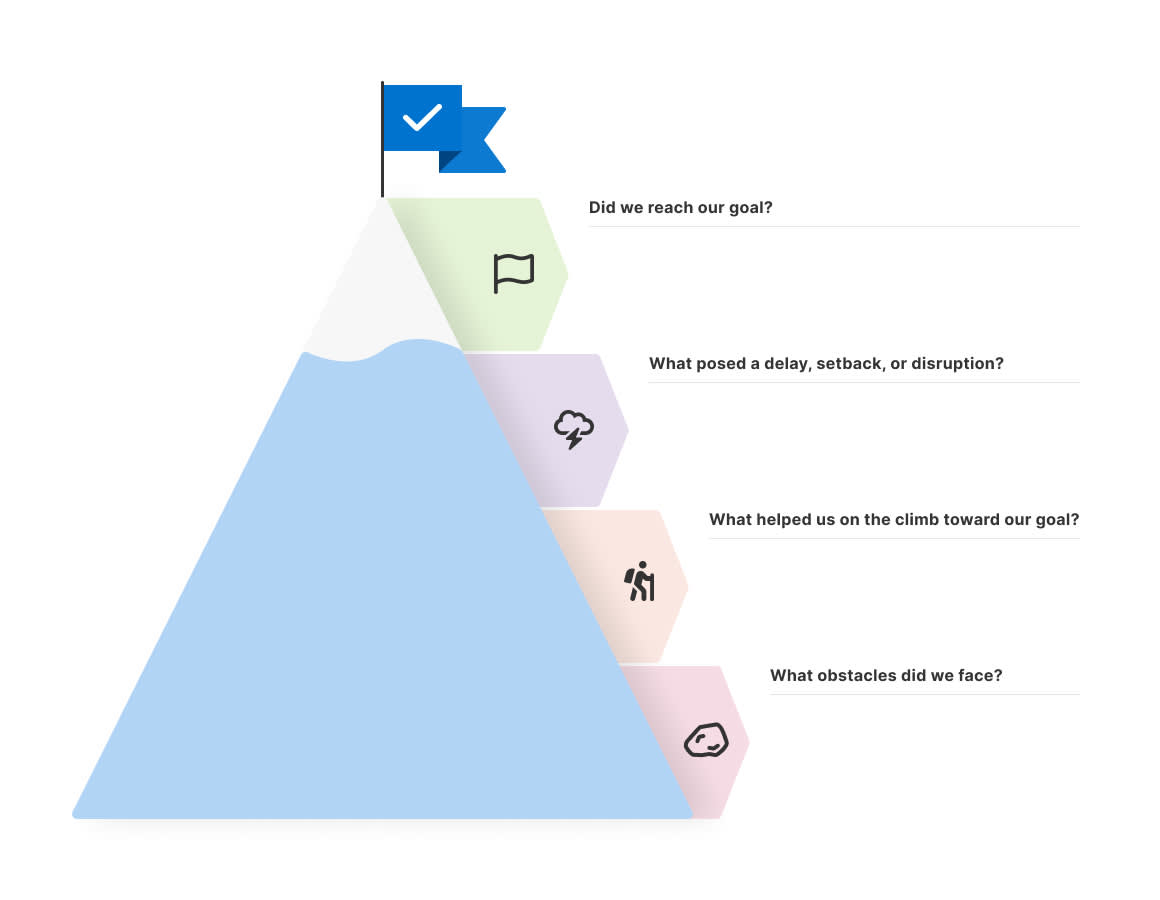
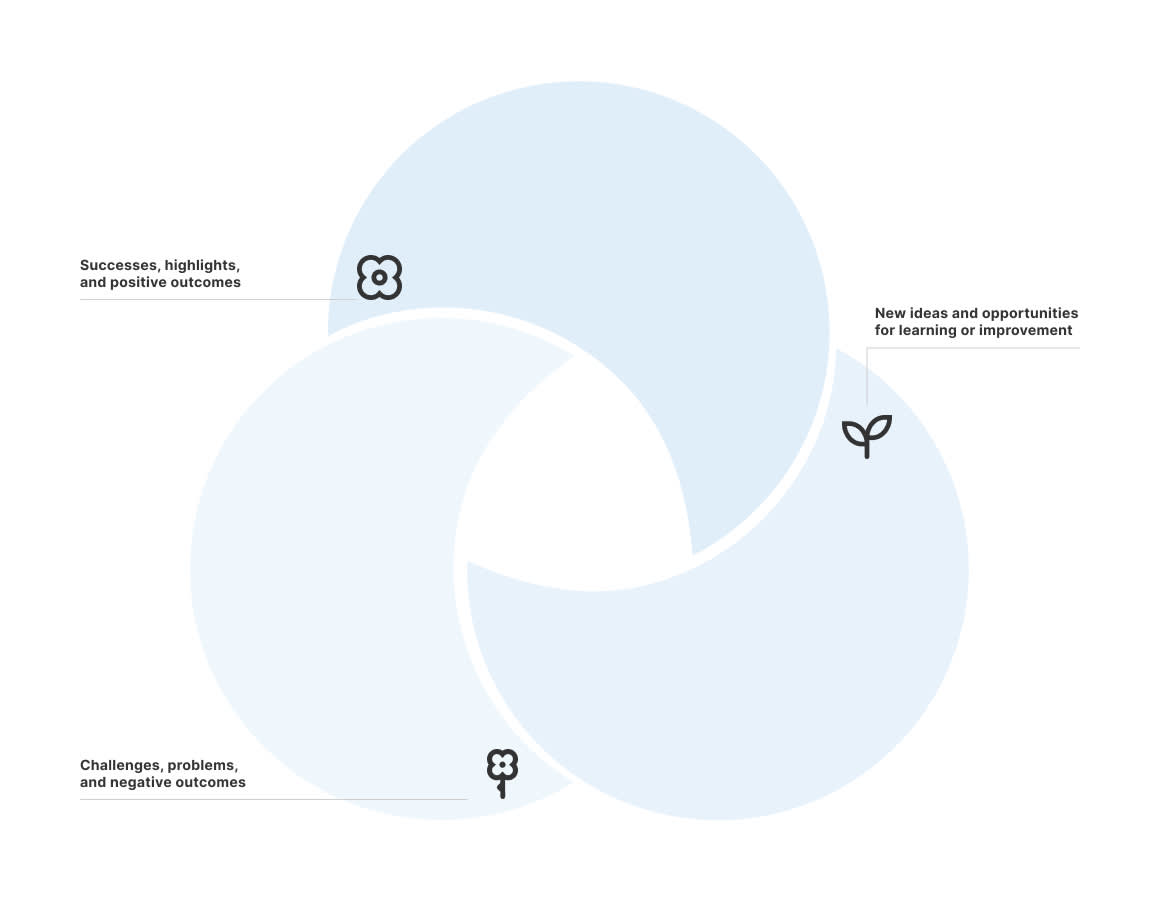
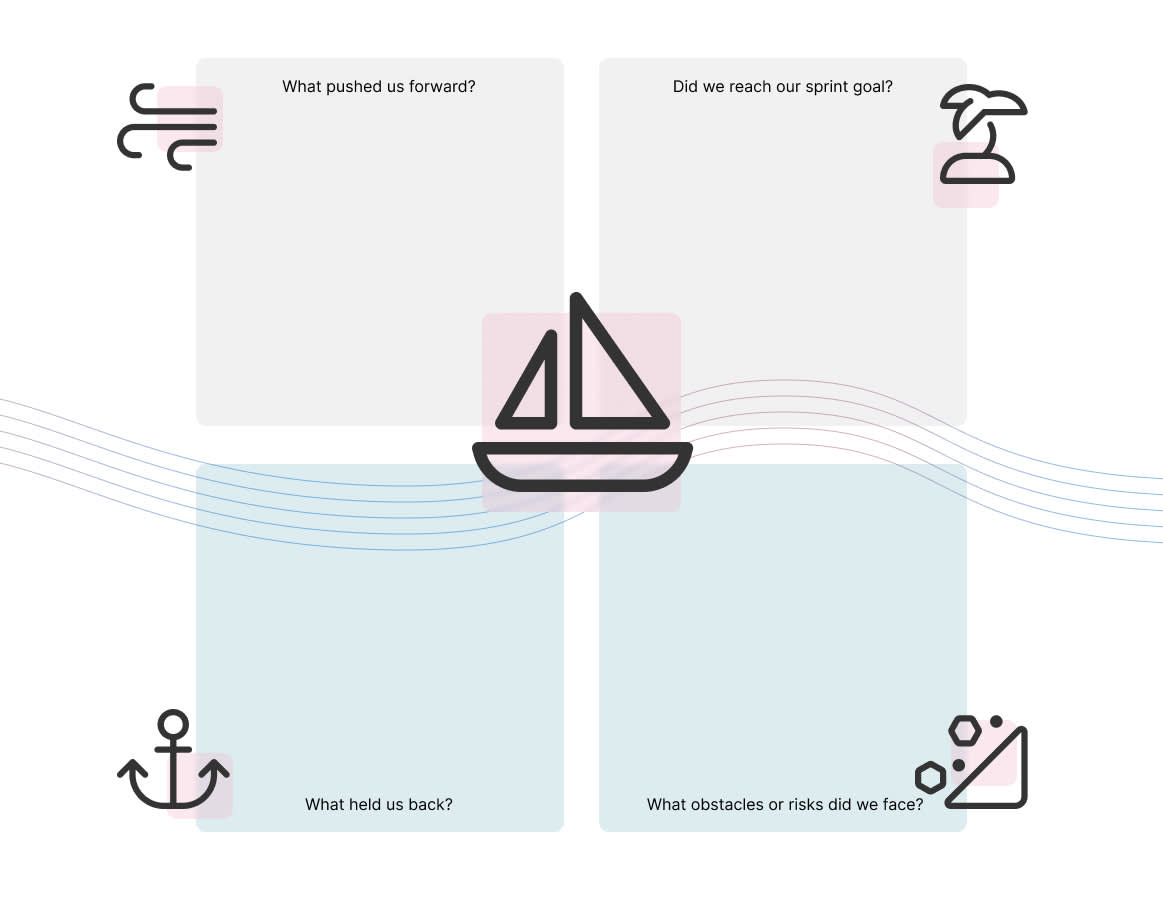
Over the years, scrum masters have devised a number of these frameworks to help guide sprint retrospective discussions — often in the form of diagrams, images, and interactive exercises. Since these techniques have become so popular and effective, agile teams use templatized versions in their discussions.
Before we take a closer look at the templates, here are the main ways your team can benefit from a sprint retrospective template:
Freshness: Retrospectives can get stale over time. A variety of templates helps meetings stay fresh and productive. With so many templates to choose from, even seasoned teams can usually find a new one to try.
Openness: Sprint retrospective templates provide a low-pressure way to share authentic feelings — via conversation starters, visuals, and specific questions (e.g. "what is one thing we should stop doing?") versus open-ended ones (e.g. "how do you think the sprint went?").
Fairness: Templates encourage full participation. Each teammate spends a few minutes reflecting, sometimes writing ideas on physical or digital sticky notes, and then discussing their thoughts. Taking turns ensures each person's voice is heard — even if they are not the loudest.
Direction: Scrum teams collectively own their wins and losses. When discussing poor results, retrospective templates provide guiding prompts that direct discussions on the overall sprint process and avoid scapegoating.
Efficiency: A retrospective template keeps the conversation moving. Think of it like a basic agenda — outlining your talking points and previewing the order of events. For scrum teams, this is especially helpful as sprint retrospectives are timeboxed.
Knowledge sharing: Collective insights are valuable. Capturing everything in a template lets you revisit learnings later to evaluate how things have improved.